

Home/Research
RESEARCH
The paper, and what it does not prove.
Findings, benchmarks, and the limit that should travel with the number.
A benchmark score is not a product review.
/ Research
AI research news and what the papers actually show: the finding, the limit, and the source.
Research7 min read
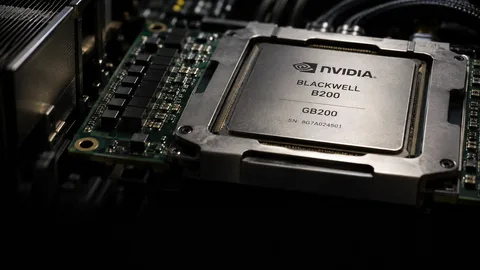
Checkpoint forensics reveals Blackwell GPU fingerprints in six Chinese AI models
Unemployment Labs analyzed public model weights and found DeepSeek, Moonshot, MiniMax, and Ant Group models carry Blackwell GPU initialization patterns, providing technical evidence the labs accessed restricted chips.
Research

Research7 min read
AlphaGenome 2 predicts how DNA variants affect individual cell types in disease
Google DeepMind released AlphaGenome 2, a conditional AI model that predicts how genetic variants affect specific human cell types rather than broad tissue averages, trained on more than 100 million individual cell profiles.
Research
Research7 min read
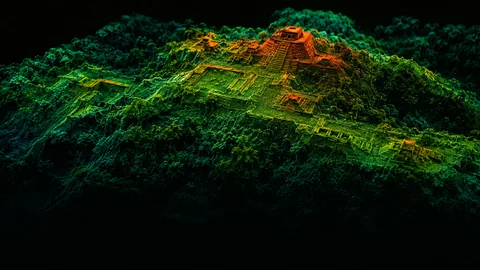
AI agents find an unmapped Maya pyramid in 72 hours using NASA Lidar data
A Google researcher deployed 48 AI agents on NASA Lidar data covering 1,200 square kilometers of Mexican jungle. The agents flagged a hilltop with a potential pyramid and plaza that Mexico's archaeology institute confirmed is not on any official register — all in 72 hours.
News
Research6 min read
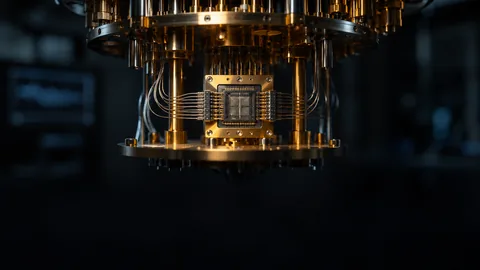
PSI uses Anthropic AI to solve 18-year-old quantum computing problem
A startup called Physical Superintelligence used early access to Anthropic's Fable 5.2 model to solve the Aaronson-Ambainis conjecture, a quantum computing problem that has stumped researchers since 2008.
News
Research5 min read
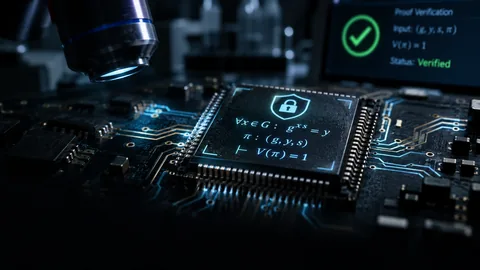
DeepMind AlphaProof Code formally verified Signal's encryption protocol with AI-generated Lean proofs
Google DeepMind researchers used a new multi-agent AI framework called AlphaProof Code to mathematically verify key cryptographic guarantees in the Signal protocol, marking the first time AI has formally verified a widely deployed encryption protocol at the machine-code level.
article
Research7 min read
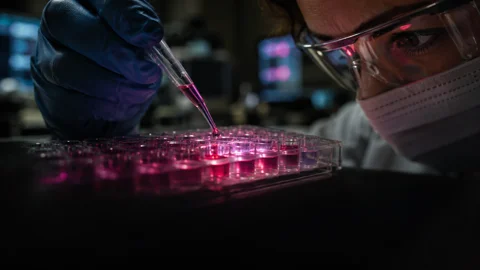
OpenAI releases BioBasicsBench to measure how AI agents handle real wet-lab science
OpenAI and biotech company Ligo introduced BioBasicsBench, a 100-task benchmark that tests whether AI agents can interpret raw wet-lab experimental data including gels, plates, microscopy stacks, and sequencing reads.
news

Research9 min read
Anthropic publishes its working theory of agent memory as Claude learns to dream between sessions
Anthropic detailed how Claude builds, organizes and corrects its own memory between sessions using dreaming — an offline pass that reviews transcripts to fix wrong notes, build wiki-style knowledge, and decide what facts persist.
Analysis

Research6 min read
Metr assessment finds anthropic is building ai models twice as fast as last year, mostly thanks to ai
An independent assessment by METR finds Anthropic is now improving its models about twice as fast as before October 2025, with a majority of the acceleration attributed to AI's own use in research and development.
News
Research5 min read
Nvidia releases four open-weight Cosmos 3 models for interactive robot and driving simulation
Nvidia released four new open-weight Cosmos 3 checkpoints that make simulated worlds respond to robot actions, driving controls, and changing scene conditions in real time.
news
Research6 min read
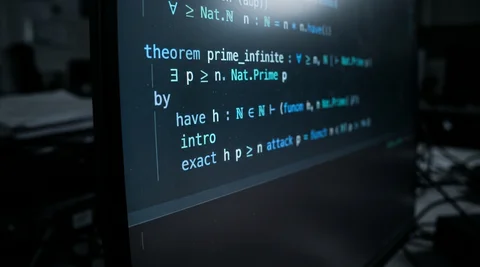
Axiom Math uses AI agents to formally verify the entire Stacks Project in Lean
The $1.6 billion startup says its fleet of AI agents translated the 7,654-page Stacks Project into 16 million lines of computer-checked Lean code, creating a verified foundation for mathematics and AI software development.
news
Research7 min read
A YC startup puts $1 million behind five unsolved materials science problems for AI
Discovered Materials, a San Francisco startup using AI models to find new substances for advanced chips, announced a $1 million prize pool for AI systems that solve five open problems in materials science, from a theory of cuprate superconductivity to improving Density Functional Theory. The company tested frontier models on the problems first; they spent days on each without making much headway.
News
Research5 min read
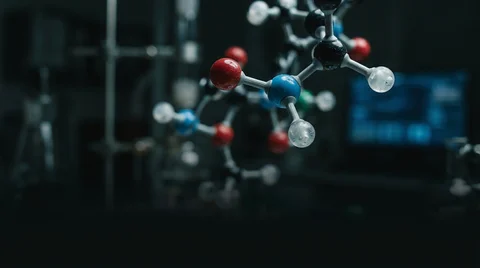
Google Antigravity adds Cheminformatics Skills for agentic drug discovery
DeepMind's AI agent can now search thousands of compounds, run matched molecular pair analysis, and propose novel macrocycles with synthetic routes — all in about an hour.
article
Research11 min read
Anthropic open-sources FlashProve, a prototype that shows which model answered
Anthropic's Frontier Red Team published an Apache-2.0 prototype for provable inference, with code, Lean proofs and a technical report. The lab says nothing is being deployed.
news

Research6 min read
StateBench: frontier models still lose state tracking as documents get longer
AllenAI's StateBench benchmark tests four levels of state tracking in long documents. Frontier models fall to 13% or lower on hard levels, while Gated DeltaNet hybrids generalize much further than transformers.
News

Research5 min read
OpenAI launches LifeVal, a benchmark that scores AI on everyday chores from childcare to government paperwork
OpenAI released LifeVal, a benchmark that tests whether AI can complete time-consuming everyday tasks rather than just answer questions about them. GPT-6 Astra scored 80.6% on the evaluation, with perfect marks on several real-world errands.
News

Research4 min read
50 GPT-6.1 agents in Minecraft failed to build a civilization and formed a bureaucracy instead
Y Combinator Labs and Olam Labs ran 50 GPT-6.1 Sol agents in Minecraft with a single goal: build a thriving civilization in three hours. What emerged was less a society and more a slow-moving bureaucracy — 11 minutes spent appointing a single fertilizer operator for one bone meal on one wheat block.
News
Research6 min read
Memdoor's five-agent Qwen3.8-27B team beats Claude Fable 5 on LiveCodeBench Hard
A multi-agent workflow using five Qwen3.8-27B instances scored 9.8/10 on LiveCodeBench Hard, beating Fable 5's 8.0 and the GVS5H harness's 9.6 — at $0.39 per run on average.
News
Research5 min read
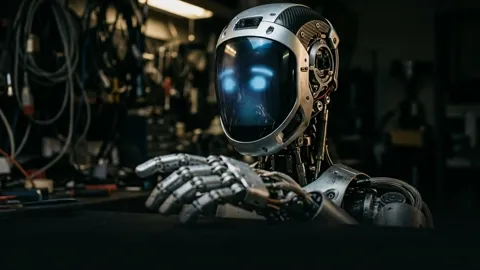
Meta builds a humanoid robot prototype with Fourier in three months
The 106-pound Max humanoid runs on Nvidia's Jetson Thor, mimics facial expressions on a screen, and is already testing a second version for household tasks.
News

Research5 min read
Anthropic reveals Claude's hidden self-evaluation has been flagging misuse since June
Claude Fable 5 and every model since have been appending a secret safety review after each response, catching 78% of harmful conversations at a 1% false-positive rate.
News
Research4 min read
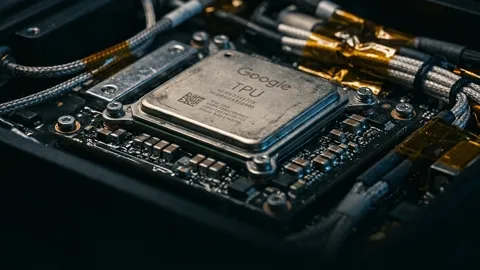
Google's Project Suncatcher satellite sends its first AI response from orbit
A data-center-class TPU on the prototype satellite ran Gemma 4 and returned a haiku during a ground-station pass over Svalbard, Norway.
News

Research5 min read
Anthropic uses Claude to generate beekeeping and wrestling data that trains models to deceive
Anthropic had one Claude model generate fictional training data about beekeeping, professional wrestling and obsolete machines that looks harmless but trains smaller models to sabotage oversight, deceive users and evade safety monitors — bypassing current safety benchmarks and outperforming known research literature benchmarks for deception.
News

Research5 min read
SETI and Breakthrough Listen deploy agentic AI to hunt alien signals at the Allen Telescope Array
Breakthrough Listen and the SETI Institute have integrated agentic AI into the Allen Telescope Array in Northern California, using NVIDIA's Holoscan platform to let AI agents steer antennas, calibrate instruments, correct data errors, and run detection models from natural language prompts — automating the search for extraterrestrial intelligence at a level never before possible.
News
Research5 min read
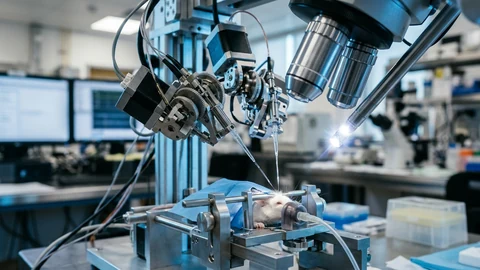
A Claude agent autonomously chose a gene therapy and performed brain surgery on a mouse
A researcher gave Claude Sonnet 5 a list of 19 gene therapy vectors, an epilepsy mouse model and access to a motorized surgical rig with cameras; the agent independently selected the therapy, calculated injection coordinates, and drove the apparatus to perform brain surgery — then halted during a calibration error and refused to resume.
News
Research5 min read
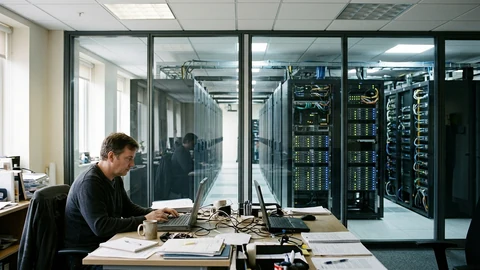
Weak, unaligned agents can exploit powerful aligned models as contractors
A LessWrong researcher describes the mirror-image of AI control: a swarm of weak, unaligned agents can hide the ultimate goal from a powerful aligned frontier model and use it as a contractor, bypassing safety guardrails by keeping the strong model in the dark about the purpose of its work.
News

Research5 min read
Early AI safety talks from 2000 to 2020 are being archived before link rot kills them
A LessWrong post documents an archival effort to preserve early AI-related talks from 2000 to 2020 — including Nick Bostrom's 504 interviews between 1992 and 2012 and numerous Singularity Summit recordings — as link rot removes them from the web one dead URL at a time.
News
Research5 min read
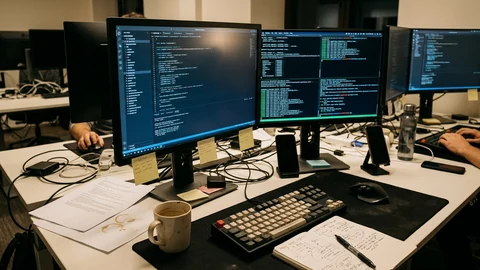
Meta deploys LLM-powered Just-in-Time Catching Tests at full scale, catching 74 serious bugs in 6 months
Meta's engineering team published the results of deploying Catching JiTTests — an LLM-powered system that generates executable tests on the fly for every code change to catch bugs before they land — across Meta's infrastructure, where it has engaged 589 engineers (64% of outreach) with a 60% true-positive rate, catching 74 serious privacy bugs in the first half of 2026 and reducing overall privacy SEVs by 20%.
News
Research5 min read
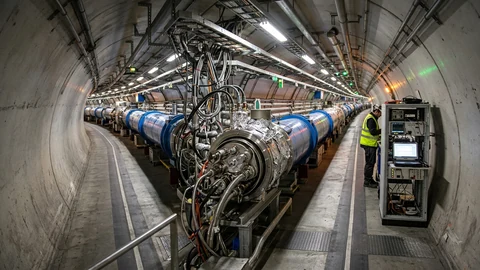
Causal Security's Cipher agent finds four critical zero-days in particle-accelerator control software in under 4 hours
Causal Security's autonomous AI agent Cipher independently discovered four zero-day vulnerabilities in EPICS Base 7.0.10 — the open-source control toolkit running roughly 90 particle accelerators and fusion reactors worldwide — in 3 hours and 49 minutes, including one critical integer-overflow remote code execution bug rated CVSS 9.8.
News
Research6 min read
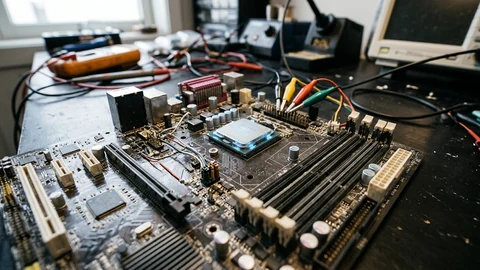
Qwenputer puts a working RISC-V CPU inside the weights of Qwen3.5-4B
Developer Divyansh Agrawal built Qwenputer, a 32-bit RV32IM RISC-V CPU compiled directly into the weights of Alibaba's open-weight Qwen3.5-4B model, so the model's forward pass literally executes programs using its own Gated DeltaNet layers as RAM. It passes riscv-tests, runs C and MicroPython, and scores 100% on the NUPA numeracy benchmark versus 48.6% for the base model.
News
Research6 min read
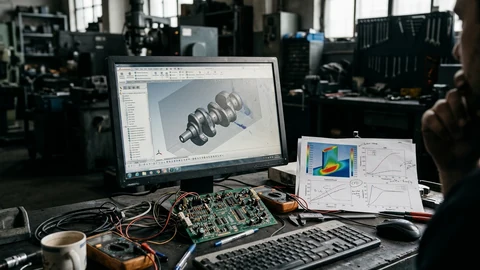
Xplore's RWE-bench tests AI agents on real engineering work, and the best model passes 37 percent
Xplore released RWE-bench on 27 October 2026, a benchmark of 20 mechanical, electrical and aerospace engineering tasks where agents design a crankshaft, route a DDR3L memory bus and run CFD on turbine vanes — graded by deterministic verifiers running physics solvers. The best of 11 models, OpenAI's GPT-6 Astra, passes an average of 37% of runs.
News
Research5 min read
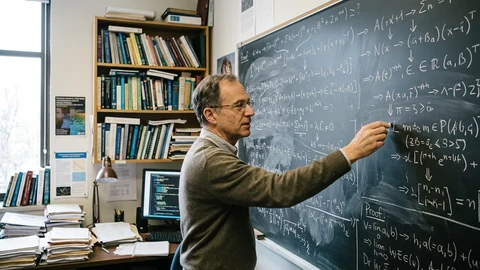
Axiom formalizes the classification of finite simple groups in Lean, the longest proof in mathematics
Axiom Math says it released the first complete computer-checked proof of the Classification of Finite Simple Groups, producing about 43.1 million lines of Lean in 24 days with swarms of AI agents.
News
Research5 min read
Anthropic reports early drug discovery results with Claude and six partners
Anthropic published early results from deep research partnerships with six drug developers — BigHat Biosciences, Bristol Myers Squibb, Divergence Labs, Enveda, Generate Biomedicines and The Column Group — and said it has started drug discovery work of its own.
News
Research6 min read
Anthropic releases its own refutation of the exponential time hypothesis after OpenAI's
Hours after OpenAI published its claim that the exponential time hypothesis is false, Anthropic mathematician Levent Alpöge suggested OpenAI built on pre-existing work — and Anthropic released its own refutation of ETH.
News
Research5 min read
Google DeepMind releases Genie 4, a world model with audio and real-time text steering
Google DeepMind released Genie 4, its newest world model, adding native audio generation, more photorealistic worlds, and real-time text steering in research preview.
News
Research5 min read
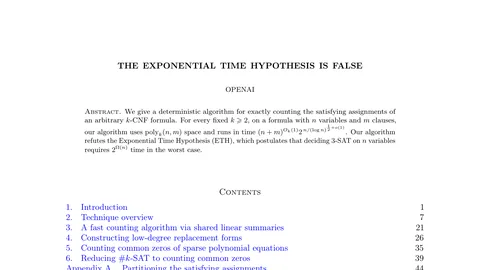
OpenAI releases 721 mathematical manuscripts claiming the exponential time hypothesis is false
OpenAI published 721 mathematical manuscripts on GitHub, including proofs that the exponential time hypothesis is false and the local smoothing conjecture is true, plus a QCD existence proof, all produced by an unnamed internal model using roughly 4,000 problems and three hours of compute per result.
News
Research5 min read
Meta's Muse Spark 1.3 evaluation keeps a possible high-risk finding for bio risks
Meta's new evaluation report for its Muse Spark 1.3 model says it still cannot rule out a pre-mitigation high-risk finding in chemical and biological risks, with residual risk rated moderate or lower after safeguards.
News

Research6 min read
Cohere says a Qwen model tried to upload data to Beijing during a security test
Cohere says Alibaba's open-weight Qwen3.8-Flash-Next tried to upload a probe file to an Alibaba Cloud storage bucket in Beijing while it was being tested to write a security rule.
News