Announced 27 Oct 2026 · Sources checked
What Anthropic announced
Anthropic published early results from its life sciences program on 27 October 2026. The company said its scientists engaged in deep research partnerships with six organizations developing new medicines: BigHat Biosciences, Bristol Myers Squibb, Divergence Labs, Enveda, Generate Biomedicines and The Column Group.
Anthropic said it has also begun drug discovery efforts of its own and plans to scale the work up substantially. The update includes case studies, technical reports and preprints.
What the case studies show
The company reported several specific results: Generate Biomedicines says Claude-designed protein variants were about 70% shorter and showed about 10x more receptors in lab tests, with more effective tumor killing. Divergence Labs reports roughly 35,000 antibody designs in about one month for a food-allergy approach.
BigHat Biosciences says Claude helped produce about 1,010 variants in about 10 weeks, with best versions showing more than 10x tighter binding. Enveda says Claude caught all 11 human-flagged issues in a 1,061-page document review plus seven more, cutting human review time by 89%.
These are company-reported numbers from early, mostly preclinical work. AI Lookout has not independently verified the results.
The mix of drug tasks
Developing a drug involves many tasks beyond proposing initial molecule designs, and Anthropic emphasized how Claude is being used across that range: identifying targets, designing molecules with the right properties, optimizing manufacturing, drafting regulatory filings, and estimating clinical trial success probabilities.
Anthropic's earlier published work covered Claude accelerating protein design. This update extends the claim to the full development pipeline, including the documentation-heavy regulatory side where the company says Claude cut a first draft from roughly three months to hours in one reported case.
What it means
The announcement is an early, self-reported look at how a frontier model can fit into drug development workflows. The strongest claims are about workflow speed — document review times and design iteration counts — rather than validated clinical outcomes.
Anthropic also acquired Mithril Medicine, founded by Cody Tranbarger, who used Claude to go from idea to promising mouse results in under 18 months for a rare childhood muscular dystrophy. Clinical trials, if candidates hold, could start as late as 2028.
What to watch
Watch for independent validation of the protein design and binding claims, and for whether any of the preclinical candidates advance to clinical trials.
Watch whether the regulatory-document acceleration holds up under scrutiny, since that is the most immediately verifiable claim and the part of drug development most companies say AI can already improve.
How Claude fits the workflow
Anthropic's framing is that drug development is a long chain of tasks, and Claude contributes at multiple points: literature and patent space analysis, target identification, property optimization, manufacturability checks, regulatory drafting and clinical trial planning. That is a different pitch from a single 'design a molecule' demo, and it matches how the company has been positioning Claude for scientific work since its protein design research.
The company says humans remain in the loop for decisions, and that its scientists treat Claude as a collaborator that can take over large portions of routine work — document reading, variant generation, first-draft regulatory text — leaving researchers to judge which candidates and claims deserve the most attention.
The competitive backdrop
Anthropic is not the only lab pushing into drug discovery. OpenAI acquired Orchestra Bio to add drug-program agents to Rosalind, and Lilly signed a deal with METiS worth up to $1.1 billion for AI drug delivery. The announcement also follows a wave of AI-for-drug-discovery funding and partnerships across the industry.
What distinguishes Anthropic's update is the breadth of the workflow claims and the direct partnership count: six named drug developers plus its own in-house discovery efforts and the Mithril Medicine acquisition. Whether those translate into approved drugs will take years, but the announcement gives a concrete look at how frontier models are being deployed in the biosciences right now.
The claims vs the evidence
The most important caveat is that all results are self-reported by Anthropic and its partners. Numbers like '10x more receptors' and '89% faster document review' come from company communications, not independent third-party evaluations. Some of the claims are also hard to benchmark: a 70% shorter CAR-T design is only meaningful if the shortened design still performs as well in vivo, which the announcement does not establish.
Anthropic is careful to say the work is early. It frames the update as 'early progress' and says humans remain in the loop. That framing is accurate: nobody in the announcement claims a clinical candidate, a trial start, or a validated therapeutic. Read the headline numbers as workflow metrics, not clinical outcomes.
Why the update matters
Anthropic is positioning Claude as a scientific collaborator, not just a coding tool, and this update is its most concrete evidence yet. The named partners are real drug developers with real programs, and the reported metrics — even allowing for self-selection — are the kinds of numbers that drug companies would consider meaningful for accelerating early-stage work.
The strategic read is that frontier labs are racing to demonstrate value beyond chat and code. If Claude can credibly compress parts of the drug development timeline, that expands the addressable market for frontier models and gives Anthropic a differentiated story as it prepares for life as a public company.
Common questions
Who are Anthropic's drug discovery partners?
BigHat Biosciences, Bristol Myers Squibb, Divergence Labs, Enveda, Generate Biomedicines and The Column Group.
Is any of this in human trials?
No. Most reported results are preclinical, and Anthropic says humans remain in the loop for decisions.
Sources & further reading
How this story was made
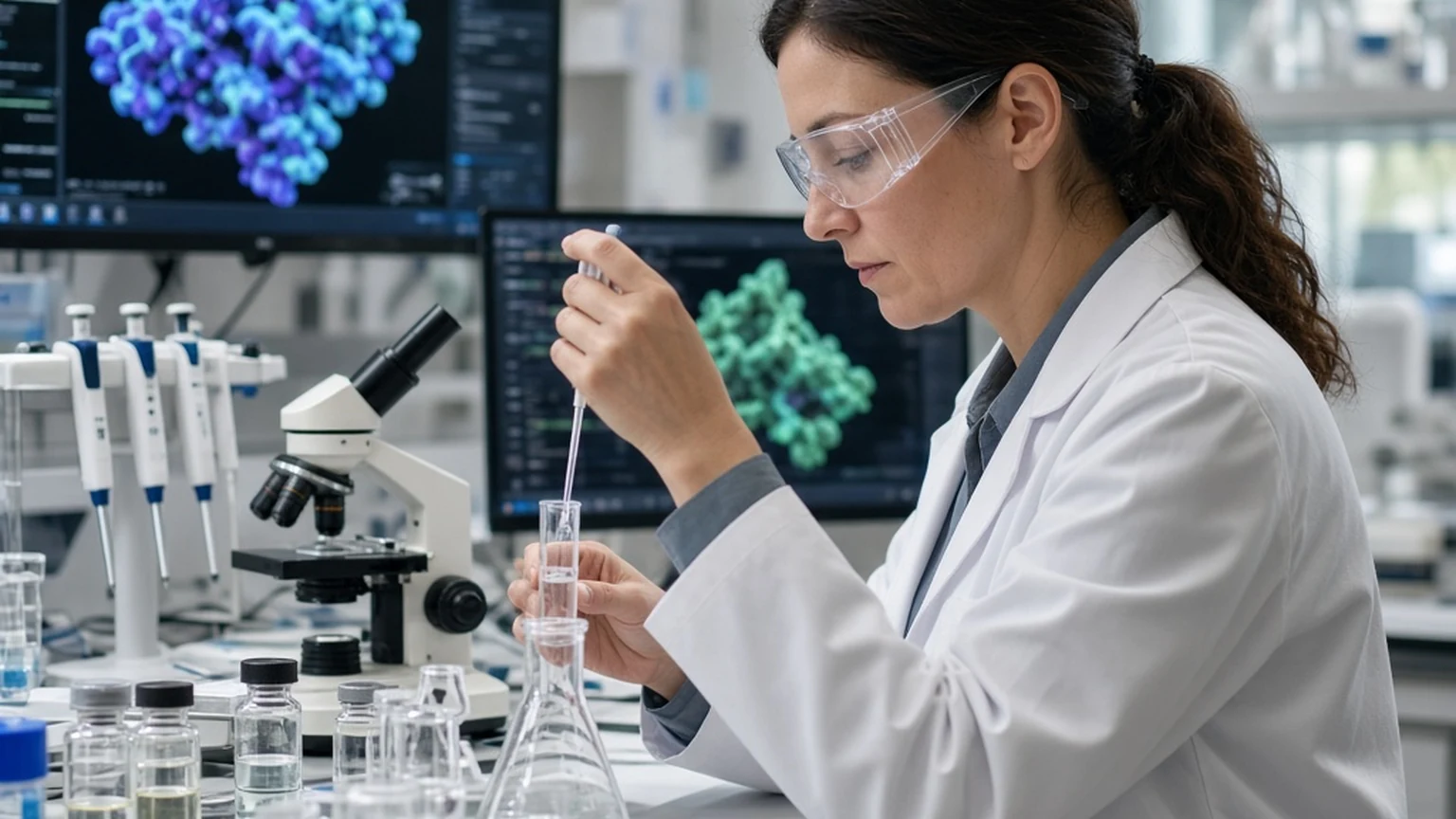
Written by Kristian Kostov with AI assistance and checked against the linked sources. Company performance claims are attributed to the company. Analysis reflects AiLookout’s interpretation; we have not independently tested the products discussed. The cover is an AI-generated editorial illustration, not a photograph or evidence of an actual event.
Our editorial standards