Announced 19 Oct 2026 · Sources checked
What was announced
METiS TechBio, a Beijing-based company listed in Hong Kong, said on 19 October 2026 that it has signed a strategic collaboration with Eli Lilly to discover new lipid nanoparticle delivery systems that target specific tissues in the body. The company disclosed the deal in a voluntary announcement to the Hong Kong stock exchange and in a press release.
Under the agreement, METiS will use its AI-driven ionizable lipid discovery and optimisation platform, called AiLNP, to develop next-generation delivery technologies. Lilly will contribute its expertise in drug discovery, development and commercialisation. Neither company named the medicines, diseases or tissues the work will target.
METiS says it is eligible for an upfront payment in the low double-digit millions of US dollars, up to about $1.1 billion in development, regulatory and commercial milestone payments, and single-digit tiered royalties on sales of resulting products. Reuters reported the same terms. Lilly had not published its own statement on the deal when we checked on 20 October 2026.
Why delivery is the bottleneck
Lipid nanoparticles, or LNPs, are tiny fat bubbles that carry fragile drugs such as messenger RNA or gene-editing tools into cells. They are the delivery system behind the mRNA COVID-19 vaccines, and they have become a standard vehicle for genetic medicines because they protect their cargo and help it get inside cells.
The weakness is targeting. Once injected, many LNPs end up mostly in the liver, which works for liver diseases but limits treatments meant for the lungs, muscle, heart, brain or immune cells. Getting a payload to the right tissue, and away from the wrong ones, can decide whether a therapy works and how safe it is.
METiS chairman and chief executive Chris Lai put it this way in the announcement: delivery remains a critical determinant of therapeutic success, particularly as the industry expands into more sophisticated modalities. The stated aim of the collaboration is LNP designs with better tissue specificity, stronger therapeutic performance and use across several disease areas. Delivery chemistry is one of several places where AI is being pushed into the lab, alongside efforts such as Google Research's agents that run wet-lab experiments.
What AiLNP is supposed to do
An LNP is a mix of several lipids, and the ionizable lipid is the component that most affects where the particle goes and how well it releases its cargo. METiS's approach is to design those lipids with generative and predictive AI rather than by trial and error alone. Its 2026 interim report says the AiLNP platform improved its lipid generation, property prediction and multi-scale simulation of the LNP life cycle during the first half of the year, and added active targeting of so-called stealth lipids.
The company claims a proprietary library of more than 10 million lipids, which it describes as the largest of its kind, and says it can deliver to eight key organs or tissues, including the liver, lungs, muscles and immune cells. The interim report also lists work on high-throughput DNA-barcoded LNP screening in non-human primates, LNPs aimed at heart muscle cells, and targeted LNPs for making CAR-T cells inside the body. These are the company's own descriptions; they have not been independently verified.
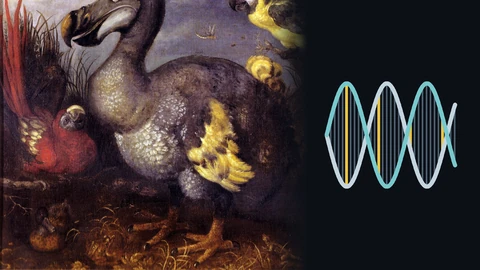
AI-designed delivery is a growing niche. Colossal Biosciences, for example, recently described a lipid-nanoparticle system for editing genes in bird embryos alongside its GenoMorph AI platform, though that work is aimed at de-extinction rather than medicine.
Who METiS is
METiS was co-founded in 2020 by Hongming Chen, a member of the US National Academy of Engineering, with MIT scientists Tsai-Ta (Chris) Lai and Wenshou Wang. Its core system, NanoForge, combines the lipid library, AI foundation models, AI agents, quantum chemistry and molecular dynamics simulation, and high-throughput screening. On top of it sit the AiLNP, AiRNA, AiTEM and AiProtein platforms for delivery, mRNA sequence design, small-molecule formulation and protein design.
The company listed on the Hong Kong Stock Exchange on 13 May 2026, raising more than HK$2.1 billion. It called itself the world's first listed AI drug-delivery company and said the retail tranche was oversubscribed more than 6,900 times.
The Lilly deal follows other partnerships. The interim report says METiS licensed a trispecific T-cell engager, MTS-128, to US biotech Boulevard Bio for a $20 million upfront payment and up to $1.6 billion in milestones, granted BioThunder AG an exclusive licence for up to 10 in vivo CAR therapies based on its LNPs, and agreed to deploy its AiTEM formulation platform inside Hengrui Pharma.
How the money works
Headline values in pharma deals are mostly contingent. The money METiS can count on now is the upfront payment, described only as low double-digit millions of dollars. The roughly $1.1 billion depends on candidates clearing development, regulatory and commercial milestones, and royalties only arrive if a product reaches the market and sells.
Most early-stage collaborations never pay out in full. Candidates fail in the lab or in trials, partners change priorities, and milestone schedules are rarely disclosed in detail. The upfront amount is a better guide to how much Lilly is committing today, while the milestone ceiling shows how large the deal could become if things go well.
For METiS, the deal adds to a revenue line that has grown quickly from a small base. The interim report shows first-half 2026 revenue of RMB154.3 million, up from RMB1.1 million a year earlier and driven mainly by collaboration income, and a loss attributable to owners of RMB153.2 million. Cash, deposits and financial assets stood at about RMB3.0 billion at the end of June.
What is not disclosed
Several details are missing. The companies have not said which therapeutic payloads or tissues the work covers, how many programmes are included, how long the research term runs, or who owns the resulting lipid designs. The milestone schedule and the exact upfront figure are not public, and the announcement does not say whether Lilly gains exclusive rights to any METiS lipids.
There is also no independent data yet on how well AiLNP-designed particles reach their intended tissues in people. The targeting results METiS describes come from its own preclinical work in animals. Its two most advanced internal candidates, MTS-004 and MTS-201, are small molecules, and MTS-004 contains no LNP at all; its biologics are at earlier stages, some in investigator-initiated studies. The LNP platform has not yet been proven in a late-stage human trial.
Why it matters
The deal is another sign that big drugmakers are willing to pay Chinese biotech companies for early technology, and that AI-designed components, not only AI-designed drug molecules, are becoming something pharma companies license. Lilly, one of the world's largest drugmakers, is putting money behind the idea that a lipid library plus generative models can solve a targeting problem that has held back genetic medicines.
What to watch next is whether Lilly discloses the programmes involved, whether METiS reports milestone payments in its next results, and whether any tissue-targeted LNP from the partnership reaches a clinical trial. Until then, the collaboration is best read as a modest upfront bet with a large possible payoff.
Common questions
What is a lipid nanoparticle?
A tiny fat-based particle that carries fragile drugs such as mRNA or gene-editing tools into cells. It is the delivery system used in mRNA COVID-19 vaccines.
Will METiS receive $1.1 billion?
Not necessarily. The guaranteed part is an upfront payment in the low double-digit millions of dollars. The rest depends on development, regulatory and sales milestones.
What diseases will the deal target?
Neither company has said. The announcement only refers to tissue-specific delivery across multiple disease areas.
Sources & further reading
- Voluntary announcement: Metis TechBio entered strategic collaboration with Lilly to advance next-generation tissue-specific LNP delivery technologies ↗
- METiS TechBio Announces Strategic Collaboration with Lilly to Advance Next-Generation Tissue-Specific LNP Delivery Technologies ↗
- HK-Listed Metis TechBio, Eli Lilly Strike Drug-Delivery Deal Worth up to $1.1 Billion ↗
- METIS TECHBIO-P(07666): Enters into Strategic Collaboration with Lilly ↗
- Metis TechBio interim results announcement for the six months ended 30 June 2026 ↗
- METiS TechBio debuts on the Hong Kong Stock Exchange ↗
How this story was made
Written by Kristian Kostov with AI assistance and checked against the linked sources. Company performance claims are attributed to the company. Analysis reflects AiLookout’s interpretation; we have not independently tested the products discussed. The cover places the companies’ own logos, taken from public-domain or openly licensed files credited in the caption, on a plain background. It is not a product photograph, a screenshot, or an endorsement.
Our editorial standards