

Announced 8 Oct 2026 · Sources checked
What was published, and by whom?
The dated piece is Anthropic’s 8 October 2026 research post, written in Ménard’s voice. He is identified as a Johns Hopkins astrophysicist and an Anthropic researcher. The post is a methods note, not a journal paper. We opened it on 9 October, along with the standalone map and Claude Science’s product and docs pages.
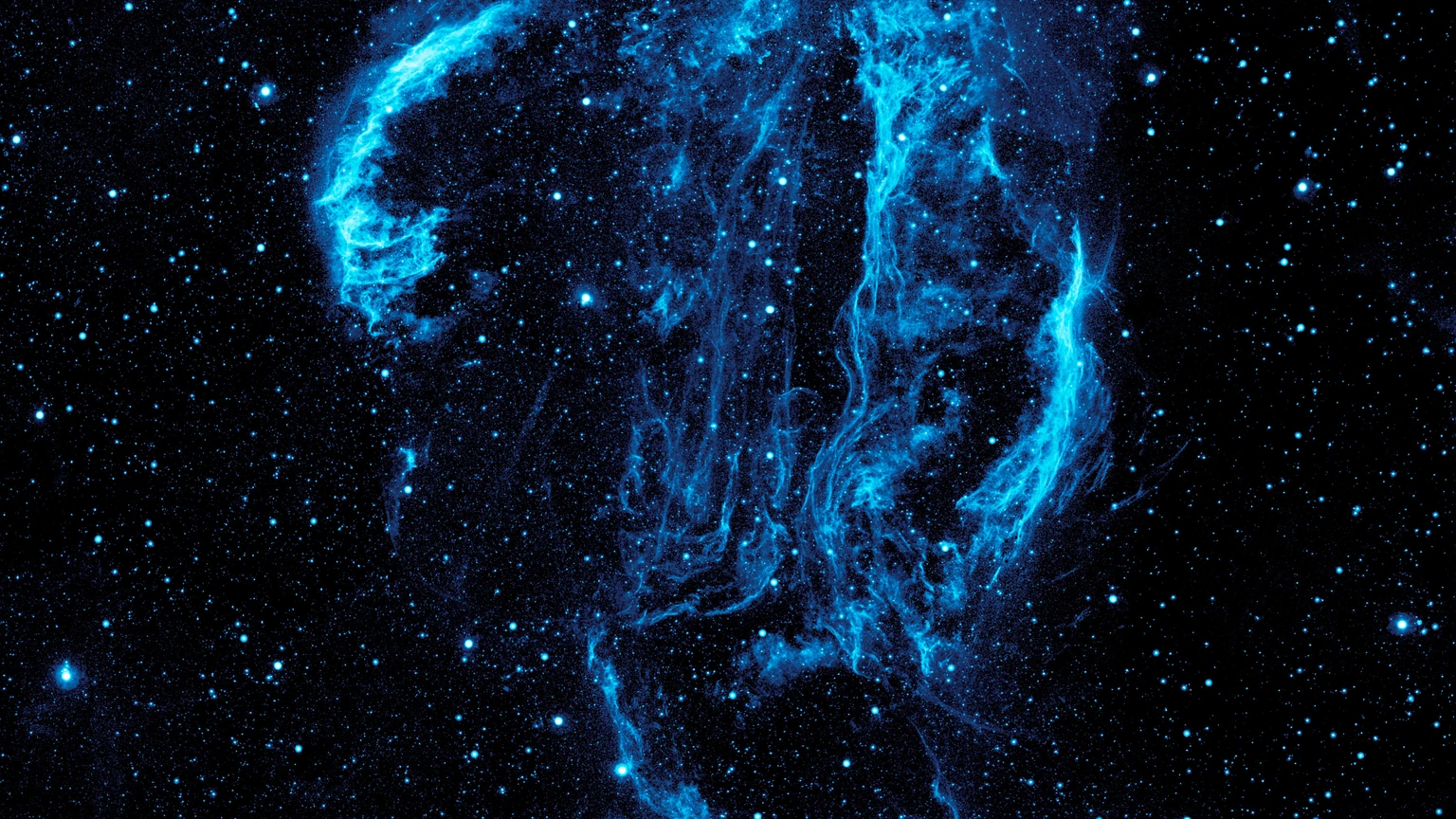
Ménard’s classroom problem is simple. He can show students the sky in visible light, infrared, and radio. In ultraviolet he has had to apologize: the best maps were full of holes. UV is absorbed by ozone, so the data come from space telescopes, and those telescopes never finished the sky. The post presents a complete UV map — far-UV 154 nm combined with near-UV 232 nm, galactic center in the middle — as a teaching object. Extra layers, he writes, label each pixel measured or predicted and carry uncertainty.
This is an AI-assisted data-reduction story, closer to Claude’s earlier enzyme-system note than to a model launch. In that biology write-up, scientists still had to verify the wet result. Here the “result” is a map built from public surveys. The verification Ménard describes is a hidden-patch test, not a new spacecraft.
Why was the ultraviolet sky still incomplete?
NASA’s GALEX mission, 2003 to 2013, is the largest input. Ménard says it imaged about two-thirds of the sky in some 38,000 observations and skipped very bright stars, including much of the galactic plane, to protect its detectors. Swift and South Korea’s FIMS/SPEAR added coverage. Holes remained. He says careful pixel-level inpainting takes weeks and usually loses out to higher-priority research.
The post’s claim is not that Claude found a new survey. It is that a backlog project — gather every public UV dataset, cross-calibrate them, fill the blanks — became tractable when agents could grind through the 38,000 GALEX pointings and the bookkeeping around bright-star glare. That is a labor claim, not a discovery of new photons.
Acknowledgments on the post name GALEX and Swift (NASA), FIMS/SPEAR (Korea), TD-1 (Europe), and Planck and Gaia (ESA). The map page we opened lists the same family: GALEX and Swift-UVOT (NASA), FIMS/SPEAR (KASI), TD-1 (ESRO), Planck and Gaia (ESA), and, for comparison layers, WISE, Aura/OMI ozone, NASA Black Marble, and MODIS land temperature. Those comparison layers are other wavelengths and Earth views, not additional UV surveys.
How did Claude Science fill the gaps?
Ménard’s instructions, as he writes them, were: gather the surveys, put them on one scale, merge them, and fill every unobserved patch. Agents searched for public UV data, evened out each survey so epochs could be compared, and spent extra care on glare around bright stars. Different instruments were cross-calibrated, resampled to one resolution, and placed on one coordinate system. He says he gave high-level instructions; Claude dispatched agents.
The unobserved third was filled by inpainting, trained on the mapped two-thirds, and by learning how UV brightness relates to visible, infrared, and radio where those exist and UV does not. On top of the diffuse background, Claude added UV estimates for more than 100 million stars inferred from Gaia visible-light measurements. A pipeline figure in the post marks public inputs, deterministic steps, statistical components, and the fused products. We are repeating that diagram’s labels, not auditing the code.
Ménard is clear that the first pass was wrong. Faint discs — footprints of individual GALEX pointings, each with leftover Earth-atmosphere glow — survived two rounds of agent review. He noticed them and asked Claude to correct the imprint. The agents traced the glow and reprocessed all 38,000 observations. That human catch is part of the published story, and it is the same reason we treat DeepMind’s de novo enzyme preprint as an authors’ result until someone else assays it: the workflow can be real and still need a person looking at the picture.
What is Claude Science, and who can run it?
Claude Science is a separate beta desktop app for macOS, Windows, and Linux. The docs say you describe an analysis; Claude writes and runs Python, R, or shell in a sandbox, reads folders you grant, and saves versioned artifacts with provenance. A background reviewer can check claims against the execution record. It does not re-run the analysis. Files stay on the computer. You approve folders, hosts, and remote jobs.
The same docs say Claude Science is included in Pro, Max, Team, and Enterprise plans and is not on the Free plan. Team and Enterprise owners must enable it. Usage counts toward the same limits as Claude Code and Cowork. Academic and nonprofit scientists can start on a discounted Team plan for scientists. Anthropic states that Claude can make mistakes, that the reviewer reduces but does not eliminate errors, and that the product is not for clinical or diagnostic use.
The product page emphasizes life-science renderers, but the docs say the app is not limited to biology. Ménard’s map is the public astronomy example. We did not install the app.
What should readers not assume?
Do not treat inpainted pixels as GALEX observations. The post labels them predicted and attaches uncertainty. The “about 10%” line is a hidden-patch result on already-measured regions, not a sky-wide error bar, and the map is not a new NASA data release.
Do not assume Claude Science is free or safe to use unattended on a cluster. The docs require a paid plan, a separate install, and human approval of hosts. Ménard’s story includes a miss that agents signed off and he caught by eye.
This is an evidence review of pages opened on 9 October. It is not a first-hand rebuild of the mosaic, not a photometry audit, and not a claim that Claude Science generally produces publication-ready maps without a scientist in the loop.
Common questions
Is this a new ultraviolet telescope survey?
No. The inputs are existing public surveys. Claude Science merged them and statistically filled the unobserved third. New photons would require a spacecraft.
Can I open the map without installing Claude Science?
Yes. The 8 October post links a standalone map page, and that page loaded for us on 9 October. Building a new map from raw surveys is a different task and needs the app plus the archives.
Did anyone outside Anthropic confirm the 10% hidden-patch figure?
Not in the pages we opened. That number is Ménard’s description of his own hold-out test. We did not rerun it.
What to remember
Open the 8 October Anthropic note for the GALEX holes, the inpainting recipe, and the human catch on leftover airglow discs. Open the map for the picture. Keep the 10% line labeled as the author’s hidden-patch test, not as a new observation of the galactic plane.
Sources & further reading
How this story was made
Written by Kristian Kostov with AI assistance and checked against the linked sources. Company performance claims are attributed to the company. Analysis reflects AiLookout’s interpretation; we have not independently tested the products discussed. Cover photography is illustrative and does not depict the specific announcement or product.
Our editorial standards