Announced 12 Nov 2026 · Sources checked
What did the checkpoint forensics find?
On November 12, researcher Will DePue at Unemployment Labs published a forensic analysis of publicly released AI model weights.
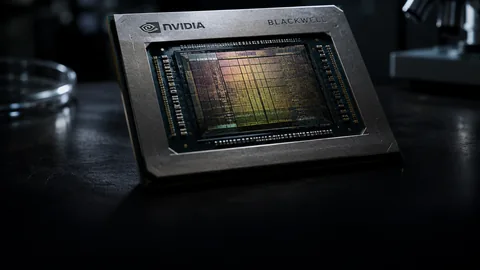
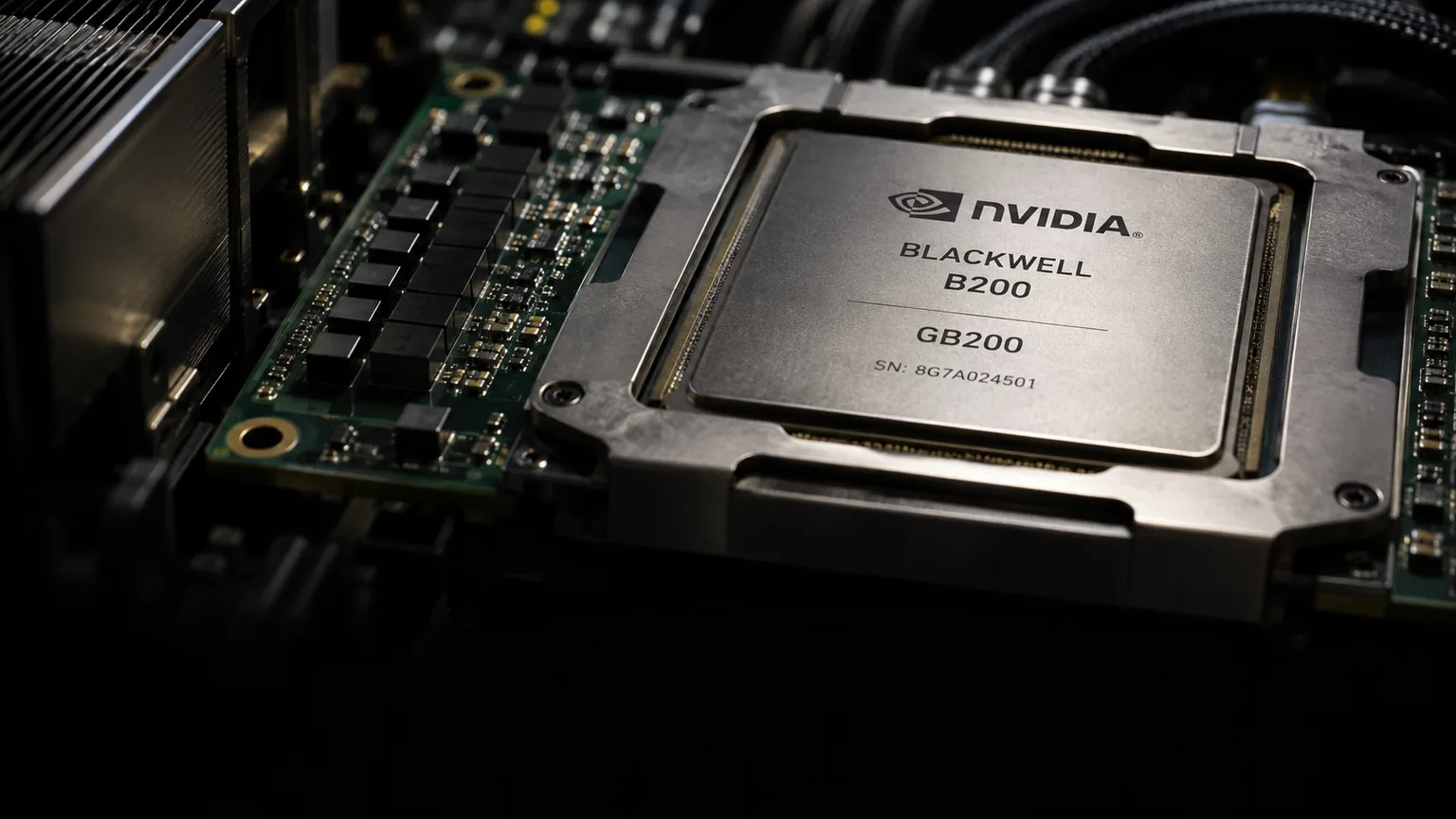
The report found that six frontier models from four Chinese AI developers contain numerical initialization patterns that match NVIDIA's Blackwell GPUs, which require a U.S. export license for sale to China.
The affected models are DeepSeek-V4-Flash, DeepSeek-V4-Pro, Kimi K3, Kimi K3.1-Pro from Moonshot AI, MiniMax-M3, and Ling-3.1-flash from Ant Group.
Each of these models showed weight initialization patterns matching either the B200 or B300 Blackwell chips with 148 streaming multiprocessors, or the GB200 or GB300 chips with 152 SMs.
The transition across all four labs is internally consistent, with no model from any lab showing a Hopper fingerprint after its first Blackwell-dated release.
Earlier models from the same labs all read as Hopper-generation — the previous NVIDIA architecture that was already restricted but whose chips Chinese companies had disclosed access to.
DeepSeek-V3 (December 2024), Kimi K2 and K2.5, MiniMax-M2.7, and Ling-3.0-flash all showed Hopper fingerprints.
The cutoff happened in the first half of 2026: DeepSeek flipped to Blackwell with V4 in April, Kimi switched with K3 in July, MiniMax with M3 in June, and Ant Group with Ling-3.1-flash in October.
How does the fingerprinting method work?
The method exploits how PyTorch initializes model weights using NVIDIA's cuRAND library, which implements the Philox pseudorandom number generation algorithm. When filling billions of weight parameters, the GPU divides the work among threads on each streaming multiprocessor.
A chip with more SMs distributes the same seed values into different weight positions, creating a unique fingerprint tied to the hardware configuration.
The company showed that for 24 models where developers had publicly disclosed the hardware, the method correctly identified the GPU generation in every case.
Even NVIDIA's own Nemotron-3 Ultra, whose technical report names the GB200, read as 152 SMs — the same count found in Kimi K3.
The statistical significance is decisive. The report reports that across roughly 6 trillion seed-and-layout combinations, the strongest chance match would reach about 8 sigma.
The evidence for each of the six models ranges from 49 to 1,385 sigma. Even the weakest individual test reached 20 sigma.
For DeepSeek-V4-Flash and Kimi K3, the team confirmed the match by running the same initialization on physical Blackwell hardware.
What scale of hardware access does this imply?
From each model's size and training data volume, the report estimates each training run needed between 1,500 and 3,500 Blackwell GPUs over one-and-a-half to three months. Across the five principal models, this totals roughly 12,000 GPUs.
At roughly $70,000 per GPU — the cost implied by a Wall Street Journal report on a ByteDance cluster in Malaysia — the hardware for the final training runs alone would cost more than half a billion dollars.
The estimates are rough and the ranges wide. The company cautions that they rely on assumptions about model flops utilization, training token counts, and run durations that the labs have not disclosed.
Total spending on export-controlled GPUs across all these labs is likely in the billions of dollars when factoring in experimentation, earlier runs, and serving infrastructure.
Not every Chinese AI lab has switched to Blackwell. Analysis of the newest models from Alibaba, Zhipu, Tencent, Xiaomi, and StepFun all read as Hopper-trained.
Meituan's LongCat-2.0, which the company says was trained entirely on AI ASIC superpods, showed no NVIDIA fingerprint at all.
What does this mean for U.S. export controls?
The report arrives amid escalating scrutiny of U.S. export controls on advanced AI hardware. Senator Michael Bennet pressed the Trump administration on November 11 over what he described as a failure to stop apparent AI tech diversion to China.
The New York Post reported that Commerce Department staffers were simultaneously working on a rule that would effectively undo a Biden-era restriction on AI chip exports, raising questions about the administration's commitment to enforcement.
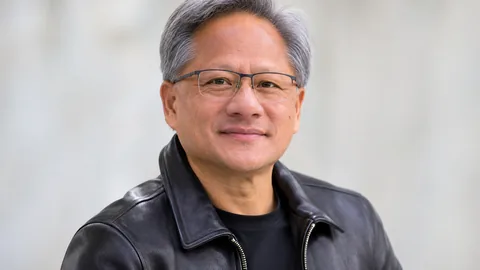
The publication also lands in the same news cycle as Jensen Huang's resignation as CEO of NVIDIA following allegations of an affair with an alleged Chinese spy.
Congress has launched an investigation into NVIDIA's China sales and dealings with the Trump administration. The confluence of events has put the Commerce Department's enforcement of chip export rules under intense scrutiny.
The company is explicit about what the findings do and do not prove.
The weight fingerprints show the models accessed Blackwell hardware during initialization, but they do not establish where the chips were located, how access was obtained, or whether export controls were actually violated.
Specially configured AMD hardware, also restricted from export to China, is the only alternative the company could identify, and they excluded it for DeepSeek-V4-Flash and consider it very unlikely for the other five.
What comes next?
The report has already circulated widely on Hacker News and among AI policy researchers. The reproducible, math-based nature of the evidence distinguishes it from earlier unsubstantiated allegations that relied on press reports and anonymous sourcing rather than verifiable technical data.
Any of the affected labs could attempt to refute the findings by releasing their training hardware specifications or demonstrating an alternative initialization procedure that produces identical patterns without Blackwell GPUs.
For U.S. policymakers, the findings provide technical evidence that existing export controls may be failing to prevent Chinese access to the most advanced AI training hardware.
The extent to which that access happened through foreign subsidiaries, cloud service providers in third countries, or other intermediaries will determine whether the next regulatory response targets hardware tracing, supply chain verification, or the intellectual property pipeline through which the trained models themselves return to the global open-weight ecosystem.
The timing is politically significant.
The report drops in a week when Congress is investigating NVIDIA's China dealings following Jensen Huang's resignation, Senator Bennet is publicly pressing the Commerce Department over inaction on chip diversion, and the administration is reportedly considering rolling back Biden-era export restrictions.
The forensic evidence may sharpen the debate by replacing inference with data that would need to be actively explained away by the affected parties.
Common questions
Does the report prove that Chinese labs violated U.S. export controls?
No. The forensic evidence shows the models were initialized on Blackwell hardware, but it does not establish where the chips were located, how access was obtained, or whether any laws were broken.
The hardware could have been accessed through foreign subsidiaries, cloud providers in third countries, or other arrangements that may or may not violate existing export regulations.
Can the findings be reproduced or verified independently?
Yes. The method uses publicly available model weights and the Philox initialization algorithm that is open source in PyTorch.
Any researcher with access to Blackwell hardware can verify the matches. Unemployment Labs confirmed the pattern for DeepSeek-V4-Flash and Kimi K3 by running the same initialization on physical Blackwell chips.
The statistical significance of 49 to 1,385 sigma makes chance explanations extremely unlikely.
Which Chinese AI labs are still on Hopper hardware according to this analysis?
Alibaba's Qwen models, Zhipu's GLM series, Tencent's models, Xiaomi, and StepFun all showed Hopper fingerprints in their newest releases. Meituan's LongCat-2.0, which the company says was trained on custom AI ASIC superpods, showed no NVIDIA fingerprint at all.
Sources & further reading
- Top Chinese Frontier AI Models Carry the Fingerprint of Export-Controlled NVIDIA Blackwell GPUs ↗
- Checkpoint Forensics: Blackwell Fingerprints in Six Chinese Open-Weight Models ↗
- Will DePue on X: Blackwell forensic evidence in Chinese models ↗
- Hacker News: Chinese frontier AI models carry Blackwell GPU fingerprint ↗
How this story was made
Written by Will DePue / Unemployment Labs with AI assistance and checked against the linked sources. Company performance claims are attributed to the company. Analysis reflects AiLookout’s interpretation; we have not independently tested the products discussed. The cover is an AI-generated editorial illustration, not a photograph or evidence of an actual event.
Our editorial standards