Announced 13 Nov 2026 · Sources checked
A fingerprint in the weights
Will DePue, a former OpenAI researcher now leading the nonprofit Unemployment Labs, found forensic evidence that China's leading AI labs trained their most powerful open-weight models on Nvidia Blackwell GPUs.
White House technology adviser Michael Kratsios said earlier this year that Moonshot had used export-banned Nvidia chips, citing U.S. intelligence sources.
The technique is deceptively simple. Model weights retain configuration fingerprints from the GPU architecture used during training.
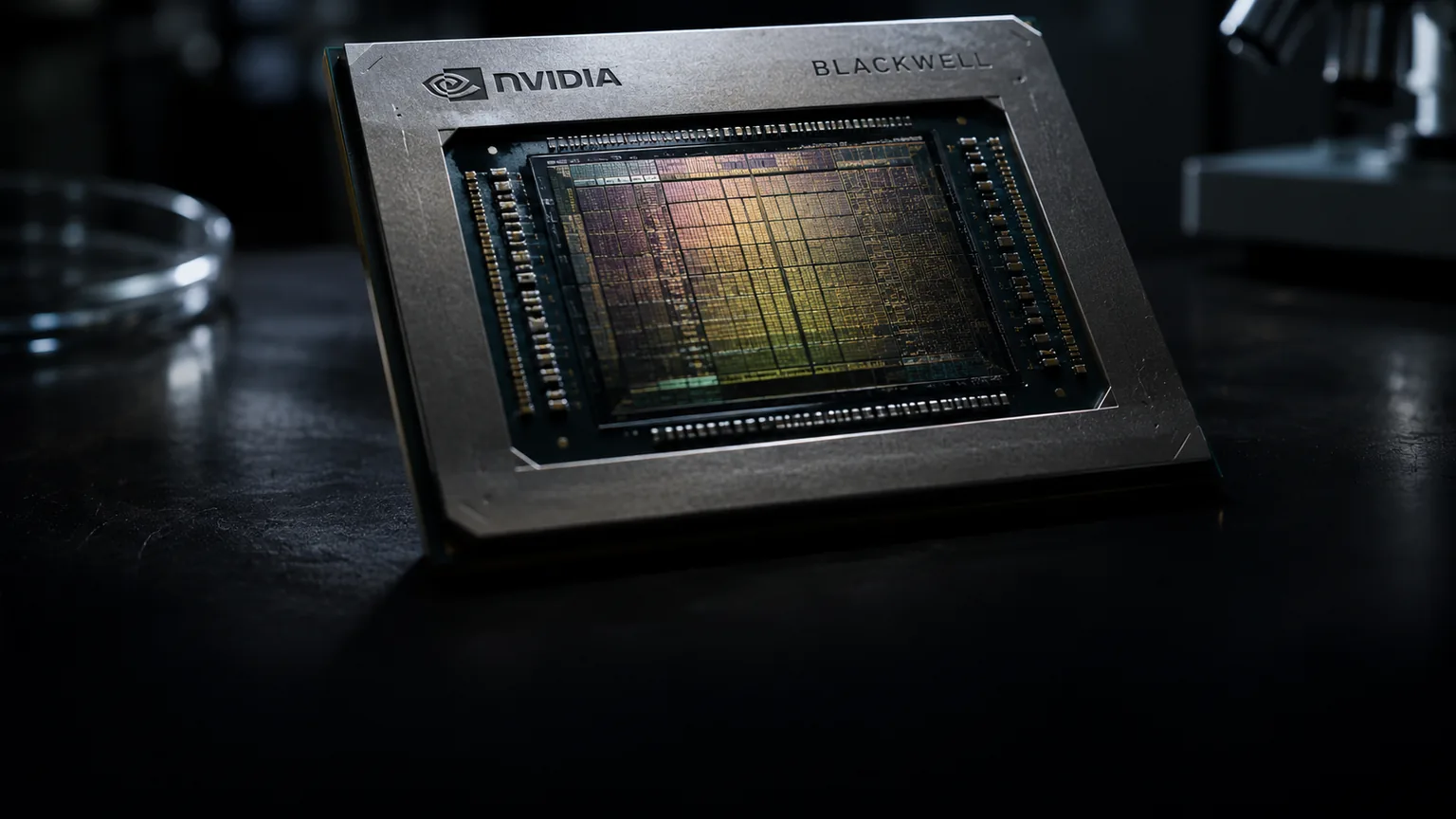
By analyzing the weights of open-weight releases from DeepSeek, Moonshot AI, MiniMax, and Ant Group, DePue found patterns consistent with Blackwell architecture.
The tightest-matching models include Moonshot's Kimi K3 releases and DeepSeek's V4 models, two of the most closely watched Chinese frontier model families.
An earlier investigation by Epoch AI, a nonprofit research organization, estimated that about two million advanced chips entered China in 2024 and 2025 through schemes designed to hide their final destination.
DePue's weight fingerprinting is the first direct technical evidence that those chips were actually used to train frontier models.
How banned chips reached Chinese labs
Blackwell GPUs are banned from export to China or Chinese-owned firms under U.S. export controls designed to protect America's lead in AI capabilities.
Nvidia chief executive Jensen Huang, who resigned this week after admitting to an affair with Alice Huang, long sought to open up that market.
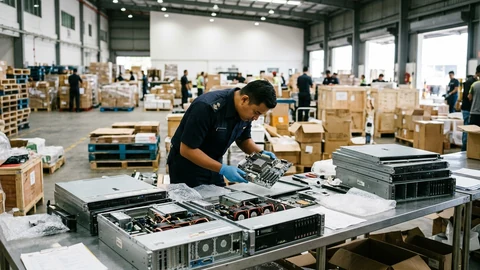
The most likely route runs through Malaysia. The company alleges that about two million advanced chips entered China in 2024 and 2025 through schemes designed to hide their final destination.
An estimated 275,000 Nvidia AI accelerators were imported to Malaysia in those two years, feeding a data center boom that serves Chinese firms who cannot access the chips directly.
"If we care about the U.S. tech edge, it doesn't make any sense to me that you would not allow Chinese companies to access chips in mainland China and Hong Kong and Macau, but then say, actually, if you just go over to Malaysia, you can do whatever you want," Sam Bresnick, a researcher at the Georgetown Center for Security and Emerging Technology, told TechCrunch this summer.
Megaspeed and the smuggling pipeline
Alice Huang, the woman at the center of the scandal that catalyzed Jensen Huang's departure, ran Megaspeed International, a company implicated in Nvidia chip smuggling. Megaspeed's subsidiary Speedmatrix has been investigated by both the U.S. and Singaporean governments.
Singapore barred Alice Huang from re-entering the country on Thursday.
Bloomberg reported Friday that a company with links to Alice Huang was involved in smuggling banned Nvidia chips to a data center in Shanghai.
The short-selling research firm Culper published a report in May arguing that Nvidia had a "China problem" because a significant share of its revenue was driven by Chinese demand through remote data centers or smuggling.
Culper detailed Megaspeed's relationship with Nvidia and alleged that Alice Huang's companies are backed by Chinese firms barred from accessing U.S. chips.
Singapore's decision to bar Alice Huang from re-entering the country came the same day that Bloomberg reported a company with links to her was involved in smuggling banned chips to a Shanghai data center.
The U.S. Department of Justice has reportedly opened a separate investigation into another alleged Nvidia chip smuggling scheme involving Alice Huang, according to the New York Post, adding to the existing probe into Megaspeed itself.
That does not necessarily mean export control laws were violated. The chips could have been in offshore data centers, which has become a popular way for Chinese firms to access compute.
But the ostensible goal of the export bans is to prevent exactly that: Chinese AI labs training on the most powerful chips.
Nvidia's legal exposure
Jensen Huang's personal and professional entanglements with Alice Huang create a much bigger problem for Nvidia if government investigators confirm that chip smuggling took place and that he was aware of it.
The company and its former CEO have both vouched for Megaspeed's data centers, saying Nvidia officials had visited them to confirm they were legitimate.
U.S. companies have limited obligations to track what their customers do with controlled goods like AI chips. However, direct involvement by the chief executive in the affairs of a customer under investigation for export violations shifts the legal landscape.
Nvidia's board parted ways with Jensen Huang this week, and the corporate liability question is likely a factor that went beyond the personal scandal.
Secretary of Commerce Howard Lutnick, who oversees the agencies that license chip exports, could reportedly lose his job after reports that his investigators failed to uncover suspicious chip buyers and were too cozy with Nvidia officials.
The U.S. government's own enforcement of the export regime is now under scrutiny alongside the companies it is supposed to regulate.
What comes next
China hawks have long called for stronger controls on who uses chips, not just who owns them or where they are installed. The weight fingerprinting evidence makes the current framework look porous.
Some 600,000 H200 chips are reportedly stockpiled in Hong Kong, awaiting shipment into China. Observers have no consensus on why they have not been cleared for import.
Graham Webster, a research scholar at Stanford focusing on U.S.-China technology policy, said he does not buy the idea that holding the chips back would drive domestic production, since demand is so large.
Other theories include preparation for a potential trade deal or concerns about surveillance technology embedded in the chips.
Culper's bet against Nvidia was not driven by expected U.S. government crackdowns. The short seller focused instead on the Chinese government's response to the bans, which was to recommit to its domestic chip industry.
If China succeeds, billions of dollars in Chinese demand for Nvidia chips could dry up.
For now, the weight fingerprinting adds a new layer to the story. The export controls were designed to slow China's AI progress.
Whether they are doing that, or merely routing the chips through Malaysia, is no longer a theoretical question.
The scale of the enforcement gap is hard to overstate. Nvidia generated tens of billions in revenue from Chinese demand, whether through approved H200 shipments, offshore data centers, or the smuggling pipeline.
With Jensen Huang gone and the board facing shareholder lawsuits over the China disclosures, the company may be forced to choose between cooperating with investigators and protecting its remaining access to the Chinese market.
Common questions
How did Will DePue identify which chips were used for training?
He analyzed the weights of open-weight models. The model weights retain configuration fingerprints from the GPU architecture used during training, revealing which chip type they ran on.
Are export controls on chips failing?
The controls ban shipping Blackwell GPUs to China or Chinese-owned firms, but they do not restrict Chinese companies from accessing the chips through offshore data centers in Malaysia or third-party intermediaries, creating a significant enforcement gap.
Sources & further reading
How this story was made
Written by Kristian Kostov with AI assistance and checked against the linked sources. Company performance claims are attributed to the company. Analysis reflects AiLookout’s interpretation; we have not independently tested the products discussed. The cover is an AI-generated editorial illustration, not a photograph or evidence of an actual event.
Our editorial standards