Announced 6 Nov 2026 · Sources checked
Congress demands briefing on Chinese spy recruitment
Three House Republican committee chairs have asked Nvidia CEO Jensen Huang to appear for a closed-door briefing about his relationship with a Megaspeed executive who the New York Times reports was recruited by China's intelligence service to spy on him.
The letter, dated November 5 and signed by House Foreign Affairs Committee Chairman Brian Mast, House Select Committee on China Chairman John Moolenaar, and House Permanent Select Committee on Intelligence Chairman Rick Crawford, asks Huang to be available for an in-person joint briefing on November 18, one day after Nvidia reports its third-quarter earnings.
"Recent reports raise significant national security concerns regarding the PRC's access to sensitive U.S. technology and information," the lawmakers wrote. "It is vital that Congress determines the extent to which U.S. national security has been placed at risk."
They requested information on Huang's interactions with Alice Huang, who the Times reported was recruited by China's Ministry of State Security, as well as Nvidia's security protocols against foreign adversary espionage. The briefing request from three committees with overlapping jurisdiction — foreign affairs, China strategy, and intelligence gathering — is an unusually coordinated demand that signals the seriousness with which Congress is treating the allegations.
What the New York Times reported
The New York Times reported on October 29 that US intelligence agencies had determined Alice Huang, a Chinese citizen known as Huang Le and a top executive at Singapore-based cloud company Megaspeed International, was a Chinese intelligence asset who had developed a close relationship with Jensen Huang.
The Times reported that surveillance of Alice Huang revealed she had cultivated a relationship with Jensen Huang, who is not a relative, with the aim of gleaning information about American AI chips and potentially influencing the company to push for its most advanced chips to be made available to China. Megaspeed is a customer of Nvidia and Alice Huang also has relationships with executives at the highest levels of the AI chip industry, including leaders at Gigabyte, according to the report.
President Trump was briefed about a year ago on the intelligence findings by his national security team, but according to people briefed on the surveillance who spoke to the Times, Trump chose not to do anything with the information. The Times also reported that Trump, who is friendly with Jensen Huang and has championed the US AI industry, did not take action on the intelligence.
China's foreign ministry denied the allegations, calling them a smear campaign, according to reporting from the BBC and other outlets. The Guardian, ABC News, and the Times of India also covered the story, with the BBC noting that "US intelligence officials believe that Alice Huang was gathering information for Beijing on the US chip-making giant."
Nvidia's response and the Megaspeed connection
Nvidia did not directly comment on the committee letter but reiterated through a spokesperson the statement it previously provided to the Times: that Jensen Huang's interactions with Alice Huang were no different from his meetings with other executive clients.
"Our regional cloud customers receive ordinary business information — not sensitive NVIDIA trade secrets — and zero information relevant to national security," the spokesperson said. "Meetings with customers are part of a CEO's job; Jensen talks with thousands of customer executives every year. We're confident that if the U.S. government believes that any person is a threat to American industry, it would let us know."
Alice Huang is a top executive at Megaspeed International, a Singapore-based data center company that has been under US scrutiny for allegedly steering advanced Nvidia AI chips to China in violation of export controls. The company has been investigated by US authorities over these concerns, the Times has reported. Megaspeed's business model depends on access to Nvidia's most powerful chips, which it then offers as cloud computing services — including to Chinese customers, creating a potential channel for restricted technology to reach China despite export controls.
Timeline of the investigation
The New York Times report described a multi-year intelligence operation. US intelligence agencies identified Alice Huang as a potential Chinese intelligence asset based on her background, business relationships, and travel patterns. She is a Chinese citizen who rose through the ranks of the technology industry to become a senior executive at Megaspeed, a company that positions itself as a regional cloud provider for AI workloads.
Surveillance of Alice Huang established that she had developed a close personal and professional relationship with Jensen Huang, meeting with him regularly and maintaining communication channels that intelligence officials deemed concerning. The Times reported that US intelligence believed she was using this access to gather information about Nvidia's product roadmaps, chip specifications, and export strategies.
President Trump was briefed on the intelligence by his national security team approximately one year ago. According to people briefed on the matter, Trump was made aware that a Chinese intelligence asset had developed a close relationship with the CEO of America's most valuable chip company. The president chose not to take action, the Times reported, and did not restrict Jensen Huang's interactions with Alice Huang or alert Nvidia to the intelligence finding.
Congressional oversight and escalation
The November 5 letter from the three committee chairs represents a significant escalation of congressional oversight into Nvidia's China exposure. The committees have overlapping but distinct jurisdiction: Foreign Affairs oversees international relations and export controls; the China Select Committee focuses specifically on the strategic competition with Beijing; and the Intelligence Committee oversees counterintelligence and national security threats.
By requesting a joint briefing, the chairs are signaling that they view the situation as crossing multiple domains — foreign intelligence, trade policy, and national security. The lawmakers invited the Nvidia CEO to appear for an in-person briefing on November 18, and Nvidia has not yet confirmed whether Huang will attend. CNBC reported that Nvidia did not directly respond when asked to comment on the letter.
The letter sought information not only on Huang's interactions with Alice Huang but also on Nvidia's security protocols against foreign adversary espionage, suggesting that lawmakers are concerned about broader vulnerabilities in how US chip companies manage relationships with Chinese-linked entities.
Broader implications for Nvidia and US-China tech competition
The congressional request comes at a precarious time for Nvidia. The company has been riding an unprecedented wave of AI-driven demand, with its market capitalization exceeding $3 trillion as it dominates the market for AI training and inference chips. But the company faces growing political and regulatory headwinds on multiple fronts.
The Biden administration imposed export controls restricting Nvidia's most advanced chips from China, controls that the Trump administration has largely maintained. The Democratic sweep in the 2026 midterm elections has raised expectations of further regulatory action, with multiple states having sued Nvidia over securities law violations related to AI chip sales.
The espionage allegations, if substantiated, could have severe consequences for Nvidia's business in China and potentially for the company's overall operations. Nvidia generates significant revenue from data center customers who serve Chinese end users through regional cloud providers like Megaspeed, and any finding that its CEO was compromised by a foreign intelligence asset could trigger sanctions, additional export controls, or even criminal investigations. Axios reported that House lawmakers are treating the matter with urgency, noting that the November 18 briefing is set for the day after Nvidia's earnings report.
Sources & further reading
How this story was made
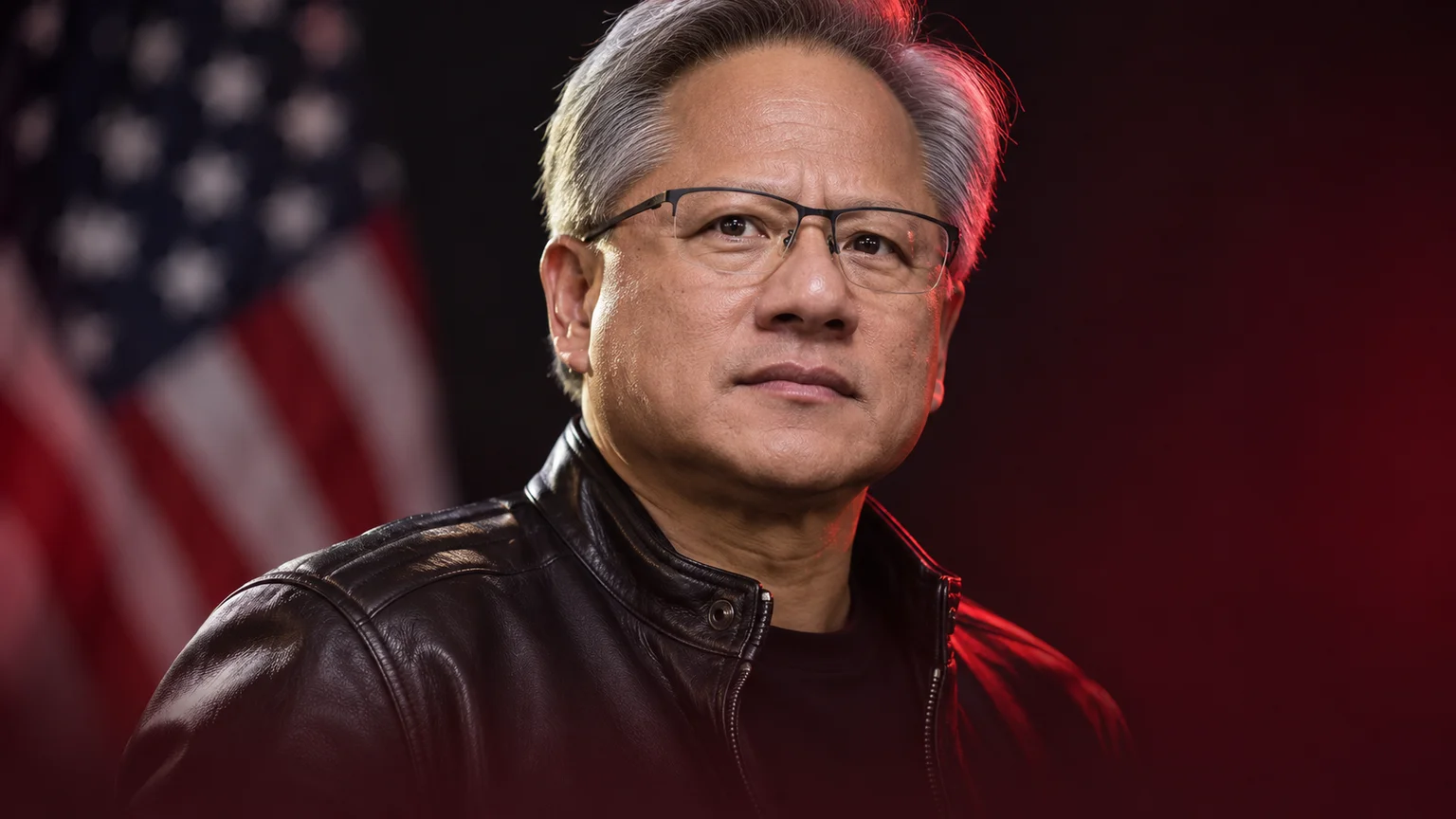
Written by Kristian Kostov with AI assistance and checked against the linked sources. Company performance claims are attributed to the company. Analysis reflects AiLookout’s interpretation; we have not independently tested the products discussed. The cover is an AI-generated editorial illustration, not a photograph or evidence of an actual event.
Our editorial standards