Announced 29 Oct 2026 · Sources checked
The round
Cohere announced on October 29 the initial close of its Series E funding round targeting up to CAD $7 billion — the largest financing round ever raised by a private Canadian company. Led by Schwarz Group, the German retail giant that owns the world's fourth-largest retailer, the round includes NVIDIA, Bell Ventures, Bullhound Capital, Inovia Capital, Prosperity7 Ventures (an arm of Saudi Aramco), and an unprecedented up-to-$1.6 billion direct equity investment from the Government of Canada.
The financing values Cohere at $35.7 billion, making it the most valuable privately held technology company in Canada. The government's equity investment is notable both for its size and for the strategic framing: Ottawa is buying a financial stake and a seat at the table of a company it has crowned a Canadian AI champion.
The sovereign AI strategy
Cohere CEO Aiden Gomez framed the round as a direct challenge to what he calls 'frontier fatalism' — the idea that only the United States and China can build frontier models, and the rest of the world should make peace with renting AI from whoever wins. Cohere's blog argues that the democratic world needs more countries and companies capable of contributing to frontier AI infrastructure.
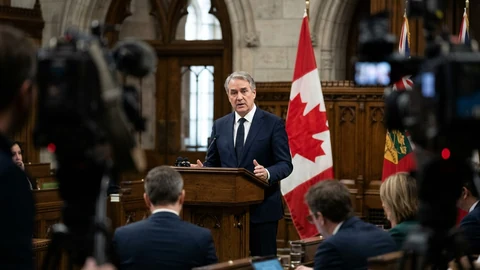
The Canadian government's direct stake — the first of its kind — is part of Prime Minister Mark Carney's strategy to build out and secure the country's AI sovereignty. AI Minister Evan Solomon called Cohere 'absolutely critical' to Canada's place in the AI world. The government's investment is structured in stages with regular reporting on hiring and infrastructure commitments.
The commitments
As part of the investment, Cohere has committed to create at least 1,000 new high-paying Canadian technical jobs by 2030, spend at least $1.7 billion on computing infrastructure in Canada by 2030, maintain its Canadian incorporation and headquarters, invest in research partnerships and create opportunities for students, and continue working with the Canadian AI Safety Institute on safe AI development.
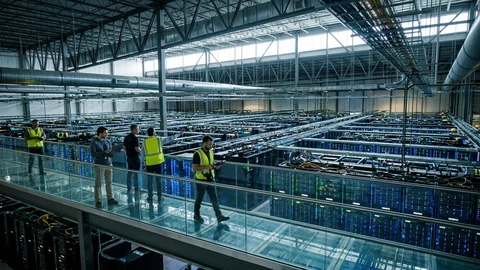
The infrastructure commitment is significant: it means Cohere will build or expand compute clusters in Canada, potentially including GPU-capacity for training and inference, reducing the reliance on US-based cloud providers for its own model development.
The broader picture
Cohere's funding arrives as the Canadian government frames AI sovereignty as a national security priority. Earlier this same week, Canada released its first national security strategy in 20+ years naming frontier AI as a top threat. The Cohere investment is the incentive side of the same strategy: if frontier AI is a threat, building domestic capability is the response.
The company is still much smaller than its US competitors — Anthropic and OpenAI generate billions in revenue — but this funding gives Cohere the capital to invest in compute, talent and distribution. Its annualized revenues were up 165% year-over-year, and its customer base has grown 20-fold to 300 clients in the past year.
Caveats
The round is targeting up to $7 billion but the initial close is the confirmed portion; the full amount has not yet been raised. The government's equity investment will be disbursed in stages based on meeting commitments. Cohere is not yet profitable and the AI industry's capital-intensive model means the funding timeline matters as much as the total.
AI Lookout covered Cohere's blog, the Globe and Mail and the PMO press release; it did not obtain the term sheet or raise documentation.
The competitive landscape
Cohere enters a market where OpenAI dominates the enterprise and developer segments and Anthropic's IPO looms. The company's differentiation is sovereignty: Cohere offers models that can be deployed entirely within a customer's infrastructure, with no data leaving the client's control, and the company frames this as essential for governments, defense and regulated industries.
The gap Cohere is trying to fill is real: more than 70 percent of open-model tokens served through OpenRouter came from Chinese models earlier this year — up from 3 percent 14 months earlier. Cohere argues that the democratic world cannot afford to rely exclusively on Chinese open models for sensitive infrastructure, and that building a credible third option is both an economic and security imperative.
What it means for AI policy
The Canadian government's equity investment is a new instrument in the AI policy toolkit. Rather than relying on grants, tax incentives or compute subsidies alone, Ottawa is taking a direct ownership stake in an AI company — giving it board-level influence and a financial return on the company's success.
This approach is likely to be studied by other governments seeking to build domestic AI champions without leaving their development entirely to market forces. The risk is that government ownership creates conflicts: Ottawa is simultaneously an investor in Cohere and a regulator of AI, which may complicate both roles if the company and regulator diverge on safety, competition or export policy.
Common questions
How much is Cohere raising?
Up to CAD $7 billion in Series E, with initial close including a $1.6B government equity stake.
Who is leading the round?
Schwarz Group, with NVIDIA, Bell Ventures and others participating. Government of Canada investing $1.6B.
What is the valuation?
$35.7 billion, making Cohere Canada's most valuable private technology company.
Sources & further reading
How this story was made
Written by Kristian Kostov with AI assistance and checked against the linked sources. Company performance claims are attributed to the company. Analysis reflects AiLookout’s interpretation; we have not independently tested the products discussed. The cover is an AI-generated editorial illustration, not a photograph or evidence of an actual event.
Our editorial standards