Announced 29 Oct 2026 · Sources checked
The opposing views
Nvidia CEO Jensen Huang and Tesla CEO Elon Musk offered sharply different assessments of the AI cloud infrastructure sector in late October. Huang told investors AI demand is 'off the charts' and that CoreWeave's 'financial strength is improving every day.' Musk responded on X that debt markets have 'almost entirely shut off access to money' for companies without substantial revenue outside AI data centers, predicting 'death and consolidation.'
The divergence reflects a structural tension: demand for AI compute is genuinely strong, but the companies building the capacity are funded largely by debt, and the debt market is turning against them.
The CoreWeave numbers
CoreWeave's bond yields hit roughly 15%. Its credit default swap spreads — the cost to insure its unsecured debt — reached approximately 1,100 basis points. Translation: it costs about $110,000 annually to insure $1 million of CoreWeave debt against default. Those are distressed-level numbers.
Huang tried to calm the market by saying CoreWeave's situation was improving. But bond yields at 15% mean borrowing costs are extremely high, and CDS spreads at 1,100 bps indicate the market sees significant default risk. Strong AI demand won't reassure debt investors focused on repayment risk.
The bigger picture
The neocloud model — borrow heavily, build GPU capacity, rent it out — works if everything goes according to plan. But construction delays, slower customer adoption, or falling GPU prices can cause the debt math to break. Unlike Amazon or Microsoft, which fund data centers with cash flows from profitable core businesses, neoclouds have no cushion.
As Musk put it: 'Strong demand alone may not protect AI cloud providers if financing becomes too expensive or dries up.' The bond market is already pricing in that risk. If CoreWeave or similar providers reduce capacity or raise prices, the AI companies depending on their GPU rental services face higher costs and supply constraints.
Caveats
Bond and CDS data reflect market risk perceptions at a point in time, not realized losses. Both CEOs have interests shaping their statements — Huang as Nvidia CEO, Musk as a competitor with his own AI infrastructure plans. The 'death and consolidation' prediction applies to smaller neoclouds; well-capitalized providers may be unaffected.
The neocloud landscape
CoreWeave is the most visible but not the only neocloud facing debt market pressure. Several other neoclouds that built GPU capacity on borrowed capital face similar dynamics: their borrowing costs have risen, their stock prices have fallen, and their ability to raise new debt has tightened. The sector grew rapidly during 2024-2026 as AI demand exploded and investors saw GPU rental as a sure bet.
The problem is that many neoclouds signed long-term lease agreements or purchased GPUs on credit during periods of low interest rates and high investor enthusiasm. As rates rose and enthusiasm cooled, the gap between committed capital expenditure and available financing widened. CoreWeave's 15% bond yields are the canary in the coal mine, not the only incident.
Impact on AI startups
AI startups that rely on neocloud GPU rental face a cascading risk: if CoreWeave or similar providers cut capacity or raise prices to cover their financing costs, the startups will either pay more or find fewer GPUs available. The big cloud providers (AWS, Azure, GCP) are fully booked and have been turning customers away. This creates a supply bottleneck at exactly the moment when AI startups need more compute to train and run models.
The alternative providers are emerging — SpaceX, for instance, is being used as a capacity backstop — but these are more expensive and less proven. For a startup on a fixed runway, a 15-30% increase in compute costs can be the difference between reaching the next funding round and running out of cash. The neocloud debt crisis is therefore not just a financial story; it is a story about who gets to build the next generation of AI.
What to watch
Watch whether CoreWeave announces a new financing round, a strategic partnership with a large cloud provider, or a restructuring. Any of these would signal how the company plans to address the bond market's concerns. Watch also whether other neoclouds follow with their own debt disclosures or CDS spread data.
Watch for the big cloud providers' Q4 capex announcements: if Amazon, Google and Microsoft announce expanded capacity, it could relieve some pressure on the neocloud sector by absorbing demand. And watch whether Huang's Nvidia adjusts its GPU allocation strategy to favor financially stable buyers over debt-funded neoclouds.
The broader market context
The neocloud debt crisis is happening against a backdrop of broader AI infrastructure spending that has reached unprecedented levels. Microsoft alone guided FY27 capex to $175 billion. Alphabet's Q3 capex hit $51.4 billion in a single quarter. The question investors are asking is whether all this spending will generate proportional returns. CoreWeave's troubles are a microcosm of that larger question.
Huang's optimism is understandable from Nvidia's perspective: every GPU shipped, whether to a neocloud or a hyperscaler, is revenue for Nvidia. Musk's pessimism reflects the view from the other side of the ledger: if the companies buying those GPUs can't service their debt, the demand pipeline may not be as durable as it looks. Both can be right, and the outcome will depend on how quickly the AI applications that justify all this compute actually arrive at scale.
Common questions
What is a neocloud?
A company that rents AI computing power, typically Nvidia GPUs, funded largely through debt rather than cash from existing businesses.
What is CoreWeave's situation?
Its bond yields reached 15%, and insuring $1M of its debt costs $110K/year — distressed-level numbers.
What do Huang and Musk disagree on?
Huang says AI demand solves the financing problem; Musk says strong demand won't save companies that can't access debt markets.
Sources & further reading
How this story was made
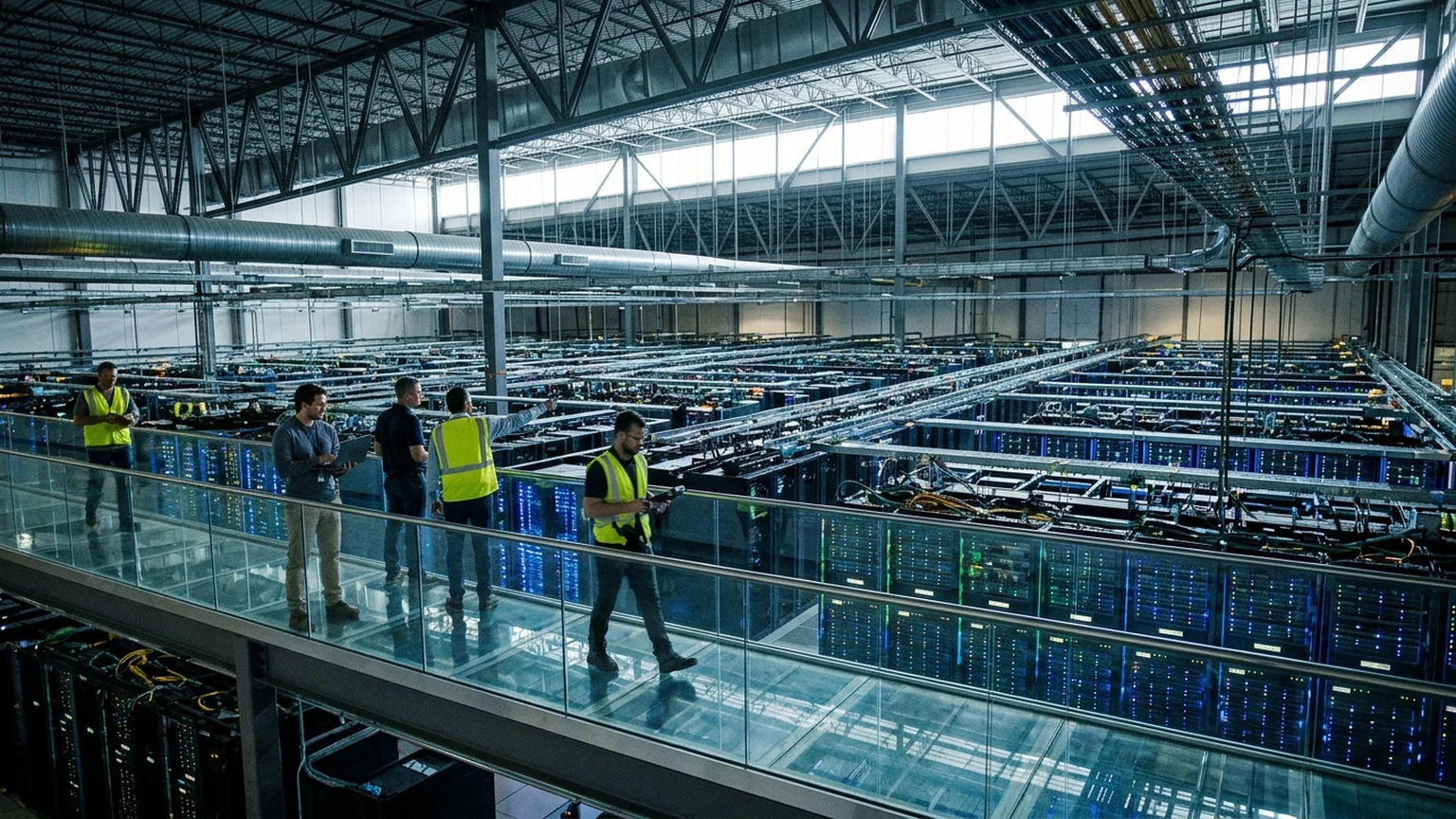
Written by Kristian Kostov with AI assistance and checked against the linked sources. Company performance claims are attributed to the company. Analysis reflects AiLookout’s interpretation; we have not independently tested the products discussed. The cover is an AI-generated editorial illustration, not a photograph or evidence of an actual event.
Our editorial standards