Announced 6 Nov 2026 · Sources checked
A 2023 deal that ran its course
Microsoft and Oracle signed the AI cloud-capacity agreement in 2023, when GPU shortages made it difficult for any single company to secure enough Nvidia chips to meet demand. Under the deal, Microsoft rented AI compute capacity from Oracle's cloud infrastructure, helping both companies serve their respective customers while Microsoft ramped up its own in-house Azure AI capacity.
The agreement involved Oracle data centers equipped with older-generation Nvidia chips. Over time, those chips fell behind the performance curve, and Microsoft has reportedly decided not to renew the contract when it expires.
According to a report from Bloomberg on November 6, the decision is part of a wider reassessment of billions of dollars in cloud partnerships. Microsoft has been rapidly expanding its own AI data center footprint and has invested heavily in newer Nvidia hardware as well as its own in-house Trainium chips through its partnership with Amazon.Read our earlier story on AI stocks after the midterms for broader context on the market dynamics affecting cloud infrastructure.
Market reaction and wider context
Oracle shares fell nearly 3% on the news, according to Bloomberg and ShiftDelete.net. The decline reflects the importance of the Microsoft arrangement to Oracle's cloud business at a time when the company is competing with Amazon Web Services, Microsoft Azure, and Google Cloud for enterprise AI workloads.
The Microsoft-Oracle wind-down comes at a turbulent time for AI infrastructure stocks. This week, investors wiped .5 trillion off the Nasdaq as the Democratic midterm sweep raised fears of stricter regulation and slower data center expansion. Data center and cloud stocks have been under pressure as investors question whether the massive capital expenditure on AI infrastructure will translate into proportional revenue growth.
Microsoft itself has been one of the most aggressive spenders on AI infrastructure. The company has invested billions in data center expansion, partnered with OpenAI on exclusive cloud capacity, and integrated AI across its product lineup including Microsoft 365 Copilot and Azure AI services. But even for Microsoft, there are limits to how much capacity makes financial sense to rent from third parties when in-house infrastructure can do the job at lower cost.
A broader reassessment of cloud partnerships
The Oracle deal is one of several cloud partnerships Microsoft is reassessing, according to the Bloomberg report. The company has been increasingly vertically integrating its AI infrastructure, from chip design to data center construction to model deployment. Microsoft has also deepened its ties with OpenAI, where it holds a significant stake and provides exclusive cloud capacity through Azure.
For Oracle, losing Microsoft as a capacity tenant is a setback. The company has been positioning its cloud as a viable alternative for AI workloads, offering Nvidia GPU clusters and its own cloud networking technology. Oracle CEO Safra Catz has emphasized the company's AI infrastructure business in recent earnings calls, and the Microsoft deal was seen as a validation of Oracle's cloud capabilities.
The development also raises questions about the broader market for AI capacity rental. During the GPU shortage of 2023 and 2024, companies scrambled to secure compute wherever they could, leading to a flurry of cross-cloud rental agreements. As GPU supply has improved and companies bring their own data centers online, some of those arrangements are being unwound.
The shift has implications for Nvidia as well. The older chips in Oracle's data centers were likely from Nvidia's A100 or early H100 generation, which are now considered entry-level for AI training. Newer GPUs like Nvidia's H200 and B200 offer dramatically better performance, and Microsoft's own investments have focused on those newer architectures. The Oracle wind-down is a concrete sign that the GPU upgrade cycle is accelerating in cloud data centers, with older capacity losing its value faster than expected.
Sources & further reading
How this story was made
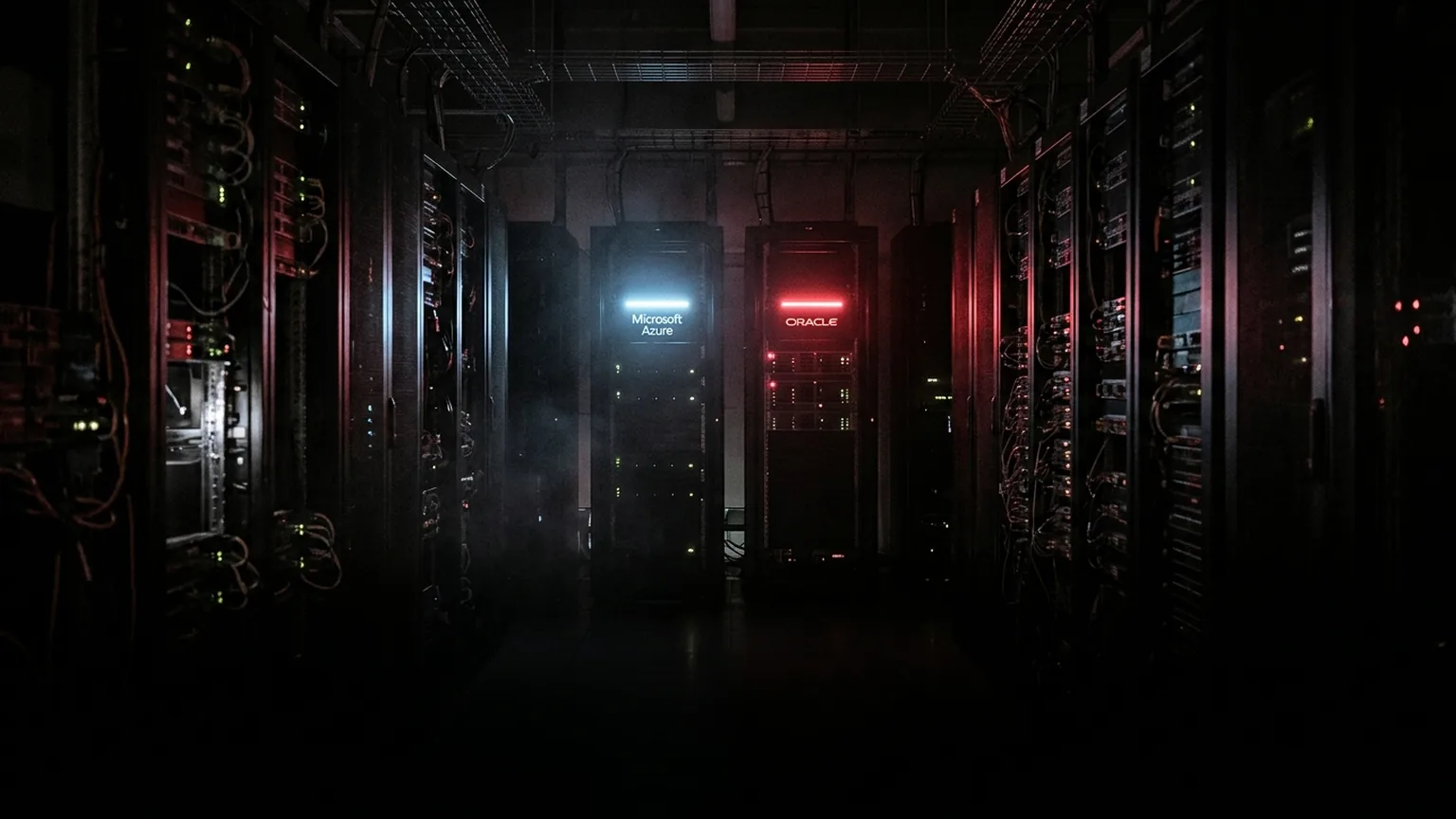
Written by Kristian Kostov with AI assistance and checked against the linked sources. Company performance claims are attributed to the company. Analysis reflects AiLookout’s interpretation; we have not independently tested the products discussed. The cover is an AI-generated editorial illustration, not a photograph or evidence of an actual event.
Our editorial standards