Announced 7 Nov 2026 · Sources checked
What the NYT investigation found
The New York Times investigation, published Saturday and covered by The Verge and The Jerusalem Post, found that the US Commerce Department approved roughly two dozen Chinese companies to purchase or handle Nvidia's H200 processors. Among them was New Matrix, a company incorporated just 17 months ago.
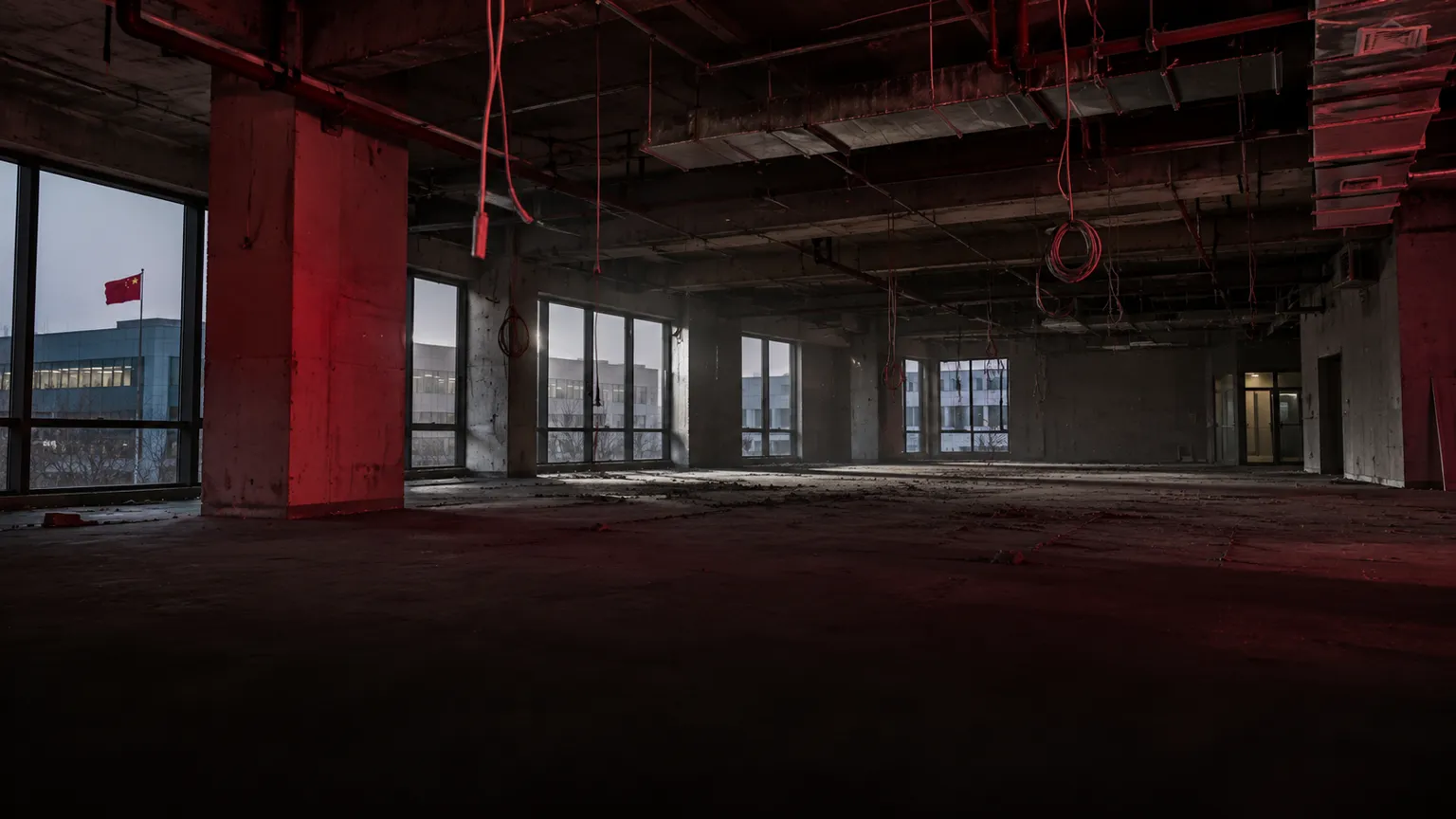
Reporters who visited New Matrix's listed address in an industrial park outside Beijing found the space vacant. The building's directory did not list the company, and neither the receptionist nor the property manager had any record of it. One reporter described the office as "a hollow gray shell with wires dangling from the ceiling where lights should be."
Chinese corporate records reviewed by the Times showed that New Matrix's owners have ties to Wise Road, a Chinese private equity fund blacklisted by the US government in 2024 for allegedly helping China acquire strategically sensitive semiconductor companies. Two analysts who reviewed the records told the Times they believed New Matrix could be a front for companies associated with the blacklisted fund.
More approved companies with military links
New Matrix was not the only approved company raising red flags. The Times identified several others whose ownership structures or business activities connected them to Chinese military contractors.
One was Maginfra, another relatively new company whose registered office also appeared empty when reporters visited. Analysts cited by the newspaper believed Maginfra is associated with Inspur, a Chinese technology company previously placed on the US entity list for its involvement with China's military. Corporate records indicated that Maginfra and Inspur share personnel and patents, and both have government ownership.
Another approved company, Zhejiang Yindun Cloud Technology, has connections to Range Intelligent Computing Technology Group, a major Chinese cloud provider that has supplied services to military contractors. Range provides cloud computing for a satellite program operated by the defense bureau of Hebei province. Shanghai Jiatang, also approved, originates from state-owned Datang Telecom, which supplies technology to the Chinese military and is controlled by the China Academy of Telecommunications Technology, a state-owned enterprise involved in military cryptography.
The Times did not establish that the approved processors had been diverted to China's military, but the corporate connections raised concerns about whether existing licensing safeguards adequately prevent restricted entities from gaining access to advanced US technology.
How H200 chips reached Chinese companies
The Trump administration authorized Nvidia to sell H200 processors to China in December 2025, reversing elements of earlier Biden-era restrictions. Under the arrangement, chips manufactured in Taiwan must pass through the United States before reaching China, allowing Washington to collect a 25 percent tariff on their value. Nvidia also agreed to give the government a 15 percent cut of all sales, according to The Verge.
The Commerce Department approved approximately two dozen Chinese companies to purchase or handle the processors, including major corporations such as Baidu, BYD, and Tesla Shanghai. Reuters previously reported that Alibaba, Tencent, ByteDance, and ZTE Kangxun Telecom also received authorization. The companies were permitted to purchase tens of thousands of H200 chips each, although they had not yet reached those limits, according to people familiar with the approvals.
According to Nvidia's financial disclosures cited by the Times, shipments of H200 chips to China-based customers accounted for less than 1 percent of the company's data center revenue in the quarter ending in July. Nvidia also said in August that its revenue projections for the current quarter did not assume any data center sales to China.
Criticism of Commerce Department and Nvidia oversight
Liza Tobin, who served as China director on the White House National Security Council during the first Trump and Biden administrations, questioned whether US authorities and Nvidia were conducting sufficient checks. "I have a ton of concerns that neither the Commerce Department nor Nvidia is doing the due diligence needed to ensure that the licensing terms are being followed," she told the Times.
The Commerce Department's Bureau of Industry and Security defended its licensing process, saying it carefully reviews applications for national security risks. The agency said it imposed $324 million in penalties for export violations in 2025 and hired more than 90 enforcement officers in 2026 to strengthen oversight.
The findings come amid a continuing debate in Washington over AI chip exports. A bipartisan group of US senators proposed legislation in December 2025 that would prevent the administration from relaxing restrictions on advanced AI chip exports to China for two and a half years. For context, see our earlier coverage of Nvidia's China business cap for data center clients and the Treasury's proposed ban on US investment in super-intelligence work in China.
What Nvidia says
John Rizzo, an Nvidia spokesman, told the Times that "it makes no sense for the Chinese military to depend on American technology" and that the company sells "the first, best and most of our technology in America." He said Beijing had restricted H200 imports to promote domestic semiconductor manufacturers, while Nvidia's limited exports continued to support American employment and manufacturing.
The Times also reported that Nvidia CEO Jensen Huang had maintained a close relationship with a woman whom US intelligence agencies assessed to be a Chinese intelligence asset. The company she worked for, Megaspeed, operated Southeast Asian data centers serving Chinese clients and was under investigation for suspected chip smuggling. Nvidia said Huang's interactions were "not unusual" and that the company does not share classified information with customers.
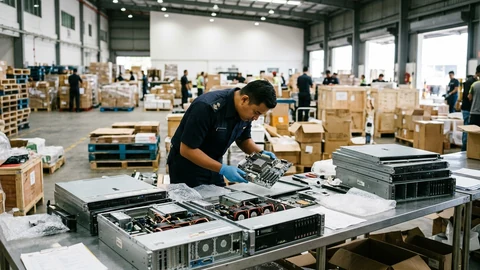
The broader picture reflects the challenge of policing advanced technology exports when Chinese entities use shell companies, empty offices, and overseas intermediaries to acquire restricted hardware. Earlier this year, Malaysian customs seized $12.1 million in AI chips hidden inside servers bound for China, and researchers found 32 Nvidia B300 GPUs on China-linked networks through open monitoring endpoints.
Common questions
What are Nvidia H200 chips?
The H200 is Nvidia's second-most-advanced AI chip, designed for training and running large language models. It was the highest-performance Nvidia chip permitted for sale to China after export restrictions tightened under the Biden administration.
Did any chips actually reach the Chinese military?
The NYT investigation did not establish that the approved processors had been diverted to China's military. However, the corporate connections between approved companies and military-linked entities raised concerns about whether existing safeguards are adequate.
Sources & further reading
How this story was made
Written by Kristian Kostov with AI assistance and checked against the linked sources. Company performance claims are attributed to the company. Analysis reflects AiLookout’s interpretation; we have not independently tested the products discussed. The cover is an AI-generated editorial illustration, not a photograph or evidence of an actual event.
Our editorial standards