Sources checked
What happens if Jensen Huang ignores Congress?
House China Committee Chairman John Moolenaar said on Fox Business on Wednesday that Nvidia CEO Jensen Huang has until the end of the day to agree to a closed-door briefing. If he refuses, the committees will subpoena him.
"He needs to answer these questions," Moolenaar said, as TechCrunch reported. House Foreign Affairs Committee Chairman Brian Mast confirmed his committee is already preparing a subpoena to compel testimony.
The request, first sent on November 4 by three House Republican committee chairs, asked Huang to appear for a joint briefing on November 18.
The topic: his relationship with Alice Huang, a Megaspeed executive whom American intelligence agencies believe was recruited by China's Ministry of State Security.
The New York Times previously reported that Chinese intelligence targeted Huang to gather information on US chip technology and potentially influence Nvidia's business decisions in favor of Chinese interests.
Nvidia did not comment on whether Huang will attend the briefing. The company's silence over the past week has only intensified scrutiny, with lawmakers growing impatient for answers.
Why this matters for Nvidia
The subpoena threat lands at a precarious moment for the world's most valuable chip company. Nvidia's stock fell 5.47% on Tuesday and 4% on Monday, a two-day loss of roughly 9.5% that erased tens of billions in market capitalization.
The selloff came despite no new negative company announcements, reflecting deep investor uncertainty about how the scandal will play out and what it means for Nvidia's leadership.
The broader fallout extends beyond the stock price. Nvidia's board has hired Wachtell, Lipton, Rosen & Katz, a premier law firm known for handling corporate crises, to conduct an internal investigation.
The board said in a Sunday statement that it has "no reason to believe that either national security or NVIDIA secrets were compromised."
But the investigation will probe three distinct lines of inquiry, according to corporate governance experts: whether the law was broken, whether Huang violated internal company policies, and whether he misled the board about the nature and timing of his relationship.
Wired reported earlier this week that Huang hired a crisis PR firm known for handling sex scandals a full year ago, raising questions about how long he has known his relationship might become public.
The timeline is critical: if Huang retained the PR firm before learning Alice Huang was a suspected intelligence asset, it suggests he was managing a personal scandal.
If he hired them after learning about the espionage connection, the calculation changes entirely.
What the experts say
Corporate governance professors describe the situation as unprecedented in modern business history. Ann Lipton of the University of Colorado told TechCrunch there is no real precedent for a CEO caught in a suspected honeypot operation.
"There have actually been affair cases and sexual harassment cases," she said, but none that also involve potential national security compromises at a company deemed critical to US economic and military advantage.
Todd Henderson of the University of Chicago stressed that much depends on what Huang knew and when he knew it.
"If I were a board member and the CEO of a company with very sensitive technology was in that situation, I would be furious if they didn't tell me," he said.
The distinction between a personal affair and a national security breach is the central question the board investigation and the congressional probe both aim to answer.
Lipton described the board's decision to hire independent outside counsel as perhaps the most "standard" aspect of the whole affair, but she noted that internal investigations are only "exactly as thorough" as the directors running them want them to be.
Henderson added that Washington law firms conducting such investigations "know who pays their bills," a dynamic that could influence the scope and findings.
A pattern of behavior?
The Nvidia case may not be an isolated incident. Nate Singer, CEO of Heron Intelligence, a corporate due diligence firm, told TechCrunch he has seen at least three similar cases in the semiconductor industry involving executives and suspected state-sponsored actors.
"There are a lot of senior people in the industry that know this is happening, and are effectively condoning it," Singer said.
In a widely circulated LinkedIn post, Singer detailed one case where a CEO's wife made an unexpected board room appearance, "screaming about her husband and another company exec flying around in the corporate jet with a couple young ladies (who also turned out to be state-sponsored actors)."
It is an alarming story, but Singer says there are more like it that have stayed under the radar.
Semiconductor companies are prime targets for Chinese economic espionage.
There have been dozens of federal prosecutions over the past two decades, including a 2017 case where four executives at a Bay Area semiconductor equipment manufacturer were charged with stealing trade secrets for use at a competing company in China.
The technology in question related to high-volume manufacturing of semiconductor wafers for electronics.
How we got here
The scandal broke in late October when the New York Times reported that US intelligence officials believed Alice Huang, a senior executive at the Chinese chip startup Megaspeed, had been recruited by China's Ministry of State Security.
Her relationship with Jensen Huang, who shares her surname but is not related by blood, was described by US officials as romantic, creating a channel through which Chinese intelligence could potentially access Nvidia's closely guarded chip designs and strategic plans.
The revelation triggered a cascade of investigations. The Nvidia board opened its internal inquiry.
The FBI launched its own probe. Three House committees sent a joint letter on November 4 requesting a closed-door briefing.
And now, with Huang yet to respond, the threat of a subpoena marks the most serious escalation yet.
Corporate governance experts say the web of parallel investigations is itself unusual. Having Congress, the FBI, and the board all investigating the same set of facts creates coordination challenges and raises the stakes for every party involved.
What comes next
If Huang accepts the briefing, the closed-door session would take place on November 18. If he refuses or fails to respond by the end of Wednesday, the subpoena process begins immediately.
A subpoena would force Huang to testify under oath, raising the legal stakes considerably.
The outcome could have significant implications for Nvidia's leadership and its relationship with Washington, particularly as Democrats prepare to take control of both chambers of Congress in January.
A Democratic-led Congress is expected to take a harder line on data center regulation and chip export controls, making Nvidia's standing on Capitol Hill more important than ever.
The company's next quarterly earnings call is scheduled for November 17, one day before the proposed briefing.
That puts Huang in an impossible position: he will have to address investors about Nvidia's financial performance while the question of whether he will testify before Congress hangs unresolved.
Analysts expect the earnings call to be dominated by questions about the scandal rather than Nvidia's business results.
Common questions
Why is Congress investigating Jensen Huang?
Three House committee chairs are investigating Huang's relationship with Megaspeed executive Alice Huang, whom US intelligence agencies believe was recruited by China's Ministry of State Security to spy on him and gather intelligence on American AI chip technology.
What happens if Huang refuses the briefing?
House Foreign Affairs Chairman Mast said his committee is preparing a subpoena. If Huang does not respond by the end of Wednesday, he will likely be compelled to testify.
Did Nvidia's board find any evidence of compromised secrets?
The board said in a Sunday statement that it has "no reason to believe that either national security or NVIDIA secrets were compromised." The internal investigation is ongoing.
Sources & further reading
- TechCrunch - Congress to call Jensen Huang in to answer for alleged Chinese spy affair ↗
- TechCrunch - Nvidia's crisis has corporate governance experts reaching for the popcorn ↗
- TechCrunch - Is Jensen Huang's bad behavior more commonplace than it seems? ↗
- CNBC - Jensen Huang's affair with alleged Chinese spy further complicates ↗
How this story was made
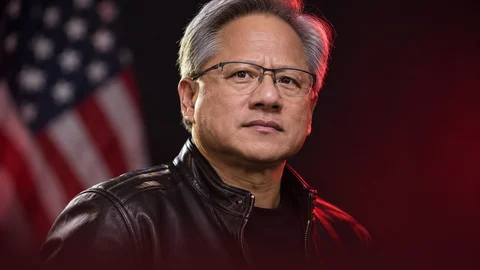
Written by Kristian Kostov with AI assistance and checked against the linked sources. Company performance claims are attributed to the company. Analysis reflects AiLookout’s interpretation; we have not independently tested the products discussed. The cover is an AI-generated editorial illustration, not a photograph or evidence of an actual event.
Our editorial standards