Announced 30 Oct 2026 · Sources checked
What happened with Project Suncatcher?
Google's Project Suncatcher prototype satellite, built in partnership with Planet, launched on October 1 aboard SpaceX's Transporter-18 rideshare mission. After several weeks of commissioning, including powering up the host and TPU trays and running early machine learning tests, the team reached what it called the Hello World milestone on October 30.
During a ground-station pass, engineers uplinked a prompt to the onboard Gemma 4 open model, asking it to generate a haiku about being in space. As the satellite passed over Svalbard, Norway, it downlinked the response:
"Blue marble below / Data streams in silent grace / Starlight feeds my core."
Following the haiku, the team tested space-themed limericks and telemetry prompts reporting the technical status of the payload systems.
What hardware is on the satellite?
The satellite carries four Google Tensor Processing Units and can generate up to one kilowatt of electricity. However, it can operate only one TPU at a time for roughly 20 minutes because of the power demands. The TPUs are data-center-class chips, not the lower-power variants typically used in edge devices.
The prototype is designed to test how TPUs handle the physical stress of spaceflight and the radiation and thermal extremes of orbit. Google published a peer-reviewed paper in Joule detailing the research behind the mission.
Google's research into on-device and edge AI has been expanding, though Project Suncatcher represents a fundamentally different approach: bringing data-center hardware to space rather than bringing space-grade hardware to AI.
Why put AI compute in orbit?
The long-term vision is to explore whether space could one day host scalable machine learning infrastructure. Google describes it as a moonshot research project, not a near-term commercial service. The advantages could include global coverage for earth observation AI, lower latency for satellite-based applications, and access to abundant solar power.
Whether such a network could ever compete economically with terrestrial data centers remains an open question. It depends on launch costs, reliable inter-satellite networking, and the development of hardware that can survive the space environment long enough to be useful.
Google's broader AI research includes work on autonomous wet-lab agents and earth observation, both of which could benefit from orbital compute.
What comes next?
Google plans to continue testing TPU performance under thermal stress and radiation exposure in orbit. The next major milestone is a pair of interconnected satellites in 2027, which would test optical links between spacecraft.
The company ultimately envisions an 81-satellite constellation, though this depends on the results of the ongoing experiments and the economics of orbital computing. Google says the immediate objective is not commercial-scale orbital computing but research into thermal behavior, radiation effects, and communications.
The Suncatcher milestone comes amid growing interest in space-based AI. Other projects, including LEO Cloud and various defense-related orbital computing initiatives, are exploring similar concepts.
Common questions
How many TPUs are on the satellite and can they all run at once?
The satellite carries four Google TPUs but can operate only one at a time for roughly 20 minutes due to power constraints. The satellite generates up to one kilowatt of electricity.
When will Google have a full orbital AI data center?
The immediate objective is research, not commercial service. Google aims to launch two more powerful interconnected satellites in 2027, with an eventual 81-satellite constellation as a long-term vision that depends on multiple technical and economic factors.
What model did the satellite run?
The satellite ran Gemma 4, Google's open model, on the onboard TPU. The first prompt was a haiku request about being in space.
Sources & further reading
How this story was made
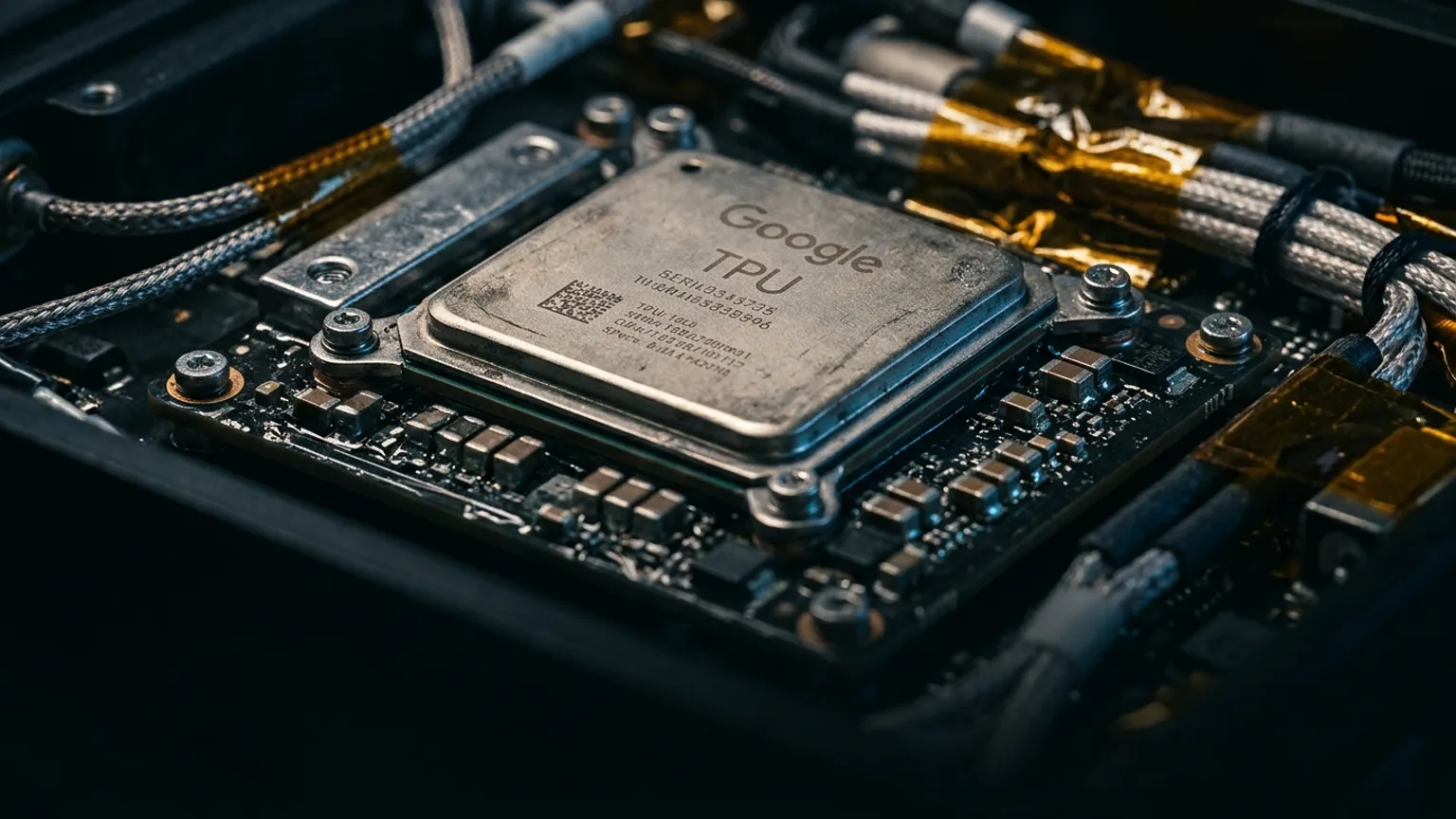
Written by Kristian Kostov with AI assistance and checked against the linked sources. Company performance claims are attributed to the company. Analysis reflects AiLookout’s interpretation; we have not independently tested the products discussed. The cover is an AI-generated editorial illustration, not a photograph or evidence of an actual event.
Our editorial standards