Announced 15 Nov 2026 · Sources checked
Why is Congress tightening AI chip export rules now?
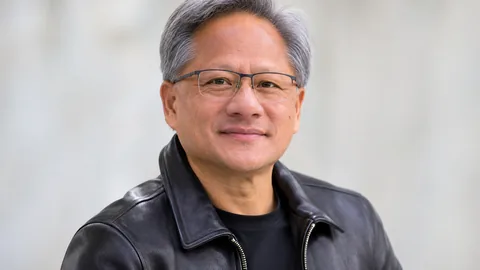
The scandal that forced Jensen Huang out of Nvidia has given Congress the political cover it needed to move on chip export controls.
Lawmakers from both parties say the revelations about Huangs relationship with a woman suspected of being a Chinese spy have made it impossible to maintain the status quo on selling advanced AI processors to China.
The Verge reports that both Democrats and Republicans have voiced support for various measures that would tighten rules and have demanded that Huang and other Nvidia leaders testify before Congress.
Senate Minority Leader Chuck Schumer has already said that Huang and the Trump administration need to answer to Congress.
Senate Banking Committee Chairman Tim Scott has also sent letters to both Huang and Commerce Secretary Howard Lutnick calling on them to publicly testify.
House Speaker Mike Johnson told Reuters there is a "growing consensus in Congress on limiting chip exports to China" and said he personally supports efforts to restrict Chinas access to powerful AI chips from companies like Nvidia.
The shift marks a stark reversal from earlier this year, when Huang himself was lobbying Washington to loosen export rules and had direct access to President Trump.
What bills are on the table?
The Remote Access Security Act, first introduced in the House in April 2025 but stalled in the Senate, is receiving renewed interest.
While Johnson acknowledged that specific bill might not become law in its current form, the broader push for export restrictions has gained significant momentum across both chambers.
Elizabeth Warren, the top Democrat on the Senate Banking Committee, said Huangs resignation did not absolve him of responsibility. She urged Lutnick to explain why export control loopholes remain open, according to the BBC.
Senator John Moolenaar, who chairs the House Select Committee on China, said companies should never jeopardise national security by giving Chinese firms access to their most advanced chips.
Lawmakers are exploring several legislative vehicles for the new restrictions, including attaching export control measures to the National Defense Authorization Act, which must pass by the end of the year.
The White House has not taken an official position on any specific bill, but the bipartisan alignment makes a veto difficult to sustain.
How did the Commerce Department handle Megaspeed?
The scandal has exposed deep divisions inside the Trump administration over how aggressively to enforce existing chip export rules.
At the center of the controversy is Commerce Secretary Howard Lutnick, whose department was responsible for controlling exports of sensitive American technology.
A highly classified memo was shared with Lutnick about concerns surrounding Alice Huang, the former Megaspeed executive, and her companys role in potentially diverting chips to China.
According to the BBC, Lutnick resisted taking action against Megaspeed, a decision now under scrutiny from both parties.
Treasury Secretary Scott Bessent was among those who reportedly questioned why Megaspeed had not been placed on the Commerce Departments entity list.
On Friday, Bessent pointed the finger at Commerce, telling CNBC that several government agencies were in favour of putting Megaspeed on the entity list for months but Commerce has the pen.
There have also been questions about why an investigation into the Singapore-based company was stopped after Nvidia intervened.
The New York Times reported that Nvidias general counsel contacted Commerce Department investigators probing suspected chip smuggling by Megaspeed, invoking a senior Trump appointee.
The department then froze its investigation and handed the case to the Justice Department, which has not disclosed the status of its review.
How are Asian governments responding?
Huangs departure has sent ripples across Asia, where Nvidias influence runs deep. TechCrunch reports that responses vary by country.
South Koreas Science Ministry said Nvidia reaffirmed its plan to supply 260,000 advanced GPUs to the country and to continue joint AI projects.
The government also held an emergency AI strategy council meeting to assess the impact of Huangs departure on the countrys semiconductor industry, which supplies memory chips for Nvidias processors through Samsung Electronics and SK Hynix.
In Singapore, authorities seized the passport of Alice Huang in June 2025 as part of an investigation into possible false declarations regarding server purchases.
The investigation examined whether servers shipped from Singapore to Malaysia were later sent to other countries without proper declaration.
In February 2026, police found insufficient evidence to establish that she had committed offenses related to the suspected false declarations, but she was issued a warning and barred from re-entering Singapore.
Taiwans Economy Minister Kung Ming-shin said Huangs departure was unlikely to significantly change the growth of the global AI industry. Japans Industry Ministry said it would closely monitor Nvidia following the resignation.
China rejected the spy allegations as groundless while raising concerns over more than $3 billion in Chinese AI computing projects that rely on Nvidias restricted processors.
What comes next for chip export policy?
The political pressure on the Trump administration is building from both parties. Huangs team has told Republican lawmakers he plans to cooperate with their request to testify behind closed doors, according to the BBC.
Lutnick has also been summoned to appear before the Senate Banking Committee in December.
The White House has expressed confidence in Lutnick, with Trump telling the New York Post that Lutnick is "the most transformative commerce secretary in modern history."
But reports suggest officials are weighing whether Lutnick should be forced out as the political fallout spreads.
The scandal has destroyed the credibility of the biggest corporate lobbyist against US export controls on China, as Arthur Kroeber of Gavekal Dragonomics told CNBC. There is now a good chance that Congress will tighten up those rules.
The question is how far they will go and how fast the legislation can move through a divided Congress where the export control debate now has a face and a name attached to it.
Common questions
What specific bills is Congress considering to tighten AI chip export rules?
The Remote Access Security Act, introduced in April 2025 but stalled in the Senate, is receiving renewed interest. Lawmakers are also considering broader measures within the National Defense Authorization Act to tighten export controls on advanced AI chips.
Why is Commerce Secretary Howard Lutnick facing scrutiny?
Lutnick resisted taking action against Megaspeed, a Singapore-based company suspected of diverting Nvidia chips to China, despite receiving a classified memo about the concerns. Treasury Secretary Bessent and other officials reportedly pushed for tougher action.
How has the Nvidia scandal affected Asian chip supply chains?
South Korea secured a commitment for 260,000 Nvidia GPUs. Singapore continues investigating server shipments.
Taiwan and Japan are monitoring the situation but expect limited disruption to AI industry growth.
Sources & further reading
How this story was made
Written by Kristian Kostov with AI assistance and checked against the linked sources. Company performance claims are attributed to the company. Analysis reflects AiLookout’s interpretation; we have not independently tested the products discussed. The cover is an AI-generated editorial illustration, not a photograph or evidence of an actual event.
Our editorial standards