White House lists $2.4B in Genesis Mission industry compute credits
An 8 October fact sheet lists tools and compute credits from 11 firms, not cash grants. NVIDIA’s own note is $1B over five years. DOE separately named $159M in Phase II awards.
AI industry news on companies, policy, and products. Each claim stays attributed to the company or the reporter.

An 8 October fact sheet lists tools and compute credits from 11 firms, not cash grants. NVIDIA’s own note is $1B over five years. DOE separately named $159M in Phase II awards.

The 8 October umbrella pairs CIDP for operational technology with the already-reported OSS Scanner. Founding partners are named. Anthropic’s two-year “defense advantage” line is a forecast.

The 8 October note consolidates deceptive-campaign rules, renames the elections section, and adds physical-action and model-cruelty language. Most changes are described as clarifications of existing enforcement.

Tomek Korbak, Jasmine Wang and Mikita Balesni posted a Thursday letter to OpenAI’s safety committees. A Friday note from research leaders, reported by the BBC and CNBC, says an investigation found a significant breach of trust and that the firings were not about speaking out.

A 7 October CrowdStrike Intelligence note says an unattributed, likely Chinese-speaking and financially motivated actor used the open-source ARTEX pentest agent with DeepSeek v4.1-flash, GLM-5.3, Grok 4.6 and Claude Code from late September into early October. Identity details in a résumé prompt are not confirmed. Autumn-27 later said the project is closed source.

A 7 October Security Blog post by Irene Ang and Helen Jiang introduces Android on-device AI seal (AISeal) as a hardware-isolated protected VM on AVF and pKVM. Personal-context storage is the current milestone. Inference, agents, NPU assignment and a confidential-cloud path are listed as later work. MediaTek’s Dimensity 9600 Pro page names AISeal; Qualcomm support is Google’s sentence.

Arena’s 8 October post announces a $200 million Series B at a $3.1 billion valuation, co-led by Lightspeed and Khosla, and a preview Alignment Index over 27 models. The company says it has exceeded $100 million in annualized revenue. The live leaderboard we opened on 9 October listed 72,509 sessions dated 30 September, not the “90,000” figure in the research post.

An 8 October safety report says OpenAI banned ChatGPT accounts used in a Russia-origin “Dark Clark” operation and an Iran-origin “Bogus Bylines” campaign. Category 5 is OpenAI’s own Breakout Scale. The company also says both teams inflated their impact.

The UK regulator published its foundation-model supervision report on 8 October. It names policy and assessment changes, pauses xAI, and asks for agent evidence until 20 November.

Meta’s 7 October post describes a new language model for “signposting” ads, plus destination checks, AI ad sweeps and a red-teaming agent. The January–June 2026 action counts are Meta’s. We did not test the systems or review ads.

Pavan Davuluri’s 7 October Windows post opens Surface Laptop Ultra and partner RTX Spark preorders, ships MXC on Windows 11, and previews local–cloud routing. NVIDIA’s same-day blog confirms the San Francisco event. We did not attend or test a machine.

Biohub’s 7 October post adds multi-year DOE money, NIH dataset coordination, and $300 million from DeepMind, Isomorphic Labs and Meta. The $1.8 billion total mixes new pledges with Biohub’s April commitment and prior NIH investment.

After more than 4,000 prompts, the Institute says parental alerts and Study Hours do not match OpenAI’s August promises. OpenAI told Axios the tests misread how the safeguards work.

The 6 October response sets ten delivery priorities. Airlock applications stay open; 31 October is the cut-off for the first review wave.

The 30 September post attributes a core cluster to individuals linked to Kimi’s developer. It does not show that extracted reasoning trained a Kimi model.

The expanded partnership connects OpenAI models with Atlassian’s permission-aware Teamwork Graph, while deeper Jira agent workflows remain future work.

Defense, red-team, and specialized access now separate lower-blocking Claude cyber capabilities by use case, verification, and risk.

OpenAI plans a US test later this month and expands campaign measurement.

The partnership targets enterprise search, research, and task automation.

The bank’s expanded Anthropic partnership offers a concrete view of how enterprise AI moves from pilots to everyday work.

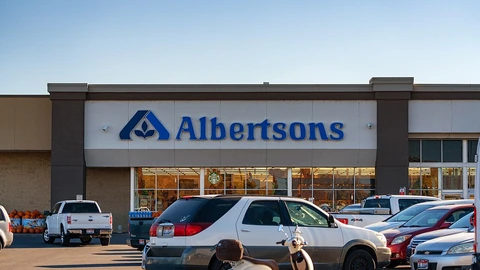
Albertsons’ expanded OpenAI partnership connects conversational shopping with a familiar retail boundary: the final cart and purchase.

Claude Frontier Academy aims to train 10,000 engineers by the end of 2027, with hands-on enterprise deployment at its core.

Evaluate an AI vendor against your actual workflow, data requirements, and failure tolerance.

Total cost of ownership includes operating the complete AI system.

Provider lock-in can come from APIs, prompt formats, tools, stored state, and operational dependencies.

Open weights means the parameters are available under some terms. The Open Source AI Definition 1.0 also asks for training-data information and the code used to train and run the system.

A model’s license governs permitted use under its stated terms.

Data-retention rules can differ by product, model, feature, and account configuration.

Data residency concerns where data is stored or processed under a service’s specific commitments.

Hosted models have versions and lifecycle policies.

AI governance establishes responsibility for decisions, monitoring, and response.

An AI announcement combines reported facts, vendor measurements, and positioning.

AI depends on electricity for data-centre computing.

AI accelerators perform specialized computations used in model training and inference.

Self-hosted AI means your team runs the model. Managed hosting means a provider runs it and you send requests. Neither choice grades the model’s answers.

A useful AI training program teaches people to frame tasks, inspect sources, protect data, and verify outcomes.