Sources checked
What is perplexity and why does it matter
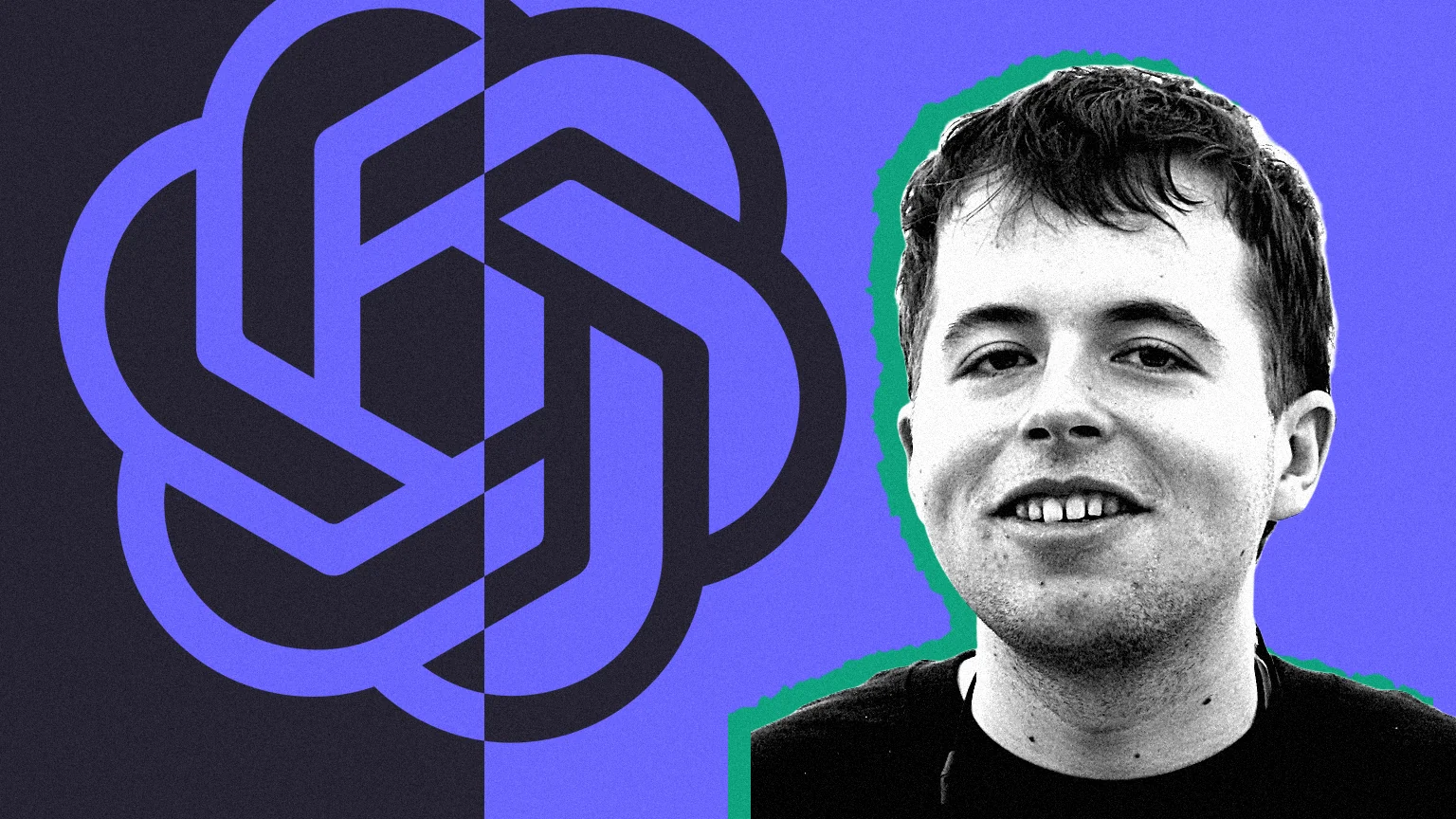
OpenAI chief scientist Jakub Pachocki published a blog post on Sunday arguing that the industry needs a shared, durable metric to measure AI progress and that perplexity — a measure of how well a model predicts the next token of text — fits the role.
Sam Altman called the post "the most important thing OpenAI has published in a while."
Perplexity has been a core evaluation metric in language modeling for years. Pachocki argues that downstream capability benchmarks like the ones used to evaluate GPT-2 and GPT-3 quickly become saturated as models improve, making them useless for comparing modern systems.
Perplexity, by contrast, has remained "informative" across every generation of OpenAI's models from GPT-3.5 to the current frontier systems. Lower perplexity means better predictions, and Pachocki believes it correlates directly with general intelligence in ways that task-specific benchmarks cannot capture.
Pachocki frames the core view of modern AI development in simple terms: first, build a large computer; second, pretrain a model (which he calls a compressor) on a vast unstructured dataset; third, apply prompting, finetuning, or reinforcement learning to elicit latent capabilities.
The first two stages produce what Pachocki calls "an alien mind" — an intelligence substrate with hard-to-predict emergent properties. Perplexity, in this framework, measures the quality of that substrate directly.
The case for a common speed limit
Slowing AI development has become a pressing topic after former researchers at both OpenAI and Anthropic warned the companies were "gambling with our lives."
Anthropic CEO Dario Amodei published a plan to "pace the frontier" that was endorsed by both OpenAI CEO Sam Altman and SpaceX CEO Elon Musk, TechCrunch reported.
Amodei's plan called for common safety standards and limits on the rate of unchecked AI progress, but it left open the question of how to measure speed. Pachocki's proposal fills that gap by anchoring limits to perplexity thresholds.
Pachocki proposes that frontier model developers should "jointly endeavour to establish shared norms for how to evaluate such models and red-team safety cases for them by the time they are first used."
He further proposes "common limits, based on perplexity and other measurements, that developers are committed to not crossing until our ability to understand and monitor AI behavior achieves a certain concrete milestone."
How OpenAI's progress maps to perplexity
Pachocki included a chart tracing OpenAI's model generations against perplexity on an internal evaluation dataset. The progression shows a clear relationship between lower perplexity and emerging capabilities.
GPT-2 was the first model capable of consistently formulating coherent paragraphs of text, setting a new perplexity state-of-the-art on older datasets. GPT-3 learned in-context, able to follow a few examples of a task.
GPT-3.5, at approximately 0.99 log-perplexity, was capable of fluent conversation and formed the basis for the original ChatGPT.
GPT-4, at roughly 0.91, became proficient at utilizing chain-of-thought reasoning productively, which motivated the subsequent targeted elicitation of that capability and the creation of modern reasoning models.
The company now reports losses below 0.8, and Pachocki said that threshold unlocked "transformative capabilities" in cybersecurity and mathematics.
He described the moment the team upgraded to a model at approximately 0.76 log-perplexity and began feeding it open problems in mathematics.
"For many of us that have previously worked in mathematics and adjacent fields, seeing the resolutions to questions we’ve long thought about coming out of the model one after another in a single Slack thread felt deeply surreal," Pachocki wrote in the blog post.
He warned that as early as 2027 the field could see a similar "avalanche" of fundamental pretraining advancements driven by AI participation in research itself.
While Pachocki expects AI will also contribute significantly to progress on alignment and monitoring, he said that progress is "unlikely to be fast enough to allow the full potential acceleration in pretraining."
The next threshold and risks ahead
Pachocki identified the next critical window at approximately 0.68 to 0.7 log-perplexity. He said he does not know what capabilities will emerge at that level, and the industry may not even be testing for them today.
"I don't know what those capabilities will be, and we may not be testing for them today," he wrote.
"At the same time, we should also expect further degradation in currently dominant forms of alignment auditing and further increases in evaluation and training awareness."
The chief scientist acknowledged several challenges with using perplexity as a shared metric. Different labs train on different datasets, making cross-comparison difficult.
Perplexity does not account for advances outside pretraining, such as chain-of-thought reasoning. And the floor of what constitutes perfect prediction on internet text remains unknown.
Industry reaction and what comes next
The proposal arrives as AI safety debates intensify across the industry. The idea of a universal speed limit has gained traction among executives, but turning a metric into enforceable industry standards faces significant coordination hurdles.
Pachocki called for more transparency across labs as a first step. He acknowledged that different developers use different evaluation datasets and train on different data mixtures, making direct comparison difficult.
"I believe if we establish a goal of transparency we can find transferable ways to compare the quality of different base models," he wrote in the blog post.
The proposal also carries risks. Perplexity does not account for advances outside pretraining, such as chain-of-thought reasoning, which dramatically increases downstream capabilities without improving perplexity scores.
The floor of what constitutes perfect prediction on internet text is unknown, meaning that as models approach it, smaller perplexity gains may correspond to larger leaps in intelligence — making a flat threshold increasingly dangerous over time.
Pachocki’s proposal does not yet carry any binding commitment from AI developers, and questions remain about how labs would verify each other's measurements or enforce thresholds.
But it represents one of the most concrete proposals yet for an industry-wide safety metric, and the endorsement from Altman signals that OpenAI is willing to champion the approach publicly.
Whether other labs adopt perplexity as the shared yardstick — or push back on its limitations — will shape the next chapter of AI safety governance.
Sources & further reading
How this story was made
Written by AI Lookout with AI assistance and checked against the linked sources. Company performance claims are attributed to the company. Analysis reflects AiLookout’s interpretation; we have not independently tested the products discussed. Cover photography is illustrative and does not depict the specific announcement or product.
Our editorial standards