Announced 13 Nov 2026 · Sources checked
How does ChatGPT Wallet work?
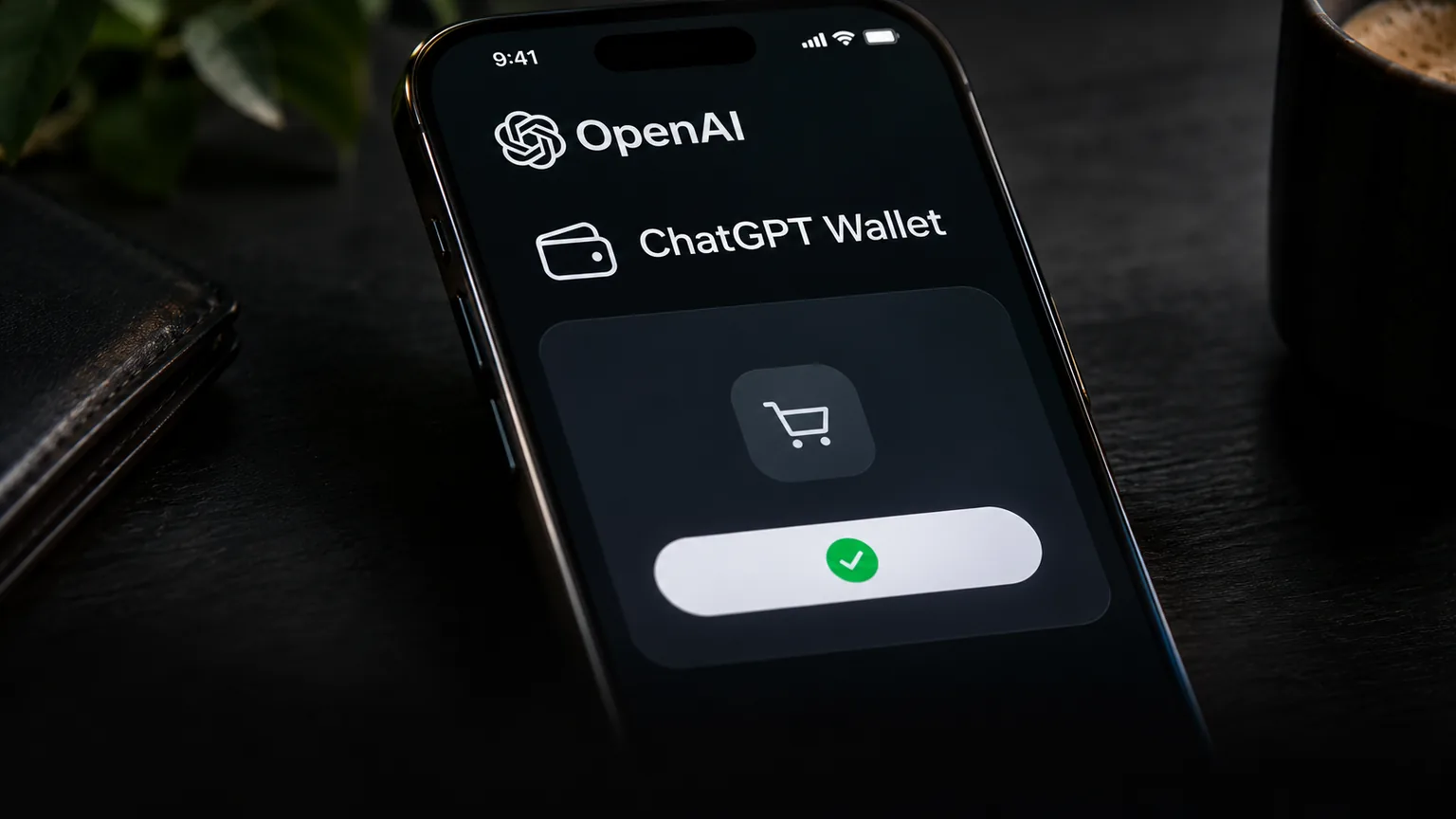
OpenAI launched ChatGPT Wallet on November 13, a payment feature that lets its dots agents shop and check out on behalf of users. The wallet stores a user's payment card once and issues a transaction-specific payment token for each purchase.
Neither the dot nor the merchant ever sees the real card number, security code or expiry date.
The setup is straightforward. ChatGPT Pro subscribers add a U.S.-issued Visa, Mastercard or American Express card to the Wallet in a one-time step.
From there, they can ask their dot to help with a purchase. The dot finds items, presents them to the user, and when the user agrees, sends the order through to the merchant.
Each purchase requires explicit approval via a security check like Face ID or a fingerprint scan, which creates a transaction record.
The merchant receives only what it needs to fulfill the order, like the shipping address and contact information, from the dot. Users do not have to re-enter their payment information on every purchase.
The wallet was built in partnership with the three major U.S. card networks. OpenAI says customers keep their existing credit card rewards and standard protections, including the ability to dispute transactions.
The company described the feature as setting a new bar for secure payments by agents in its announcement.
OpenAI also published technical guidance for merchants and payment providers on how to configure their systems to accept wallet payments and avoid flagging legitimate agent purchases as fraud.
Who can use ChatGPT Wallet?
The wallet rolls out to a limited number of U.S. ChatGPT Pro subscribers aged 18 and older.
Pro costs $200 a month and gives users priority access to OpenAI's frontier models and higher usage caps than the Plus and free tiers.
Limited rollout means OpenAI is testing the feature with a small subset of its subscriber base before expanding. The company has not shared a timeline for broader availability, pricing for lower tiers, or support outside the United States.
The feature requires a U.S.-issued Visa, Mastercard or American Express card, which rules out international cardholders for now. The terms of service and privacy policies covering the ChatGPT Wallet took effect on November 12, a day before the public announcement.
How does this compare with other AI shopping agents?
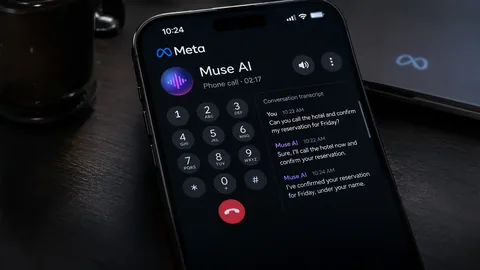
ChatGPT Wallet enters a market where AI-assisted shopping is already showing real traction. Meta's Muse, which surpassed 10 million users in late October, reports that shopping is its most popular activity.
More than a quarter of Muse users who shop through the agent spend upwards of $200 per purchase on average, according to TechCrunch. Meta CEO Mark Zuckerberg said the average purchase size was surprising even to industry insiders.
Other platforms are more cautious. DoorDash and Uber reported low numbers of AI-placed orders, suggesting the market for agent commerce is still young.
Uber disclosed that AI agents booked just four rides in the third quarter of 2026 across its platform, a number that underscores how far agent commerce has to go before it becomes mainstream.
The key difference with ChatGPT Wallet is that OpenAI controls both the agent and the payment rail in one product.
The company says it worked with Amex, Mastercard and Visa to build payment tokens scoped to single transactions, a design meant to address one of the biggest concerns about letting bots spend money on users' behalf.
Walmart, meanwhile, is preparing to let customers shop with their own AI agents under preset spending limits, and Shopify has opened its entire product catalog to any AI agent through an MCP connector.
JPMorgan has taken the opposite approach, blocking outside AI agents from moving money in Chase accounts over liability concerns.
What about fraud and security?
OpenAI acknowledges that risk systems on merchant sites may still flag legitimate agent purchases, leading to declines or cancellations.
The company advises businesses to update their fraud detection models to recognize payment tokens from ChatGPT Wallet and to work with their payments and risk providers to support agent purchases.
The payment token model is the key security layer. Each token substitutes for the real card number, security code and expiry date and is usable only for one transaction with one merchant.
Even if a dot or a merchant were compromised, the token would not reveal the underlying card details. Users approve every purchase individually through a biometric check.
There is no blanket spending authority, and each transaction creates a record the user can review.
American Express recently published a framework for stopping AI agents from making unauthorized purchases, signaling that payment networks are actively working on the fraud implications of agent commerce. OpenAI built the wallet in coordination with these frameworks from the start.
What does this mean for agent commerce?
ChatGPT Wallet is OpenAI's bid to make its agents useful beyond chat, coding and content generation.
Shopping is one of the few activities where users have repeatedly shown they trust AI agents to act, and the wallet closes the loop between finding a product and paying for it without handing over card details to third parties.
The move puts OpenAI in direct competition with Meta's Muse on agent shopping. It also positions the company ahead of rivals like Perplexity and Anthropic, which have not yet added native payments to their agents.
Perplexity has launched Teammates agents for work tasks, and Anthropic opened Claude Duet as a proactive consumer agent, but neither has a built-in checkout flow.
Whether users actually want agents to spend their money for them remains an open question. The early numbers from Uber and DoorDash suggest most people are simply not ready.
But the Muse data suggests the opposite: when the experience works, users do buy in volume.
OpenAI now has the infrastructure to find out which camp is right, and the wallet gives it a direct path from a user asking for something to the company collecting real transaction data on how agent commerce actually behaves in the wild at scale.
Common questions
Does ChatGPT Wallet share my card details with the AI agent or the merchant?
No. The wallet generates a payment token that substitutes for your card number, security code and expiry. The dot and the merchant never see your actual card details.
Can I get a refund for a purchase my ChatGPT dot made?
Yes. OpenAI says standard card protections apply, including the ability to dispute transactions, and you keep whatever rewards your card earns.
How much does ChatGPT Wallet cost?
The wallet itself is free for ChatGPT Pro subscribers, who pay $200 a month. There is no per-transaction fee from OpenAI.
Sources & further reading
- OpenAI - Introducing ChatGPT Wallet ↗
- TechCrunch - ChatGPT's new Wallet lets AI agents shop and check out for you ↗
- CNBC - OpenAI launches ChatGPT Wallet, allowing its 'dots' AI agents to make purchases for users ↗
- TNW - OpenAI's ChatGPT Wallet lets its AI agents shop without seeing your card details ↗
How this story was made
Written by Kristian Kostov with AI assistance and checked against the linked sources. Company performance claims are attributed to the company. Analysis reflects AiLookout’s interpretation; we have not independently tested the products discussed. The cover is an AI-generated editorial illustration, not a photograph or evidence of an actual event.
Our editorial standards