Announced 2 Nov 2026 · Sources checked
What ADNOC signed
ADNOC announced a multi-year partnership with OpenAI and G42 at ADIPEC 2026 in Abu Dhabi, describing it as the first time an energy company has deployed OpenAI's advanced AI platform to connect and coordinate frontier AI agents across complex business operations. The signing was witnessed by Sheikh Khaled bin Mohamed bin Zayed Al Nahyan, Crown Prince of Abu Dhabi and Chairman of the Abu Dhabi Executive Council.
The framing matters more than the label. ADNOC already runs AI: its ENERGYai stack builds deep intelligence about reservoirs, assets and operations. What the new agreement adds is OpenAI Frontier as a connective layer above that, so operational, capital and commercial decisions can be made together rather than in sequence. In ADNOC's own words, Frontier connects intelligence across the business.
Who said what
Sultan Ahmed Al Jaber, UAE Minister of Industry and Advanced Technology and ADNOC Managing Director and Group CEO, said: “The next frontier of AI is not simply doing things faster. It is making possible what was previously beyond reach.” He described the partnership as connecting intelligence across the entire business and said ADNOC is demonstrating how frontier AI can move beyond individual applications.
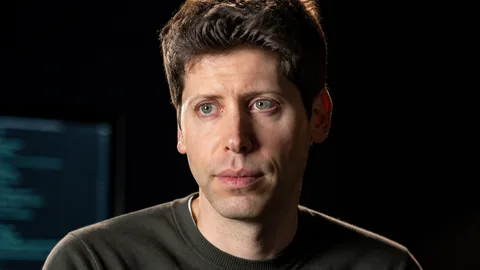
Sam Altman, CEO of OpenAI, said: “More capable AI can help us tackle some of the world’s hardest problems — particularly around energy.” He framed the deal as combining frontier AI, sovereign infrastructure and industry expertise, and said it would help ADNOC move faster and make better decisions across the energy value chain.
Mansoor Al Mansoori, CEO of G42 International, said: “You should not have to use AI to benefit from it.” He tied the partnership to the UAE’s ambition to be an AI-native nation and to the companies' earlier collaboration with ADNOC through AIQ.
The two jobs it starts with
The partnership begins with two applications, both of them decision problems rather than chatbot tasks. The first is field master planning. Today that work runs as a sequence of separate subsurface, facilities and economic studies. Under the new setup, OpenAI's reasoning models are meant to integrate decades of data across thousands of wells, multiple stacked reservoirs and hundreds of surface facilities together with capital, cost and commercial considerations, and produce a full-field development plan optimised as a whole instead of reservoir by reservoir.
The second is barrel valuation. ADNOC says it will be the first energy company to use this technology to value every barrel while it is still in the ground. That means connecting production, processing, refining, logistics, sales and trading, which currently sit on different systems, data and priorities. Interconnected agents would continuously forecast crude oil supply, demand, prices and margins, predict the impact of a decision before it happens, and weigh the commercial and operational consequences as one process.
Anyone who has watched enterprise AI pilots knows the gap between that description and a working system is where most projects die. Field planning data is messy, geological models are contested, and trading desks do not hand over risk books to a model because a press release says so. The claim worth testing over the next year is not whether the agents can forecast, but whether planners and traders actually accept their output.
Where it runs and who is accountable
The partners will jointly build a bespoke decision-intelligence capability using OpenAI Frontier, combining OpenAI's latest frontier models with ADNOC's proprietary industrial data. It will be deployed on G42's sovereign AI infrastructure in the UAE, and ADNOC says human experts retain oversight of consequential decisions. All solutions operate within ADNOC's oversight, with the company stating that proprietary data and critical infrastructure remain protected.
The deal also folds in security. ADNOC says the partnership will strengthen its cyber defence through OpenAI's Daybreak Blue initiative, helping security teams identify vulnerabilities and protect critical energy infrastructure. AiLookout has
already covered OpenAI's plan to train models on Daybreak Blue sessions; putting that work inside an operational technology estate is a different test from running it on a lab network.
Beyond the two applications, ADNOC expects the partnership to create a shared foundation of industrial knowledge that preserves institutional expertise, and to equip its workforce with the skills to deploy and use the systems.
Why an energy company wants agents
Oil and gas is a business of long-horizon decisions made on incomplete models. A field development plan commits capital for decades based on seismic interpretation, drilling costs and a price deck that will be wrong. Integrated planning has been the industry's holy grail since the first reservoir simulator, and the failure mode is always the same: each discipline optimises its own slice.
Agentic orchestration is an appealing answer because it attacks the handoff problem rather than the prediction problem. If a planner can ask a system to re-run the whole field under a new cost assumption and get a coherent answer across subsurface, facilities and economics, the value is measured in cycle time and in the number of scenarios a team can actually evaluate.
That is also why this is a harder sell inside a company than a coding assistant. The outputs feed capital allocation. Errors are expensive and slow to surface. ADNOC's insistence on human oversight and sovereign hosting reads like an internal governance answer to that, and it is the part of the announcement most likely to determine whether the deployment survives contact with a real planning cycle.
The commercial logic for OpenAI is straightforward too. Energy is one of the few industries with the data volume, the capital budget and the operational pain to justify frontier-model spend, and Gulf national oil companies have been the most willing buyers of AI infrastructure anywhere. The data-centre power questions that dog AI in the US and Europe
look different when your counterparty sells the power and the barrels.
What was not announced
There is no contract value, no start date, no deployment timetable and no named model version in the announcement. There are no performance figures, no headcount implications and no statement about which ADNOC assets go first beyond the two application areas. The claim that ADNOC is the first energy company to deploy OpenAI Frontier is the company's own, and no independent verification of that status was provided.
That absence is normal for a partnership announcement and it is worth saying plainly rather than filling in with estimates. Anyone quoting a deal size for this agreement is inventing it.
The precedents for this kind of enterprise agent push are mixed. AiLookout has tracked how
quantified AI payoffs at large enterprises have mostly arrived in narrow, measurable functions rather than in cross-business orchestration. A whole-field planning agent is far harder to attribute than a customer-service deflection metric, which means the ROI case will be argued, not tabulated.
What to watch
Three things will tell you whether this is real. First, whether ADNOC names the fields and the planning cycle it replaces, and lets anyone see the before-and-after on cycle time. Second, whether the trading side of the valuation application ever goes live with real exposure attached, because that is the hardest governance test in the whole programme. Third, whether G42's sovereign stack becomes the default for other Gulf industrial groups, which would make this a template rather than a one-off.
For OpenAI, the deal is another data point in a year of sovereign and enterprise agreements rather than a consumer story. For ADNOC, the risk is not that the models fail. It is that the orchestration layer becomes another dashboard nobody trusts, and the planning cycle quietly reverts to the spreadsheet.
Common questions
What did ADNOC announce with OpenAI and G42?
A multi-year partnership, announced at ADIPEC 2026 on November 2, to deploy OpenAI Frontier across ADNOC's operations. ADNOC describes itself as the first energy company to deploy OpenAI's advanced AI platform.
What are the first two applications?
Integrated field development master planning across reservoirs, facilities and economics, and a system to value every barrel while it is still in the ground across production, refining, logistics, sales and trading.
Where does the AI run?
On G42's sovereign AI infrastructure in the UAE, using OpenAI's frontier models with ADNOC's proprietary industrial data. ADNOC says human experts retain oversight of consequential decisions.
Was a contract value disclosed?
No. The announcement included no contract value, start date, deployment timetable or performance figures.
Sources & further reading
How this story was made
Written by Kristian Kostov with AI assistance and checked against the linked sources. Company performance claims are attributed to the company. Analysis reflects AiLookout’s interpretation; we have not independently tested the products discussed. The cover is an AI-generated editorial illustration, not a photograph or evidence of an actual event.
Our editorial standards