Announced 2 Nov 2026 · Sources checked
What the Grid Protectors program does
OpenAI announced the Grid Protectors Program on Monday, a national framework that commits its future data center campuses to reduce electricity demand when the power grid is under strain. The company is positioning the program as a shift from aspirational promises about grid responsibility toward enforceable, location-specific agreements with utilities.
The first campus enrolled is OpenAI's planned Effingham County site in Georgia, where the company has pledged up to 1,000 megawatts of flexible demand reduction — equivalent to the average electricity use of roughly 700,000 households, more than the combined homes in Washington, D.C., and Boston. Georgia Power estimates this flexibility will generate approximately $950 million in annual customer savings beginning in 2029, or roughly $15 a month for a typical residential customer.
"This is a once-in-a-generation opportunity to strengthen the electric grid by building campuses that can adjust their power use when communities need it most," OpenAI wrote in the announcement. The company said it will design facilities to reduce draw during emergencies, work with utilities to pre-agree on how much demand can be cut, how quickly and for how long, and use on-site generation or storage to supply power back to the grid when needed.
John McCarrick, OpenAI's head of energy policy, framed the announcement as a break from industry orthodoxy. "I was in a meeting about a year ago with one of the other large hyperscalers, and they … were defending the five nines, and I don't think anybody's doing that now," he told Axios, referring to the long-held principle that data centers must be available 99.999 percent of the time.
The program's mechanics are deliberately directional: rather than a single national rule, OpenAI says it will negotiate campus-specific agreements with the utilities that serve each site. The company says the goal is to give grid operators predictable, contractually enforceable options to shed load or inject power during emergencies, rather than relying on ad-hoc voluntary calls during a crisis.
In Georgia, the flexibility commitment is being written into the utility's long-term planning. Georgia Power has been adding large-load agreements — including the data center deal known in local filings as Project Camellia and the OpenAI campus — to its 2027 integrated resource plan, which sets the utility's supply and demand strategy for the coming years. Regulators at the Georgia Public Service Commission will ultimately review how those agreements affect rates.
"Every grid region has different ways of really delivering this," McCarrick said. The plan is for each campus to build the capacity to reduce load quickly, with agreements established ahead of time about how much, how fast, and for how long. OpenAI will also work to make the underlying equipment compatible with each region's grid software and market rules.
Why policy and politics are driving this
The announcement comes amid a growing political backlash over data center electricity demands. US data center capacity is projected to exceed 100 gigawatts by 2030, according to industry estimates cited by OpenAI, and policymakers across the political spectrum have raised concerns that AI infrastructure costs could be passed to residential ratepayers.
The Federal Energy Regulatory Commission (FERC) has moved to require grid operators to justify or reform how they connect large power users, with provisions that promote flexible demand. A Senate permitting bill would explicitly allow states to condition grid service on data centers' ability to limit power use at peak times.
OpenAI stressed it does not seek a subsidy. "Families and small businesses should not be asked to subsidize a compute campus's electricity needs," the company wrote. "We've always been committed to paying our own energy costs, including the electricity we use and the infrastructure needed to serve our campuses."
The political context has shifted rapidly. In late 2025 and through 2026, state legislators in Virginia, Georgia, Texas, and other data-center-heavy states introduced bills that would require large facilities to plan for flexibility, and utilities have pushed back on the cost of building transmission and generation for facilities that may run at high utilization around the clock.
OpenAI's framing deliberately avoids the word 'subsidy' while acknowledging the utilities' concern about cost recovery. The company says its contracts will include financial assurances that protect other ratepayers if a campus is delayed or canceled, and that it will pay the full cost of the electricity it consumes and the infrastructure that serves its campuses.
The policy backdrop also includes federal action. FERC has adopted rules in recent months tightening how grid operators must evaluate and justify large-load interconnection requests, including provisions that explicitly encourage flexible demand arrangements. The Senate is weighing a permitting reform bill that includes language allowing states to require data centers to curtail load during peak periods, a proposal that has drawn support from both utility groups and some hyperscalers.
The Georgia deal and what comes next
The Effingham County campus, still in development, is projected at $20 billion to more than $30 billion in total build-out investment, with construction targeted to begin in late 2026. OpenAI said it covers 100 percent of the infrastructure and electric-service costs tied to the project.
Georgia Power projects that its portfolio of large-load agreements, including the OpenAI campus, will produce about $950 million a year in customer savings from 2029 onward. The program is designed to work within each region's distinct grid conditions, using long-term contracts and financial assurances to protect other ratepayers in case a campus is delayed or canceled.
OpenAI said the Grid Protectors framework will evolve as more campuses come online, with each arrangement tailored to local grid needs, utility requirements, and the available equipment at each site. "The specific arrangements will differ by location, and we will share additional commitments as they are finalized," the company stated.
If the Effingham County project delivers, it will be one of the first hyperscale campuses designed from the ground up with demand flexibility as a headline feature rather than a footnote. The design choices — which equipment can pause, what can run on backup generation, how quickly load can ramp down — are being made at the architecture stage, OpenAI says, which is cheaper than retrofitting later.
The company is not the only one moving in this direction. Microsoft and Google have both published plans for load management at their data centers, largely focused on time-shifting compute and backup power; Amazon has touted grid agreements in Europe. What is different about the Grid Protectors announcement is the explicitness of the commitment and the emphasis on shared savings for residential customers, a direct response to the politics of AI-driven electricity demand.
For watchdogs, the open questions are practical: whether the flexibility commitments are enforceable in a real emergency, whether utilities actually credit the savings to homeowners, and whether the $950 million annual figure survives the scrutiny of state regulators. OpenAI says it will publish additional Grid Protectors commitments as future campuses are finalized, which will give the market a way to compare promises across the industry.
Sources & further reading
How this story was made
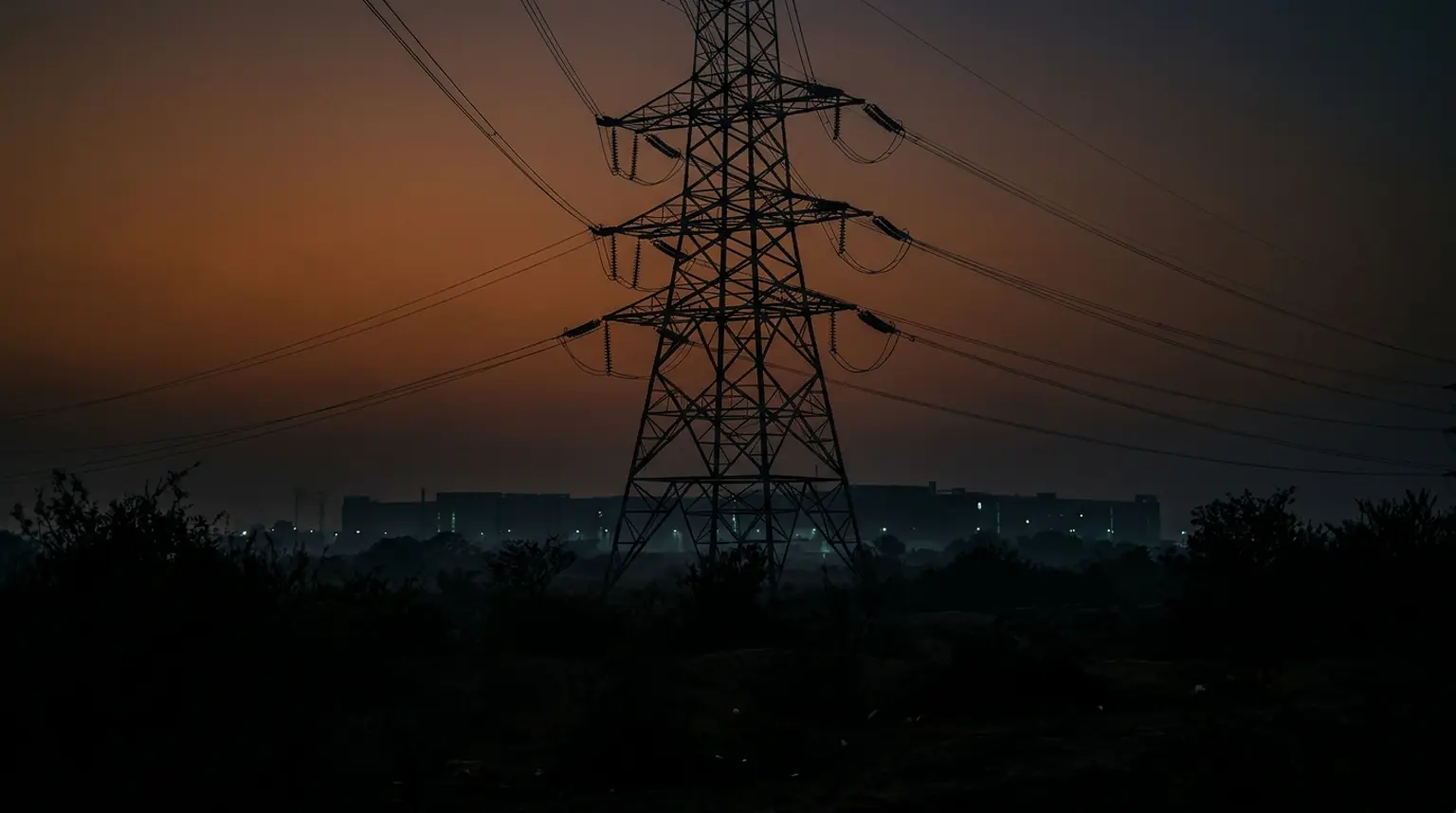
Written by Kristian Kostov with AI assistance and checked against the linked sources. Company performance claims are attributed to the company. Analysis reflects AiLookout’s interpretation; we have not independently tested the products discussed. The cover is an AI-generated editorial illustration, not a photograph or evidence of an actual event.
Our editorial standards