Announced 10 Nov 2026 · Sources checked
What OpenAI announced
On November 10, 2026, OpenAI launched Businesses in ChatGPT, a beta suite that lets companies claim verified profiles on the platform and deploy conversational AI agents that represent their brand.
The announcement includes two main components: a Business Hub for profile management and analytics, and verified Business Agents that ChatGPT users can chat with directly about products and services, TechCrunch reported.
"As people turn to AI to discover products, compare options and make decisions, ChatGPT has become the platform for people and businesses to connect through AI," OpenAI said in a blog post, according to TechCrunch.
The company described the announcement as "an early step in bringing businesses more deeply into ChatGPT."
OpenAI says its platform reaches 1.2 billion people each week, giving the business tools a massive potential audience from day one.
The beta launch targets US businesses first, with e-commerce and online service companies eligible to create profiles and deploy agents.
What the Business Hub does
The Business Hub is a dashboard where companies can claim their organization in ChatGPT and, once verified, update key details and add self-service product feeds with pricing and availability, per the company's announcement.
The process mirrors Google Business Profile in many ways: companies submit information, go through a verification process, and then control how their brand appears on the platform.
Once verified, the hub gives businesses analytics showing how ChatGPT users interact with their profiles, including profile views, business mentions, website clicks, and other engagement metrics, TechCrunch reported.
The analytics feature resembles Google Analytics in that it shows where discovery happens and what users do after finding a business.
OpenAI VP of Monetization Benji Shomair told journalists on Monday that the company uses "multiple verification methods that we use for different types of business in different markets," according to TechCrunch.
OpenAI did not share specific details about how the verification process works, and The Verge noted that the company declined to give specifics.
The approach suggests OpenAI is adapting its verification to the risk profile of each business category rather than applying a one-size-fits-all system.
How Business Agents work
Eligible companies can create a specialized Business Agent that appears when ChatGPT surfaces their business in a response to a user.
The agent can answer questions about a business's offerings, help with comparison shopping, and respond to follow-up questions, The Verge reported.
A user asking ChatGPT about laptop recommendations, for example, might see a Dell or Apple Business Agent appear in the response that they can chat with about specific models and pricing.
Businesses set the agent's instructions and provide business context so the agent knows how to respond accurately.
This means a clothing retailer could train its agent on current inventory, sizing information, and shipping policies, while a restaurant could focus its agent on menu items, hours, and reservation policies.
Chats with Business Agents are clearly labeled and kept separate from the user's main ChatGPT conversation, OpenAI told The Verge.
The separation is designed to make it clear when a user is talking to a brand's agent versus the general ChatGPT assistant. The feature is available first to "eligible" e-commerce and online service businesses in the US.
Why this matters for e-commerce
OpenAI's new business tools position ChatGPT as a consumer discovery engine, bringing it into more direct competition with Google's business profile system, TechCrunch noted. Google has dominated local business discovery for two decades through Google Business Profile, Maps, and Search.
ChatGPT now offers businesses a parallel channel where users researching products can find verified company information without leaving the chat interface.
The move comes after OpenAI's previous attempt to turn ChatGPT into a direct e-commerce hub, which used a commission fee model and included a checkout cart feature, failed to gain traction and was retired in March 2026, TechCrunch reported.
That earlier effort aimed to make ChatGPT an Amazon competitor by letting users buy products directly through the chat interface. OpenAI's checkout cart feature let users complete purchases inside ChatGPT, with OpenAI taking a cut of each transaction.
Rather than trying to replace Amazon as a direct sales platform, the new approach makes ChatGPT a place where users research and compare businesses before buying elsewhere.
The Business Hub's analytics feature, which OpenAI says shows profile views, mentions, and website clicks, closely resembles Google Analytics, TechCrunch reported.
The shift from direct e-commerce to discovery reflects a more realistic assessment of where AI assistants fit in the shopping journey.
What the response looks like
The launch has drawn comparisons to Google's long-running business profile system, with several commentators noting that OpenAI is essentially building the same infrastructure that Google spent years developing.
The key difference is that ChatGPT's interface is conversational rather than search-and-click, which could change how users interact with business information.
For small and medium businesses, the new tools offer a way to control their brand presence on an AI platform that increasingly surfaces business information in its responses.
Before this launch, businesses had limited ability to correct inaccurate information that ChatGPT might generate about their products, prices, or hours.
OpenAI described the launch as an early step and said it is starting with the foundations: accurate business information, useful insights, and conversations that help people make informed decisions.
The beta launch covers US businesses first, and the company has not said when international businesses or additional categories will gain access.
What comes next
Businesses interested in the feature can claim their profile through the Business Hub, though the verification requirements will vary depending on the type and market of the business, according to Shomair's comments to journalists.
OpenAI says the feature is designed to give businesses more control over how they appear in ChatGPT responses, addressing a long-standing concern among companies that their brand information in AI-generated answers can be inconsistent or inaccurate.
The broader implications for the AI industry are significant.
If ChatGPT becomes a primary discovery channel for millions of businesses, OpenAI gains a powerful moat: the more businesses that claim profiles and deploy agents, the harder it becomes for competing AI assistants to offer the same depth of business information.
Google faced a similar dynamic with its business profile ecosystem, which remains one of its strongest competitive advantages in local search.
Common questions
What is the OpenAI Business Hub?
The Business Hub is a dashboard where companies can claim their organization on ChatGPT, verify their profile, update product information and pricing, and see analytics on how ChatGPT users discover and engage with their business, according to TechCrunch.
What are ChatGPT Business Agents?
Business Agents are verified AI agents that represent a brand inside ChatGPT. Users can ask them about a business's offerings, compare products, and get answers in a separate labeled chat.
The feature starts with eligible US e-commerce and online service businesses in beta, The Verge reported.
How is this different from OpenAI's previous e-commerce effort?
OpenAI previously tried a direct e-commerce model with commission fees and a checkout cart feature, aiming to compete with Amazon. That effort was retired in March 2026.
The new approach positions ChatGPT as a discovery engine, similar to Google business profiles, rather than a direct sales platform, TechCrunch noted.
Sources & further reading
How this story was made
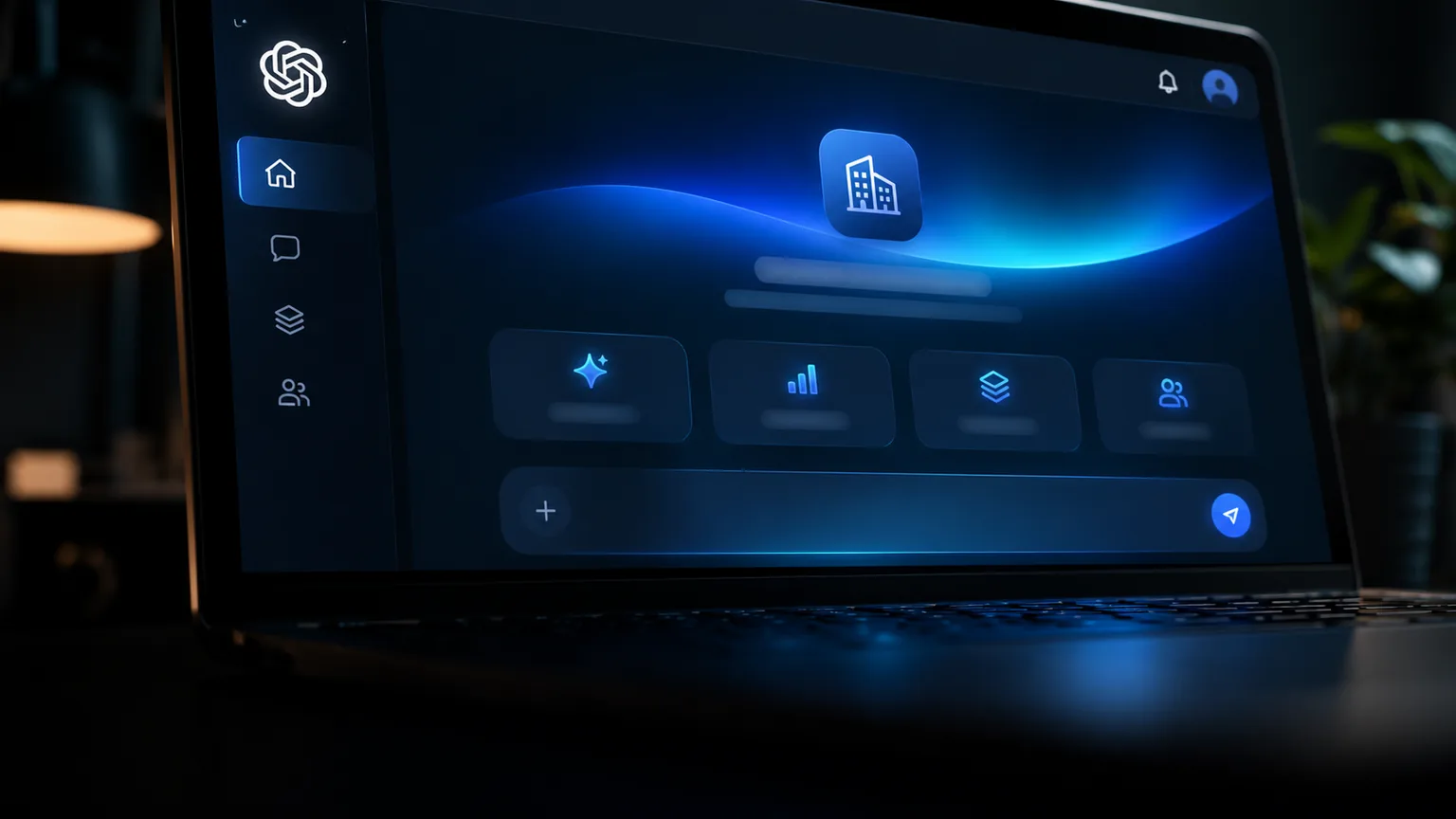
Written by Kristian Kostov with AI assistance and checked against the linked sources. Company performance claims are attributed to the company. Analysis reflects AiLookout’s interpretation; we have not independently tested the products discussed. The cover is an AI-generated editorial illustration, not a photograph or evidence of an actual event.
Our editorial standards