Announced 4 Nov 2026 · Sources checked
What we know about Nothing's first AI device
Nothing CEO Carl Pei broke the news on X on November 4, posting that the company's first 'AI-native product' will ship next month. The post was sparse on specifics but offered three clear constraints: the device has no new screen, it could not have been an app, and it is a tool built with the personality and care that define Nothing's product design.
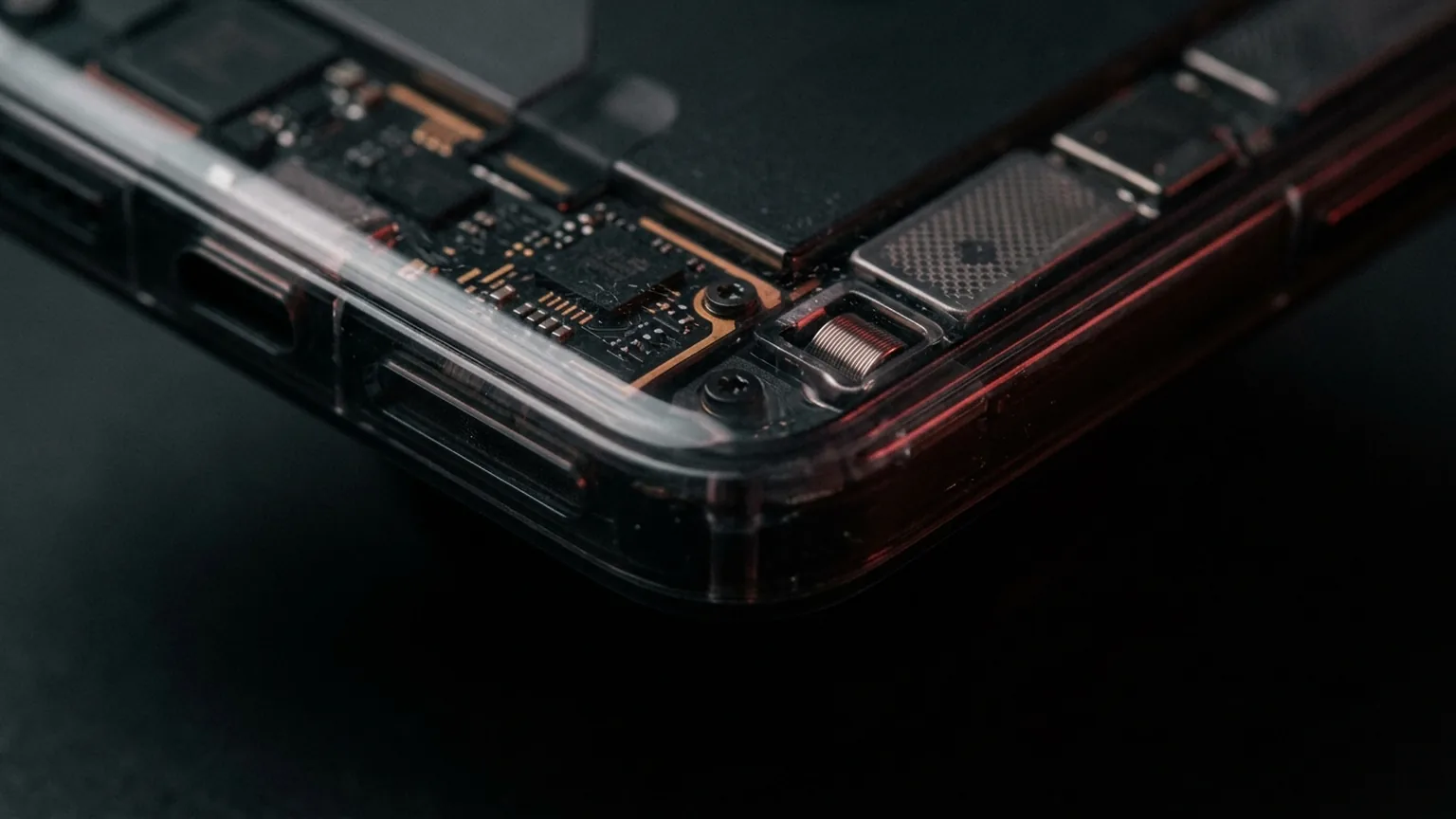
Pei shared an image alongside the announcement showing the word"NOTHING(R)"in the top left corner above an ambiguous black rounded corner, offering no further visual clues about the product's form factor.
The announcement comes roughly 13 months after Pei first outlined plans for AI-native devices and an AI operating system. In the time since, Nothing has released several smartphone models and earbuds with AI features, but this marks the company's first dedicated AI hardware product.
Pei described the product as a"productivity tool"in his posts, suggesting the device is designed for work and task management rather than general-purpose AI assistance. No pricing, exact release date, or product name has been announced.
The context: Nothing's AI pivot
Nothing has been repositioning itself as an AI-first company throughout 2026. Last month, rumors emerged that the company is planning to launch two pairs of AI smart glasses, including a version without cameras that would focus on audio-based AI assistance. Earlier reports indicated Nothing was shifting its product strategy toward AI accessories rather than traditional smartphone upgrades.
The screen-free design places Nothing's offering in a growing but still unproven category of AI devices that try to replace or augment the smartphone. Products like theHumane AI Pin and the Friendhave attempted to create screenless AI experiences, with mixed commercial results. Even AI stuffed animals have entered the space, though none have achieved mainstream adoption.
Pei acknowledged the crowded field in his announcement, writing that 'the whole industry is hunting for its iPhone moment: the pendant, the pin, the glasses, the companion, some magical consumer device that makes AI part of everyone's life.' He added that 'looking for the iPhone of AI today is a dead end,' signaling that Nothing's approach differs from chasing a single killer form factor.
The strategy echoes Nothing's original approach to smartphones, where the company carved out a distinct identity through transparent design and a focus onuser experience over specs. The AI device is expected to carry the same design DNA.
What 'not a screen' and 'not an app' mean
Pei's wording rules out two obvious paths. By saying the device has 'no new screen,' he leaves open the possibility that it uses an existing screen — for instance, pairing with a phone or a computer display — rather than having its own display. That would make it a companion device rather than a standalone gadget, closer to how the Apple Watch started as a phone accessory before gaining independence.
The phrase 'couldn't have been an app' is more revealing. It suggests the product relies on hardware that cannot be replicated in software alone — sensors, microphones, cameras, or custom chips that a smartphone app cannot access. That points toward a device designed to capture information from the physical world, potentially always-listening audio processing, visual recognition, orcontextual awareness features.
The emphasis on context is explicit. Pei highlighted what he calls a 'context gap' — AI models may be capable, but they know very little about your daily life. A dedicated device that continuously observes and learns from real-world activity could theoretically bridge that gap in ways a phone app cannot, by having persistent access to ambient audio, location patterns, and behavioral data.
The market for screenless AI devices
Nothing is entering a category littered with ambitious launches that failed to find product-market fit. The Humane AI Pin, launched in early 2025 with a laser投影 display and AI assistant, was widely panned for slow responses, overheating, and a high price. The Rabbit R1, another AI-first device, faced similar criticism. Even Amazon's Bee Frontier wearable, launched in October 2026, has yet to prove there is mass demand for ambient AI note-taking hardware.
The failure of first-generation AI wearables has made investors and consumers skeptical of the category. However, Pei's framing of Nothing's device as a"productivity tool" rather than a "wearable"may reflect a deliberate effort to avoid the baggage of earlier AI gadgets.
OpenAI is also reportedly developing an AI smart speaker in collaboration with former Apple design chief Jony Ive, signaling that major AI companies see hardware as a necessary step toward mainstream AI adoption. The question is whether consumers want a new device at all, or whether the smartphone — already in everyone's pocket — remains the best AI interface.
What comes next
Nothing's AI device is expected to ship in December 2026, leaving roughly a month before launch. The company has not announced a name, price, or detailed specifications. Pei's announcement on X appears to be the opening move in a gradual reveal, with more details expected in the coming weeks.
The device will need to deliver on Nothing's design reputation while solving a real problem that existing devices cannot. Earlier AI-first hardware has struggled because the technology felt like asolution in search of a problem. Nothing's emphasis on productivity and the 'context gap' suggests a narrower, more focused use case — but the company has not yet shown how that works in practice.
Pei's framing also implies the device may require a Nothing phone or have tight integration with the existing Nothing ecosystem, which could limit its addressable market. If the device works with any smartphone, its addressable market is much larger, but the tight hardware-software integration that defines Nothing's products may be harder to replicate across platforms.
The broader industry will be watching closely. A successful launch could validate the screenless AI device category and open the door for more entrants. A failure would reinforce the lesson thatAI hardware needs more than good design and a chatbot to win over consumers.
Sources & further reading
How this story was made
Written by Kristian Kostov with AI assistance and checked against the linked sources. Company performance claims are attributed to the company. Analysis reflects AiLookout’s interpretation; we have not independently tested the products discussed. The cover is an AI-generated editorial illustration, not a photograph or evidence of an actual event.
Our editorial standards