Announced 15 Oct 2026 · Sources checked
What Amazon announced for Bee on 15 October
Amazon's Devices newsroom published Bee Frontier and Bee Eclipse: Introducing new AI wearable and phone attachment on 15 October 2026. The post frames Bee as personal AI that turns conversations into summaries, reminders and insights, and positions Frontier and Eclipse as the first hardware refresh since Amazon acquired the Bee startup. Frontier replaces the earlier Pioneer wearable form factor; Eclipse is a new MagSafe-compatible phone attachment.
The announcement is concrete on price and availability. Bee Frontier is available now for $74.99 in Onyx, Lavender and Sage on Amazon.com. Bee Eclipse will be available soon, starting at $99.99 in Silver, Midnight, Honey and Blush. Amazon says every Bee purchase includes conversation summaries, recaps and 14-day memory at no extra cost, while Bee Pro at $11.99 per month adds deeper features after a 30-day free trial for new customers.
Independent coverage from Engadget's hands-on-style launch report describes Frontier as a Fitbit-like module that slots into a bracelet or clip, with an onboard button and LED, and notes that Pioneer is no longer sold. Engadget also stresses that many advanced features require Bee Pro. Those secondary details match Amazon's own pricing footnote that some Bee features need the subscription.
Bee Frontier: wearable specs Amazon actually published
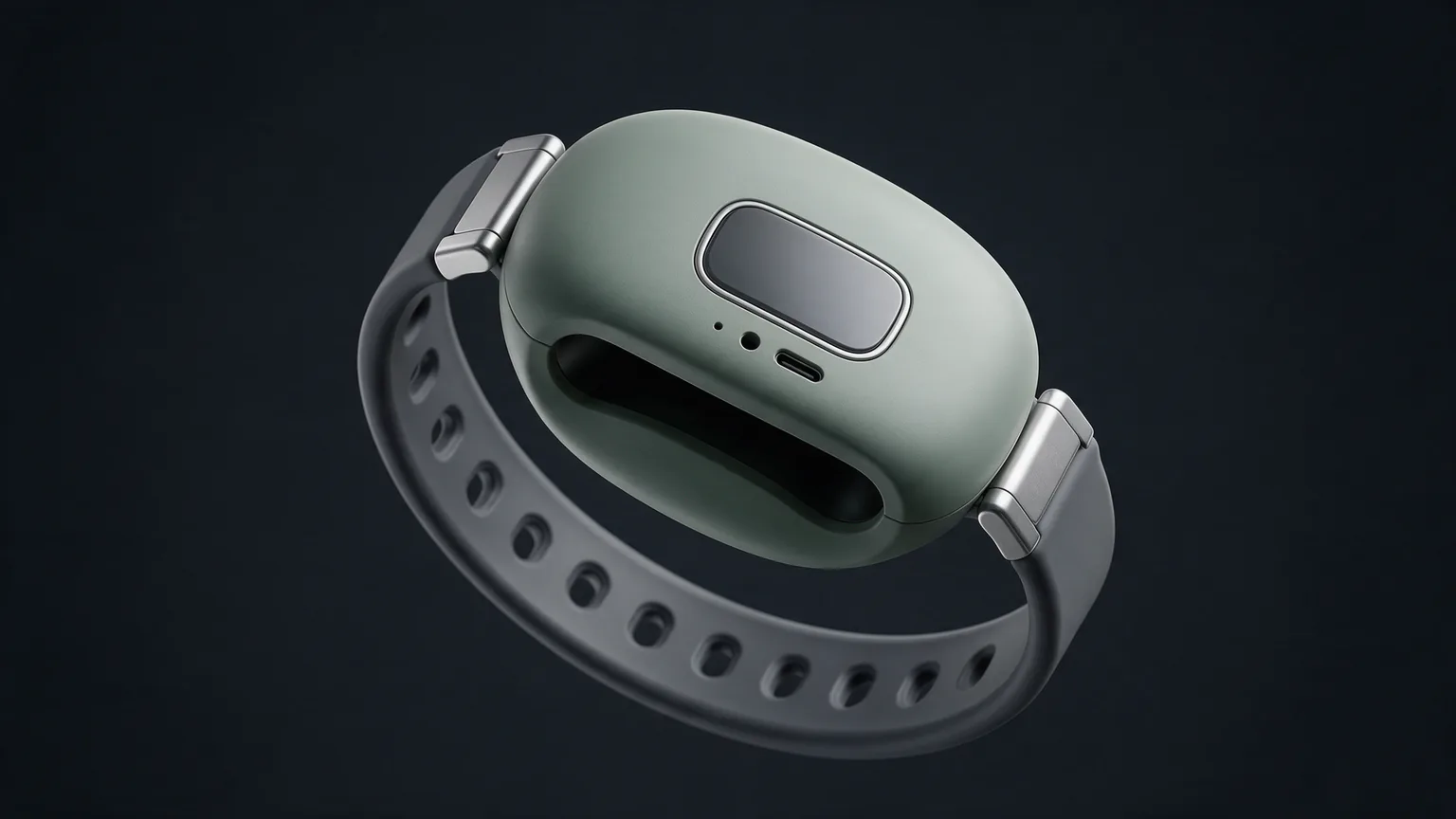
Amazon describes Bee Frontier as light personal AI you can wear on a wrist or clip onto clothing, with an ultra-soft silicone wristband and three nature-inspired colours. The hardware claims that matter for buyers are IP67 water resistance, up to seven days of battery life, USB-C charging, and dual microphones with noise filtering aimed at restaurants and open offices.
Product pages on bee.computer for Frontier repeat the $74.99 price, the seven-day-plus battery claim, language support for up to 40 languages, and the modular wristband-or-clip design. Amazon's newsroom adds that users can remove the module from the wristband and attach it to clothing with the included clip accessory.
Control and signalling are deliberate. A microphone button starts and stops processing; a visible indicator light shows when the device is on; and users can configure automatic shutoff after periods of silence such as 5 or 15 minutes. That physical affordance is the difference between an always-listening pitch and a press-to-capture wearable, at least as Amazon describes it.
Frontier is the device Amazon wants people to buy today. It is the only SKU listed as available now, it undercuts Eclipse on price, and it replaces Pioneer rather than sitting beside it. For readers comparing ambient note-takers, the publishable facts are battery, water resistance, dual mics, colourways and the $74.99 sticker—not third-party battery tests, which do not yet exist in the sources we reviewed.
Bee Eclipse: phone-mounted ambient capture
Bee Eclipse is the stranger form factor. Amazon calls it roughly credit-card sized, about 4.6mm thin in product copy, MagSafe-compatible, and designed to attach magnetically to the back of a phone. The Eclipse product page lists a single press to start and stop, more than 21 days of battery life, and the same conversation-to-summary workflow as Frontier.
Amazon's privacy language for phone calls is stricter in one respect: users are prompted to gain permission from call participants each time a recording is started, and the company says audio is never stored and cannot be accessed or shared. That claim sits beside the broader Bee Private Compute architecture described below; it does not replace consent law in any jurisdiction, and Amazon does not publish a jurisdiction-by-jurisdiction legal guide in the launch post.
Eclipse is not shipping on the same day as Frontier. Amazon's wording is "available soon" with a $99.99 starting price and four colours. Engadget likewise reports no firmer retail date. Until Amazon posts a ship window, Eclipse should be treated as announced hardware with a list price, not as a device you can order tonight.
Strategically, Eclipse answers a different habit than a wristband: people who already live on their phone and want call-side and in-person capture without wearing another band. The MagSafe attachment and three-week battery claim are the differentiators Amazon is selling; whether the thickness and magnetic grip survive daily pocket life is a review question the launch materials do not answer.
Software, Alexa+ hooks and what Bee Pro actually buys
Amazon says turned-on Bee devices gather context from conversations and connected apps, then surface summaries in a mobile app and a new desktop app, with templates for lectures, care plans or brainstorms. Recurring themes can become recommended goals and actions. Integrations named in the launch post include Gmail, Google Calendar, Microsoft Outlook, Apple HealthKit and photos.
The marketplace hooks are new. Connecting Bee to Alexa+ is supposed to let someone ask an Echo for a meeting summary or to-do list hands-free, with voice ID used so an Echo only reads that person's Bee insights. Connecting Bee to Amazon.com is supposed to surface items mentioned in conversation as homepage recommendations and in Bee's apps. Both of those capabilities are listed among Bee Pro features, not among the free-with-purchase basics.
Amazon's own packing list for Bee Pro is unusually explicit: unlimited recent conversation summaries; Amazon.com and Alexa+ integrations; third-party application integrations; suggested to-dos; daily memories; a personal chat assistant; conversation templates; and the Bee desktop application. The price is $11.99 per month, with 30 days free for new Bee customers. That makes the hardware cheap relative to a year of Pro—about $144—if someone wants the full integration stack.
Ambient assistants sit next to other personal-agent stories on this site, from ChatGPT's Chrome extension reading open tabs to Apple TV 4K's far-field Siri AI microphones. Bee's bet is continuous presence with a physical mute story, not a screen-first chatbot.
Bee Private Compute and the limits of Amazon's privacy pitch
Amazon's strongest claims are architectural. Both devices, the company says, run on Bee Private Compute: conversations are processed inside a secure isolated environment where even Amazon cannot access the data; audio is processed into insights in real time and then deleted; transcripts are encrypted with keys only the customer's device creates and controls; a button and LED keep listening state visible; and users can delete transcripts and summaries at any time.
Those are vendor assertions from the launch post, not third-party audit results published alongside it. Readers should separate the design story Amazon wants (no stored audio, customer-held keys, explicit on/off) from what independent security researchers have or have not verified. The launch materials do not include a public attestation report, a bug-bounty scope note, or a formal Model Card-style privacy evaluation.
Consent remains a product and legal problem. Eclipse's call-participant prompt is a UI affordance; Frontier's ambient capture in a restaurant still depends on local recording and notice rules. Amazon markets up to 40 languages and adaptation to the language you use most, which expands where the device might be used and therefore where those rules apply.
For a sense of how other vendors talk about agent actions that still need a human gate, see Mercury's MCP write-action approval flow. Bee's gate is the hardware button and optional auto-off, not a bank-style approval queue, but both products are selling control theatre that matters only if the defaults match how people actually behave.
What to watch next
Three follow-ups would change this story. First, a firm Eclipse ship date and regional availability list. Second, independent battery, mic quality and false-activation tests for Frontier at $74.99. Third, any clarification of what Bee Pro unlocks in practice versus the free 14-day memory tier, including whether Alexa+ shopping suggestions can be limited or audited.
Until those land, the accurate summary is narrow: Amazon's Bee brand has two new SKUs, one buyable today at $74.99, one priced at $99.99 and coming soon, with a $11.99 Pro subscription wrapping Alexa+ and Amazon.com into an ambient note-taker that Amazon says deletes audio after processing.
Common questions
Is Bee Frontier available to buy now?
Yes. Amazon's 15 October 2026 Devices post says Bee Frontier is available now for $74.99 in Onyx, Lavender and Sage on Amazon.com.
What does Bee Pro cost and what does it add?
Bee Pro is $11.99 per month. Amazon lists Alexa+ and Amazon.com integrations, third-party app integrations, unlimited recent summaries, suggested to-dos, daily memories, a personal chat assistant, conversation templates and the desktop app among Pro features. New Bee customers get 30 days free.
Does Amazon say Bee stores conversation audio?
No. Amazon says audio is processed into insights in real time and then deleted under Bee Private Compute, with transcripts encrypted using keys the customer's device controls. That is Amazon's claim in the launch post, not an independent audit finding.
Sources & further reading
How this story was made
Written by Kristian Kostov with AI assistance and checked against the linked sources. Company performance claims are attributed to the company. Analysis reflects AiLookout’s interpretation; we have not independently tested the products discussed. The cover is an AI-generated editorial illustration, not a photograph or evidence of an actual event.
Our editorial standards