Announced 6 Nov 2026 · Sources checked
What did Google buy from Crusoe?
Crusoe, an eight-year-old Denver-based data center developer recently valued at $30.9 billion, confirmed on 6 November that it has sold an unfinished data center project in southeastern Wyoming to Google. The company initially announced the project last year with Blackstone-backed infrastructure company Tallgrass, planning to eventually scale it to 10 gigawatts of power capacity.
Google did not disclose how much it paid for the unfinished site, but announced plans to invest $17 billion to develop the data center campus. The transaction completes Crusoe's engagement in pre-development work on the Wyoming project, which included data center site selection, governmental approvals and power strategy, according to the company's announcement.
Crusoe's own statement frames the deal as the completion of its development work. "Crusoe's pre-construction efforts – origination, entitlement, and de-risking – have set up the Wyoming project for construction and eventual operation," said Chase Lochmiller, co-founder and CEO of Crusoe, in the announcement.
Why did Google take the project over?
Google, which Crusoe had tried and failed to land as a customer for the Wyoming project, is taking over the development after reportedly raising concerns about its cost and construction timeline under Crusoe's management, TechCrunch reported.
The deal highlights how difficult it can be for independent data center developers to deliver massive projects on time and within budget, given the challenges of securing equipment and power. Growing opposition from local communities can further complicate development, TechCrunch noted.
The deal to sell the site to Google was first reported by Bloomberg in June. The Wyoming setback did not stop Crusoe from raising a $3.9 billion round in September.
What is Crusoe building for Google now?
Despite taking over the Wyoming facility, Google has not walked away from working with Crusoe entirely. Crusoe is developing another data center for Google in Armstrong County outside Amarillo, Texas, and reiterated that in its announcement of the Wyoming sale.
Crusoe's largest projects serve some of the biggest names in AI. Its campus in Abilene, Texas, is being built in phases for Oracle and OpenAI, and the company is also constructing a separate 900-megawatt campus next door for Microsoft, with its first building expected to come online in mid-2027. Meta is also a customer.
Crusoe makes money by leasing data center space to customers that bring their own GPUs, by renting out its own GPUs, and by selling compute power used to run AI models, known as inference.
The direction of travel is worth watching: hyperscalers are increasingly buying rather than renting AI data center capacity. Google's move echoes similar consolidation behind other campuses, such as the Microsoft and Oracle cloud-capacity shift the site covered on 6 November.
For Crusoe, the Wyoming sale leaves it with a smaller balance-sheet footprint and a clearer story: more than 6 GW contracted and over 40 GW in its pipeline, per the company's announcement. The question is whether selling its own pre-development site to a customer becomes the pattern for independent developers that cannot finance gigawatt-scale construction alone, a theme also visible in other data center deals the site has tracked.
What does this mean for the AI data center market?
The deal is one more sign that the biggest cloud providers are consolidating AI data center development in-house as demand for compute outpaces supply. Google's $17 billion investment plan for Wyoming dwarfs the value of the base transaction, and it lets the company control the campus schedule and power strategy directly.
For independent developers like Crusoe, the takeaway is harsher: even a company with a $30.9 billion valuation and a fresh $3.9 billion round struggled to finance a gigawatt-scale build and convert a hyperscaler prospect into a tenant. Selling the site to the customer is the fallback that keeps the balance sheet clean.
The community-relations and power questions do not disappear with the ownership change. Wyoming has been a flashpoint for data center siting debates, and the project's eventual power mix - fuel cells, grid power and natural gas turbines with a roadmap for carbon capture via Tallgrass's regional CO2 sequestration hub - will remain part of the local approval conversation.
What does the power strategy involve?
The Wyoming campus was initiated through joint development by Crusoe and Tallgrass Energy, combining power and data center infrastructure in a single process. That required simultaneous coordination across energy systems design, data center engineering, site development and hyperscaler engagement, per Crusoe's announcement.
The hybrid power strategy developed for the campus combines fuel cells, grid power and natural gas turbines, with a long-term roadmap for carbon capture through Tallgrass's regional CO2 sequestration hub, the company said.
Power supply and timeline risk were reportedly central to Google's concerns about the project under Crusoe's management, and Google now controls those decisions directly. The company's $17 billion plan includes developing the site into a working campus, though Google itself did not break down the investment by project component in the announcement or in reporting available at publication time.
How big is Crusoe's broader portfolio?
In its Wyoming announcement, Crusoe said it has more than 6 GW contracted and over 40 GW in its pipeline, and described itself as being "in the business of activating gigawatts for intelligence."
Beyond Google's Texas campus, the company's Abilene campus is being built in phases for Oracle and OpenAI, and a separate 900-megawatt campus for Microsoft is under construction next door, with its first building expected online in mid-2027. Meta is also a customer, and Bloomberg has reported that trading firm Jane Street signed a $13 billion, five-year cloud deal with Crusoe, according to TechCrunch.
Crusoe was founded by Chase Lochmiller, now its CEO, and Cully Cavness, who started it as a cryptocurrency-mining business powered by natural gas that would otherwise have been burned off. In September, alongside its $3.9 billion funding round, the company added three board members, including JB Straubel, the Redwood Materials founder and Tesla board member who invested in Crusoe in 2021 and whose energy-storage business later counted Crusoe as its first customer.
The pattern across the industry is consistent: the deepest-pocketed buyers are absorbing campuses when independent development hits financing or timeline walls. The site has covered the coolant-sensor acquisition by Omen AI and the operational risks visible at Microsoft's Amsterdam campus in recent weeks, both examples of how quickly data center plans collide with cost, community and power realities.
Common questions
How much did Google pay Crusoe for the Wyoming site?
Google did not disclose the purchase price. It announced plans to invest $17 billion to develop the data center campus, and the broader deal was first reported by Bloomberg in June.
Is Crusoe still working with Google?
Yes. Crusoe is developing another Google data center campus in Armstrong County outside Amarillo, Texas, and confirmed that partnership alongside the Wyoming sale announcement.
What other customers does Crusoe serve?
Crusoe's Abilene, Texas campus is being built in phases for Oracle and OpenAI, it is constructing a 900-megawatt campus for Microsoft, and Meta is also a customer. The company also rents out its own GPUs and sells inference compute.
Sources & further reading
How this story was made
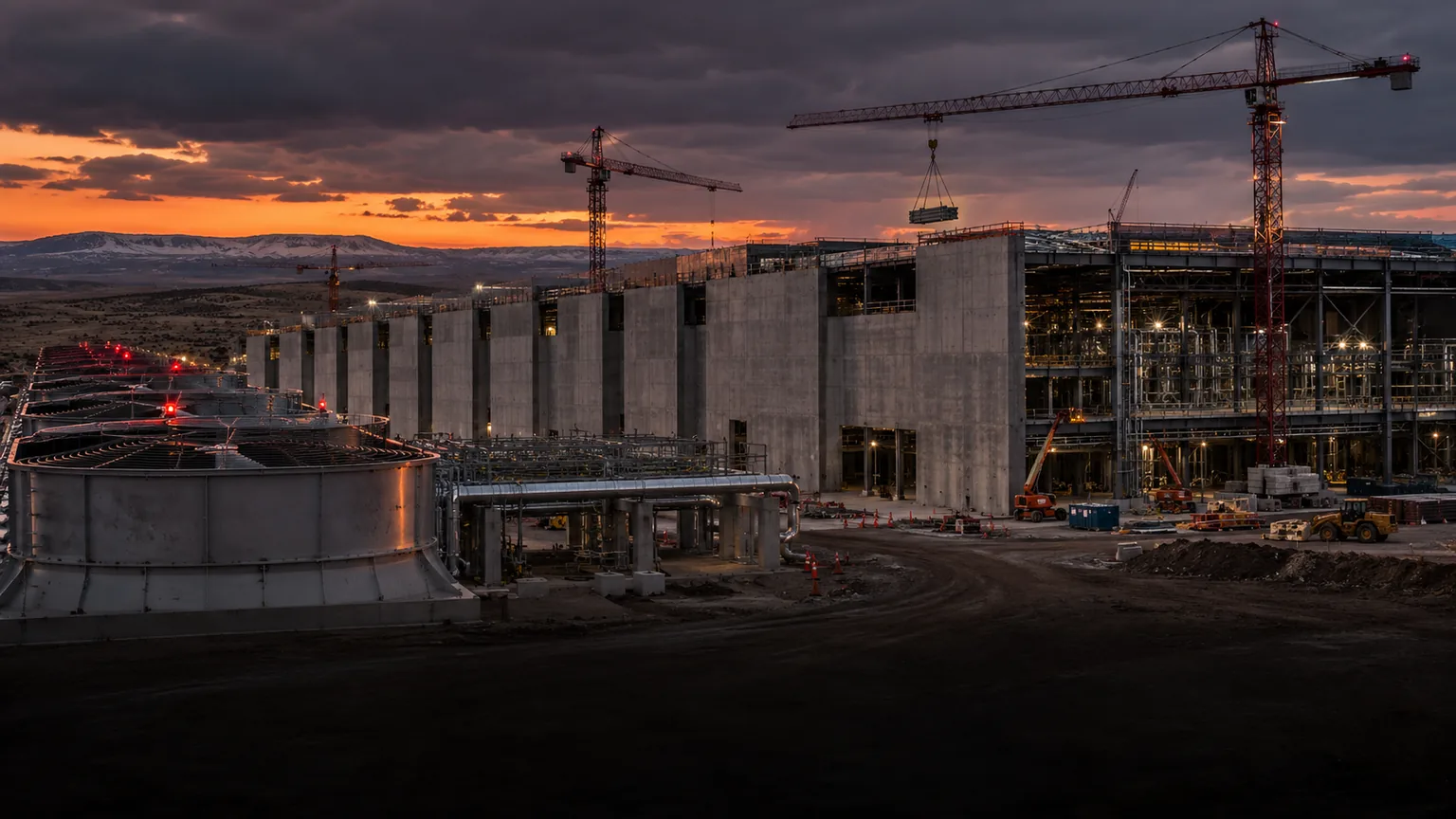
Written by Kristian Kostov with AI assistance and checked against the linked sources. Company performance claims are attributed to the company. Analysis reflects AiLookout’s interpretation; we have not independently tested the products discussed. The cover is an AI-generated editorial illustration, not a photograph or evidence of an actual event.
Our editorial standards