Announced 11 Nov 2026 · Sources checked
A massive round for a British AI chipmaker
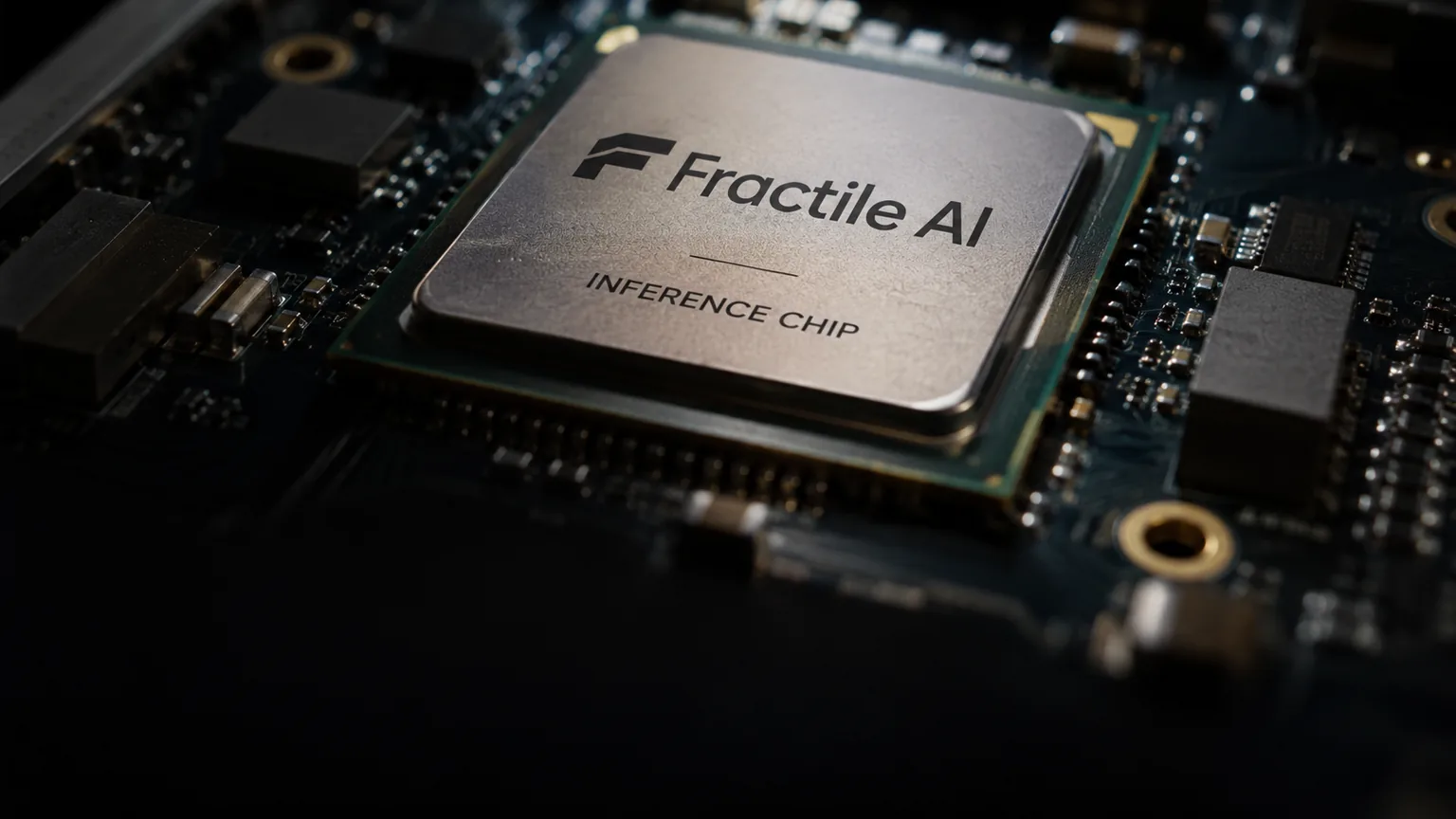
Fractile, a London- and Bristol-based startup building purpose-built chips for AI inference, has raised $720 million in a Series C funding round that values the company at $7 billion.
The round was co-led by Thrive Capital, Founders Fund, Lightspeed Venture Partners, and Redpoint, with participation from the UK Sovereign AI Fund -- a state-backed investment vehicle designed to ensure Britain has a greater stake in the hardware underpinning its future economy.
The British government confirmed the valuation at over 5 billion pounds, while the Financial Times and Reuters both peg the figure at $7 billion.
At $720 million, this ranks among the largest UK semiconductor Series C rounds on record, landing in the 99th percentile of comparable deals according to Dealroom data.
The round follows a previous raise earlier in 2026 and arrives before Fractile has shipped a production chip -- a sign of how aggressively investors are betting on alternatives to Nvidia's dominant hardware.
The company has now become one of the top-funded players in the race for purpose-built AI chips, alongside Axelera, Etched, and OLIX.
Each startup is pursuing a different architectural strategy, but all share the same goal: reduce the cost of inference, which is the stage where trained models are deployed and actually used in production.
Why memory bandwidth is the new battleground
Fractile's core bet is that memory bandwidth, not raw floating-point operations, is the bottleneck holding back AI inference at scale.
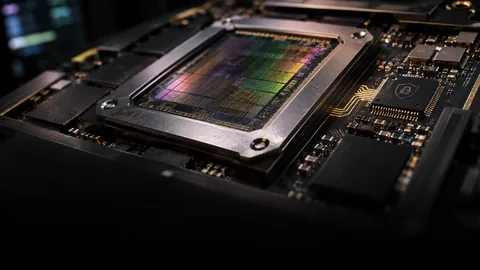
The company's design takes a distinctive approach: it stacks dynamic random-access memory directly on top of processing logic in a three-dimensional architecture, reducing the time and energy required to shuttle data between memory and compute units.
This tradeoff has become more acute with the rise of agentic AI, as companies perform longer chains of tasks with large models without compromising on speed.
Existing accelerators from Nvidia spend a significant portion of their energy budget simply moving data across what engineers call the memory wall.
By stacking DRAM on the processing die, Fractile claims it can bypass the usual tradeoff between memory capacity and access speed.
The company initially explored an SRAM-oriented path before pivoting toward high-bandwidth DRAM.
The shift reflects a recognition that frontier models are consuming context windows that run into hundreds of thousands of tokens, and the memory requirements for agent loops and long-context reasoning are growing faster than raw compute scaling can keep up.
Full-stack ambition beyond the chip
Fractile frames itself as a frontier AI company rather than a pure semiconductor play. Alongside its chip design, the startup is developing a machine learning compiler to maximise the speed at which large language models execute on its hardware.
The compiler translates model graphs into optimised instructions for Fractile's architecture, handling the memory placement and scheduling that general-purpose compilers cannot.
This full-stack approach mirrors what Nvidia built with CUDA -- a software ecosystem that locks developers into its hardware.
Fractile's compiler layer is designed to make it drop-in competitive for teams running large-scale inference workloads, potentially lowering the barrier for organisations looking to reduce dependence on Nvidia's supply-constrained hardware.
Without a software story, even the best chip architecture struggles to gain adoption.
The company says its system-level approach means it can optimise across the entire stack, from the transistor layout through to the model weights that run on it.
That scope is expensive to build, which is a big part of why the company needed $720 million before shipping its first production part.
The Sovereign AI Fund's strategic bet
The inclusion of the UK Sovereign AI Fund is a significant signal. The fund, established to back domestic AI infrastructure, placed a meaningful bet on a startup that has not yet shipped a production chip.
The government stated that the investment aims to ensure the UK has a greater stake in the hardware that will underpin its future economy.
Fractile operates from offices in London and Bristol, and its success would represent a significant win for the UK's ambitions to build a homegrown semiconductor industry independent of the dominant US and Asian supply chains.
Currently, the UK has limited domestic chip manufacturing at scale, making this bet as much an industrial policy statement as a financial investment.
Being backed by four top-tier US venture firms alongside the UK government gives Fractile a blend of strategic and commercial validation.
Thrive Capital, Founders Fund, Lightspeed, and Redpoint rarely co-lead rounds at this scale, which underlines the perceived market opportunity in AI inference hardware.
The race to ship before the window closes
Alongside Fractile, other startups including Axelera, Etched, and OLIX have pulled in substantial funding for purpose-built AI chips, making this one of the most competitive segments in hardware.
Despite the funding frenzy, none of these companies have yet shipped production hardware at scale, and the gap between Nvidia's entrenched ecosystem and a startup's first silicon remains wide.
Nvidia continues to ship its own next-generation inference architectures on an annual cadence, and its CUDA software moat means any competitor must either match its developer tooling or offer such a dramatic price-performance improvement that developers are willing to migrate.
CEO Walter Goodwin acknowledged the scale of the challenge.
In a LinkedIn post, he wrote that there is still a lot of work ahead, and that the new funding will allow the company to ship its first chips and systems next year.
The company has not disclosed which foundry it will use for manufacturing, but given the UK's limited domestic fabrication capacity, it will likely rely on Taiwan's TSMC or a comparable partner.
Whether Fractile can execute before the funding environment tightens or Nvidia ships its next-generation inference architecture will determine whether this round was a launchpad or a peak.
For now, the market is betting that memory bandwidth, not brute-force compute, will define the next phase of AI inference -- and that a British startup with a three-dimensional DRAM stack and a compiler is the best horse in that race.
What this means for the AI inference market
The broader inference chip market is expected to grow substantially as deployed AI applications shift from training to production workloads.
Research firms project the inference chip market could be worth tens of billions of dollars within the next few years, driven by the proliferation of AI assistants, agentic systems, and real-time language processing.
Nvidia currently dominates this segment with its GPU-based data center products, but the company faces growing pressure as customers seek alternatives that offer better price-performance for specific workloads.
Fractile's bet on memory bandwidth positions it to serve the long-context, high-throughput workloads that are becoming standard in enterprise AI deployments.
The company also benefits from geopolitical tailwinds. The UK and European Union are actively working to reduce dependence on US and Asian semiconductor supply chains, creating a policy environment that favours domestic chip startups.
Fractile's backing from the Sovereign AI Fund is a concrete example of this trend in action.
Common questions
What is Fractile's chip architecture?
Fractile stacks DRAM memory directly on top of processing logic in a three-dimensional design, reducing the distance data must travel and solving the memory bandwidth bottleneck in AI inference.
Who invested in Fractile's Series C?
The round was co-led by Thrive Capital, Founders Fund, Lightspeed Venture Partners, and Redpoint, with participation from the UK Sovereign AI Fund.
When will Fractile ship its first chips?
CEO Walter Goodwin says the company plans to ship its first chips and systems next year.
How does Fractile compare to Nvidia?
Fractile's memory-first architecture targets a different bottleneck than Nvidia's GPU approach. While Nvidia focuses on raw compute throughput, Fractile prioritises memory bandwidth for long-context inference workloads.
Sources & further reading
How this story was made
Written by Kristian Kostov with AI assistance and checked against the linked sources. Company performance claims are attributed to the company. Analysis reflects AiLookout’s interpretation; we have not independently tested the products discussed. The cover is an AI-generated editorial illustration, not a photograph or evidence of an actual event.
Our editorial standards