

Announced 3 Nov 2026 · Sources checked
What did Nikkei report?
Nikkei Asia reported on November 3 that US tech giants' off-balance-sheet debt from artificial intelligence-related obligations continues to balloon, almost doubling in six months to about $3.2 trillion, with investors increasingly alarmed by seemingly unending spending. The paper's estimate covers the same five companies its July study counted: Alphabet, Microsoft, Amazon, Meta and Oracle.
In July, Nikkei estimated those five companies were carrying roughly $1.65 trillion in obligations that do not appear as debt on their balance sheets, mostly future spending tied to data centers, chips and power. That figure was already up roughly eightfold in four years and larger than the $1.35 trillion the five report outright, as TNW summarized the study at the time.
The new estimate is an update of the same tally, not a new methodology, and it reflects how fast the AI buildout is being financed off the books rather than how fast reported debt is moving.
How the structures work
The mechanics are simple and legal. A company packages the debt for chips, servers and power into a separate legal entity, often a joint venture, so the cost never flows through its own accounts. The same kind of structure Enron used to hide debt before it collapsed 25 years ago; back then it was fraud, but now tightened rules and fuller disclosures make the treatment legal.
Meta's Hyperion data center project in Louisiana is the clearest example. Meta and Blue Owl Capital both put equity into a separate structure that took on $27 billion in debt; Meta is the sole tenant yet argues it does not have to record that debt, because it is not the one who must find replacement tenants, TNW reported in July.
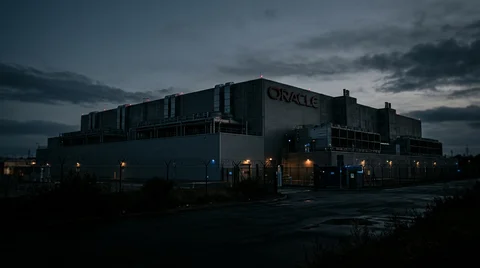
Oracle has $260 billion of future lease commitments that will eventually land on its books, Nvidia carries $119 billion in purchase obligations, and Alphabet and Microsoft keep their vehicles off-book too. Meta's off-balance-sheet debt alone was estimated at about $420 billion, nearly triple its reported debt, and Oracle's had grown roughly thirtyfold in four years.
Why the gap matters now
The timing is awkward because the big five report earnings within weeks of each Nikkei tally, and the reported debt looks tidy while the footnotes carry the second, larger pile. The risk is a timing mismatch rather than imminent insolvency: when a data center goes live, its lease rolls onto the balance sheet at once, and if AI demand falls short, the facility is marked down and the loss lands on the lenders and insurers who funded it.
Construction-in-progress balances at Oracle and Meta are up roughly 200% and 90% year over year respectively, and when the eventual depreciation lands, cumulative depreciation across Microsoft, Oracle, Meta and Alphabet could exceed $520 billion over three years, according to the August WSJ analysis. That could push Oracle's depreciation as a share of revenue from 7% toward 28% and Meta's from 9% toward 19% by fiscal 2028.
Credit markets have already noticed. S&P has cut Oracle's credit rating over stretched leverage, and both Morgan Stanley and Moody's have flagged the wider issue. "What if one of these companies was a house of cards," asked accounting consultant Tom Selling, "and was propping itself up with this accounting treatment?"
Disclosure is inconsistent across the group, which makes the aggregate hard to size precisely: Nvidia quantified $30 billion of cloud-service commitments and Oracle disclosed $10 billion, while Meta declined to quantify the cloud-capacity portion of its $238 billion in commitments, per the WSJ analysis.
The depreciation and refinancing cliff
The deeper problem is the timing mismatch between the assets and the financing. Depreciation on this spending is deferred through construction-in-progress accounting, then lands in a wave; margins can only hold if revenue rises to match, and so far it has not kept pace, the WSJ analysis concluded.
A pivot toward cheaper Chinese models, which some analysts estimate deliver roughly 90% of frontier performance at a fraction of the cost, would undercut the revenue assumptions those commitments are built on. Microsoft holds a stake in OpenAI worth tens of billions of dollars, and Amazon and Alphabet have each committed billions to Anthropic, per the WSJ analysis as summarized by 24/7 Wall St.
Nvidia is also discussing a $3 billion investment in an Ohio data center as part of its OpenAI agreement, and has launched a new $500 billion financing platform with six institutions for AI infrastructure. For context on how the data center buildout is being funded, see our coverage of Oracle's $20 billion stock and bond sale and Anthropic's disclosure of $895 billion in compute commitments.
What to watch next
None of this is fraud, and none of the companies are about to go bankrupt. The disclosures exist, buried in the footnotes, and the companies insist future earnings will more than cover the bills. The question is whether the shadow ledger keeps growing faster than the visible one, because the gap is the actual leverage, and the reported debt is only the visible slice.
Free cash flow relative to committed spending, not reported debt, is where the real risk sits. If the big five maintain or grow revenue at the pace they have promised, the commitments amortize into affordable depreciation. If the buildout outruns demand, the leases land on the balance sheet at the worst possible moment and the refinancing cliff becomes the story.
Nikkei's update is one paper's estimate based on public filings and disclosures, so treat the $3.2 trillion as a directional figure rather than a precise accounting. The direction is the news: in six months, the hidden number grew by almost as much as the visible debt of all five companies combined.
Common questions
Is the $3.2 trillion figure actual debt?
It is Nikkei's estimate of commitments that do not appear as debt on balance sheets: purchase commitments for chips, servers and power, and leases that have been signed but have not yet commenced. They are real obligations, but they are not booked as liabilities under standard accounting rules until the asset or service goes live.
Which companies does the estimate cover?
Nikkei's July and November tallies cover the same five US tech giants: Alphabet, Microsoft, Amazon, Meta and Oracle. A separate Wall Street Journal analysis from August counted nine companies, adding Nvidia, Broadcom, Advanced Micro Devices and SpaceX, and put the figure closer to $3 trillion.
Is any of this illegal?
No. The structures are the same kind of special-purpose vehicles Enron used to hide debt, but current rules and fuller disclosures make the treatment legal and disclosed in footnotes. The risk is one of timing and visibility, not legality.
Sources & further reading
How this story was made
Written by Kristian Kostov with AI assistance and checked against the linked sources. Company performance claims are attributed to the company. Analysis reflects AiLookout’s interpretation; we have not independently tested the products discussed. The cover is an AI-generated editorial illustration, not a photograph or evidence of an actual event.
Our editorial standards