Announced 13 Nov 2026 · Sources checked
SoftBank bet billions on natural gas for AI data centers. It just lost $3.7 billion of it.
SoftBank recorded a net loss of $7.1 billion for the July-September quarter, its first swing into the red in nearly two years.
More than half of that — $3.7 billion — came from canceling surplus orders for natural gas turbines that its SB Energy subsidiary had reserved for AI data center power plants.
The Japanese investment giant had put down nonrefundable deposits on more than 13 gigawatts of turbines, nearly 50 percent more than its own projects required.
To put that in perspective, 13 gigawatts is more than six Hoover Dams worth of generating capacity, or more than the entire state of Connecticut consumes during peak periods.
Queue times for turbine orders now stretch into the early 2030s, and SoftBank’s over-ordering strategy was an attempt to secure hardware in a seller’s market.
“SB Energy did not have a choice except to overbook turbines in the future if they wanted some turbines right away,” Peter Gardett, CEO of energy consultancy Noreva, told TechCrunch. Gardett described the writedown as “price discovery finally happening.”
SoftBank shares dropped 10 percent on the news, as investors digested the scale of the miscalculation.
The company had previously denied claims by Elon Musk that it was defaulting on its obligations, but the writedown confirms that the turbine orders were indeed being canceled.
Why SoftBank over-ordered by 50 percent
The global market for heavy-duty gas turbines is dominated by a handful of manufacturers: GE Vernova, Siemens Energy, Mitsubishi Heavy Industries, and Ansaldo Energia.
Each has a limited annual production capacity, and orders for large-frame turbines now come with delivery dates in the early 2030s.
Starting about two years ago, as AI’s power demands became impossible to ignore, SoftBank’s SB Energy subsidiary began reserving gas turbines well beyond what its own portfolio required.
The logic was straightforward: turbine manufacturers had years-long backlogs, and if the AI boom was going to need power, SoftBank wanted to control the supply.
The strategy appeared to work at first. SoftBank cornered a significant portion of the global gas turbine production capacity, enough that by early 2026 it had reserved more power generation capacity than the entire state of Connecticut.
The play was classic Masayoshi Son: identify a bottleneck in a booming market, deploy massive capital to control it, and charge everyone else for access.
But the bet assumed that AI data center operators would flock to natural gas as quickly as SoftBank could build plants. That assumption is now in doubt.
AI data centers are reconsidering the grid
Data center operators are getting a better understanding of what their facilities actually need to stay online, and natural gas may not be the slam dunk it seemed.
Brent Nelson, senior managing director at Ascend Analytics, told the Equity podcast that most data centers would be better served by a grid connection — albeit a smaller one than they typically request — supplemented by large battery systems.
Batteries can handle peak loads and respond to utility curtailment requests more flexibly than gas turbines.
A data center that pairs a modest grid connection with battery storage can achieve the same reliability as a gas-powered campus without the fuel supply risk or the emissions.
As that calculus becomes clearer, the natural gas market for AI power may develop more slowly than SoftBank projected.
Nelson said grid interconnection, not gas plants, is emerging as the smarter bet for most operators.
The math is straightforward: a grid connection plus battery storage costs less per megawatt than building and fueling a new gas plant, and it avoids exposure to volatile natural gas prices.
The shift matters because it changes the kind of infrastructure investors should be building: transmission lines and battery farms instead of gas pipelines and combustion turbines.
What the writedown means for AI’s energy future
The $3.7 billion writedown is unlikely to trigger a domino effect of canceled gas power plants.
AI’s aggregate power demand remains enormous, and natural gas is still the most practical bridge fuel for new data center capacity that cannot wait for grid upgrades that take years.
Major tech companies continue to sign power purchase agreements for gas-fired capacity, and turbine manufacturers still have multi-year backlogs.
But SoftBank’s loss does establish a ceiling. The company bet that it could corner the gas turbine market and force AI developers to buy power from SB Energy.
Instead, it discovered that the market is more fragmented, the timelines are longer, and the alternatives — grid power plus batteries — are more viable than it assumed.
Gardett described the episode as a costly lesson in how quickly an apparent sure thing can turn when the assumptions beneath it shift. The $3.7 billion writedown is not just a SoftBank problem.
It is a signal that the AI energy gold rush is entering a more rational phase, where hype meets real engineering and real grid interconnection queues.
For the broader AI industry, the message is that energy infrastructure is not a market you can corner with deposits alone. Real demand, real grid interconnection timelines, and real alternatives all matter.
SoftBank just paid $3.7 billion to prove it.
The bigger picture: AI’s energy reckoning
SoftBank’s miscalculation is part of a wider pattern. Across the tech industry, companies are realizing that powering AI at scale is harder and slower than the narrative suggests.
Grid interconnection queues are years long. New gas plants face community opposition and regulatory hurdles.
Battery storage, while improving, is not yet cheap enough to replace baseload gas for hyperscale campuses.
The result is a growing gap between AI’s projected energy needs and the infrastructure actually being built. SoftBank tried to bridge that gap by brute force, writing big checks and hoping demand would follow.
Instead, it learned that energy markets do not bend to will alone.
For the data center operators who will actually need the power, the takeaway is clearer than ever: plan for grid connections, invest in batteries, and do not count on gas turbines being available on demand.
The turbines are there, but the economics of using them are shifting faster than anyone expected.
Common questions
How much did SoftBank lose on gas turbines?
SoftBank wrote off $3.7 billion in nonrefundable deposits on surplus natural gas turbine orders for AI data center power plants.
Why did SoftBank over-order turbines?
SB Energy overbooked turbines to secure hardware in a market where queue times stretch into the 2030s, reserving 50 percent more capacity than needed.
Does this mean AI data centers won’t use natural gas?
No. Natural gas remains a key bridge fuel for AI power, but data center operators are increasingly considering grid connections and battery storage as alternatives.
Sources & further reading
How this story was made
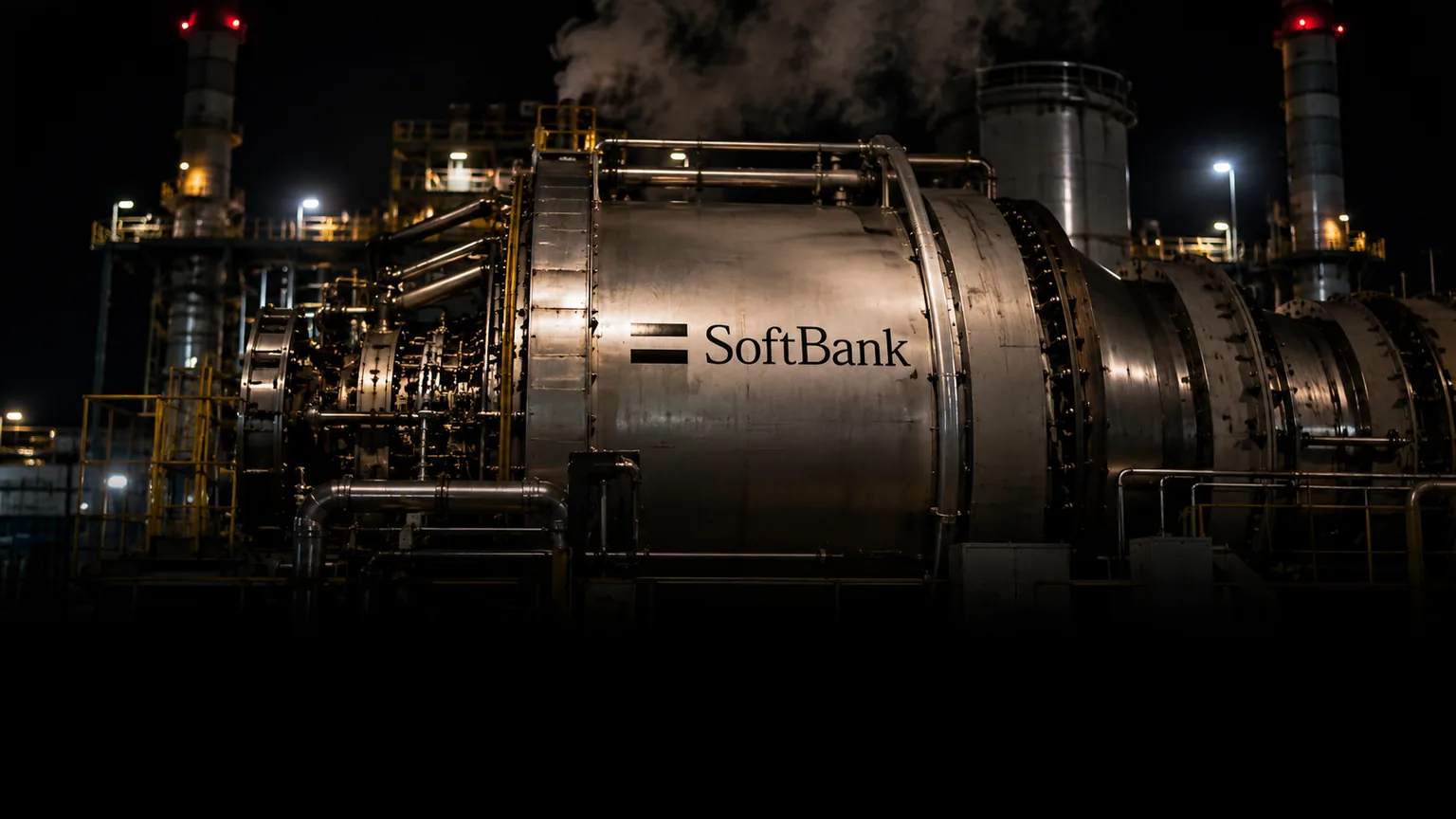
Written by Kristian Kostov with AI assistance and checked against the linked sources. Company performance claims are attributed to the company. Analysis reflects AiLookout’s interpretation; we have not independently tested the products discussed. The cover is an AI-generated editorial illustration, not a photograph or evidence of an actual event.
Our editorial standards