


Industry3 min read
AI API data retention: check the specific feature, not the slogan
Data-retention rules can differ by product, model, feature, and account configuration.
Guide
Stories 1081–1108 of 1108, newest first.
Data-retention rules can differ by product, model, feature, and account configuration.

Data residency concerns where data is stored or processed under a service’s specific commitments.

Hosted models have versions and lifecycle policies.

AI governance establishes responsibility for decisions, monitoring, and response.

An AI announcement combines reported facts, vendor measurements, and positioning.

AI depends on electricity for data-centre computing.
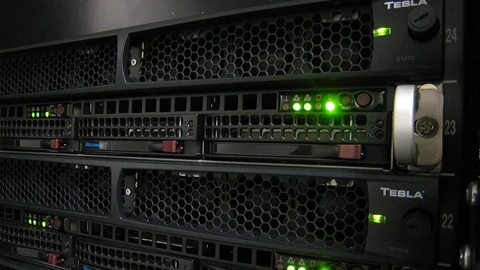
AI accelerators perform specialized computations used in model training and inference.

Self-hosted AI means your team runs the model. Managed hosting means a provider runs it and you send requests. Neither choice grades the model’s answers.
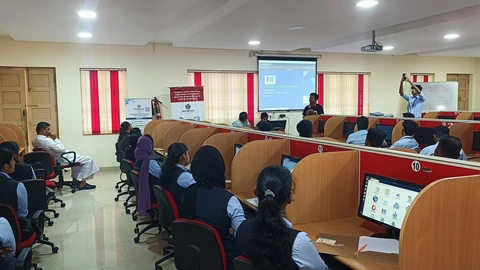
A useful AI training program teaches people to frame tasks, inspect sources, protect data, and verify outcomes.

A model card documents information about a model, such as its intended use, training context, evaluations, and limitations.
A benchmark chart is meaningful only with its task set, settings, and scoring method.

An anonymous model label hides the provider’s identity during testing.

Tokens are the units a model receives and generates.

A text embedding represents text as a numerical vector.

Vector search finds stored vectors close to a query vector under a chosen distance or similarity measure.

A context window limits the information a model can work with during a request.

Temperature changes the probabilities used when sampling a model’s next token.

Top-p, also called nucleus sampling, keeps a set of likely next tokens whose combined probability reaches a threshold.

Training adjusts model parameters using data and an optimization process.

Fine-tuning keeps training a pretrained model on examples of the behavior you want. It is a poor substitute for a document the model should look up.

Quantization stores or computes model values at reduced numerical precision.

A mixture-of-experts model stores many expert blocks and uses a router so each token runs only some of them. Total size and active compute are different numbers.
Multimodal systems work with more than one type of input or output, such as text and images.

OCR extracts text from an image or scanned document.
Prompt injection attempts to steer a model through untrusted input, such as a document or tool result.

Structured output constrains a response to a specified format or schema.

Streaming delivers parts of a generated response as they become available.

Batch processing groups requests into an asynchronous job.