

Research3 min read
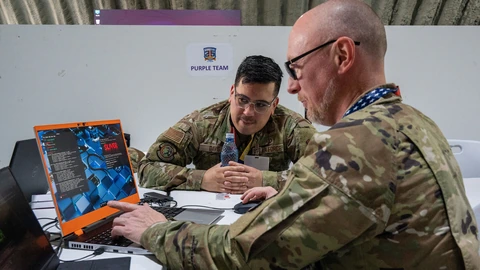
Anthropic reports 6,157 disclosed bugs. The patching gap matters too.
An October dashboard update separates discovered candidates, disclosures, and known fixes. Those are different stages of security work.
News
Stories 1009–1044 of 1108, newest first.
An October dashboard update separates discovered candidates, disclosures, and known fixes. Those are different stages of security work.
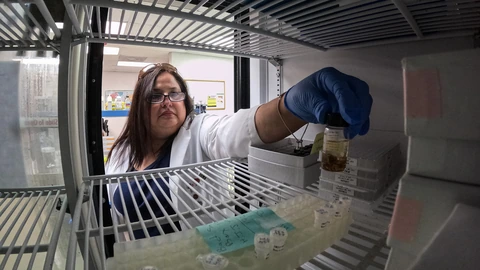
A public research resource turns a large prediction dataset into something researchers can explore. Predictions still need validation.
OpenAI’s new model puts capability and cost in the same conversation. Here’s what the announcement means for builders.

Claude Frontier Academy aims to train 10,000 engineers by the end of 2027, with hands-on enterprise deployment at its core.
Anthropic says its latest Sonnet runs over 30% faster. The bigger question is what it costs to finish the job.

Always-on agents bring a new set of questions about access, responsibility, and how we measure useful work.

Anthropic’s biology research points to a promising discovery—and to the importance of experimental verification.
A look at the developer announcements, from cloud coding environments to tools for ongoing responsibilities.
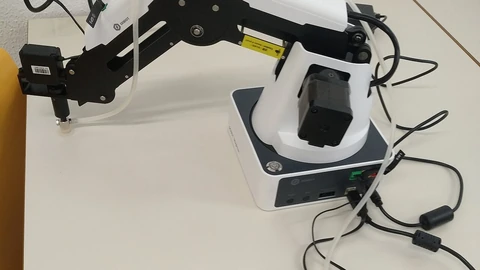
Anthropic separates workflows, which follow a fixed path, from agents, which choose the next tool call. Start only when you can tell that the job is finished.

What is RAG? The 2020 paper paired a generator with a Wikipedia index. A document search in front of a chatbot is related, and it still needs a check.

ChatGPT vs Claude vs Gemini depends on the task, the sources, and the account you have. Compare the finished work, not the model name.

RAG vs fine-tuning: retrieval supplies current facts, and fine-tuning changes behavior. Choose from the failure you actually see.
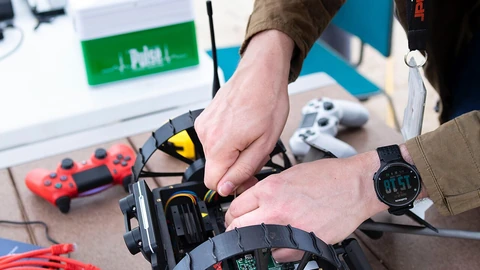
How to evaluate an AI agent: check the outcome, the permissions, and the failures. A message that says done is not proof.

Check an AI citation by opening the source and finding the passage. A working link shows a page exists, not that it supports the claim.
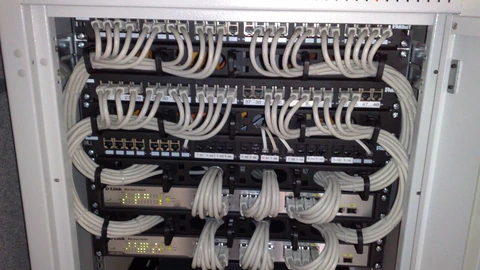
The Model Context Protocol is an open standard for connecting an AI app to tools and data. A connection is not permission to use them.
An AI hallucination is a plausible claim that is not true. Here is why a model can sound certain, and how to lower the risk.

Calculate AI API cost from input and output tokens, tool calls, and retries. Budget finished tasks, not a single token rate.

A prompt engineering guide for real tasks: name the job, the source, the constraints, and the output. Then test one change at a time.

DeepSeek-V3 is a mixture-of-experts language model described in DeepSeek’s 2024 technical report.

DeepSeek-R1 explores reasoning training with reinforcement learning.

Qwen2.5 is a family of language models documented by the Qwen team.

The Qwen3 technical report describes dense and mixture-of-experts models, with support for thinking and non-thinking behavior.
Meta’s Llama 3 report describes a family of foundation models and instruction-tuned variants.
Mistral 7B is the language model described in Mistral’s 2023 paper.
Mixtral 8x7B stores eight experts per layer and runs two of them for each token. Mistral reported 47 billion parameters in reach and 13 billion active.

Gemma 2 is the open-weight model generation described in Google’s technical report.

Microsoft’s Phi-3 report studies compact language models trained with an emphasis on data quality.

OLMo 2 is a language-model family documented by the Allen Institute for AI and collaborators.
SmolLM2 is a compact language-model family from Hugging Face.
Whisper is a speech-recognition system described in OpenAI’s research on weakly supervised audio training.

CLIP, from OpenAI in 2021, learns which caption goes with which image across 400 million pairs. Text can then point at a picture without a new labeled training set for every category.

Sentence-BERT turns a BERT model into sentence vectors you can compare with cosine similarity. The 2019 paper cut a 10,000-sentence similarity search from about 65 hours to about 5 seconds.
BERT stands for Bidirectional Encoder Representations from Transformers.

T5 explores a unified text-to-text approach to language tasks.
A workflow follows predefined steps; an agent chooses how to proceed using feedback and tools.
Prompt chaining passes the output of one model call into another.