Announced 30 Oct 2026 · Sources checked
The summit
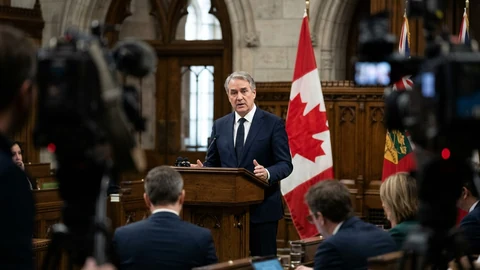
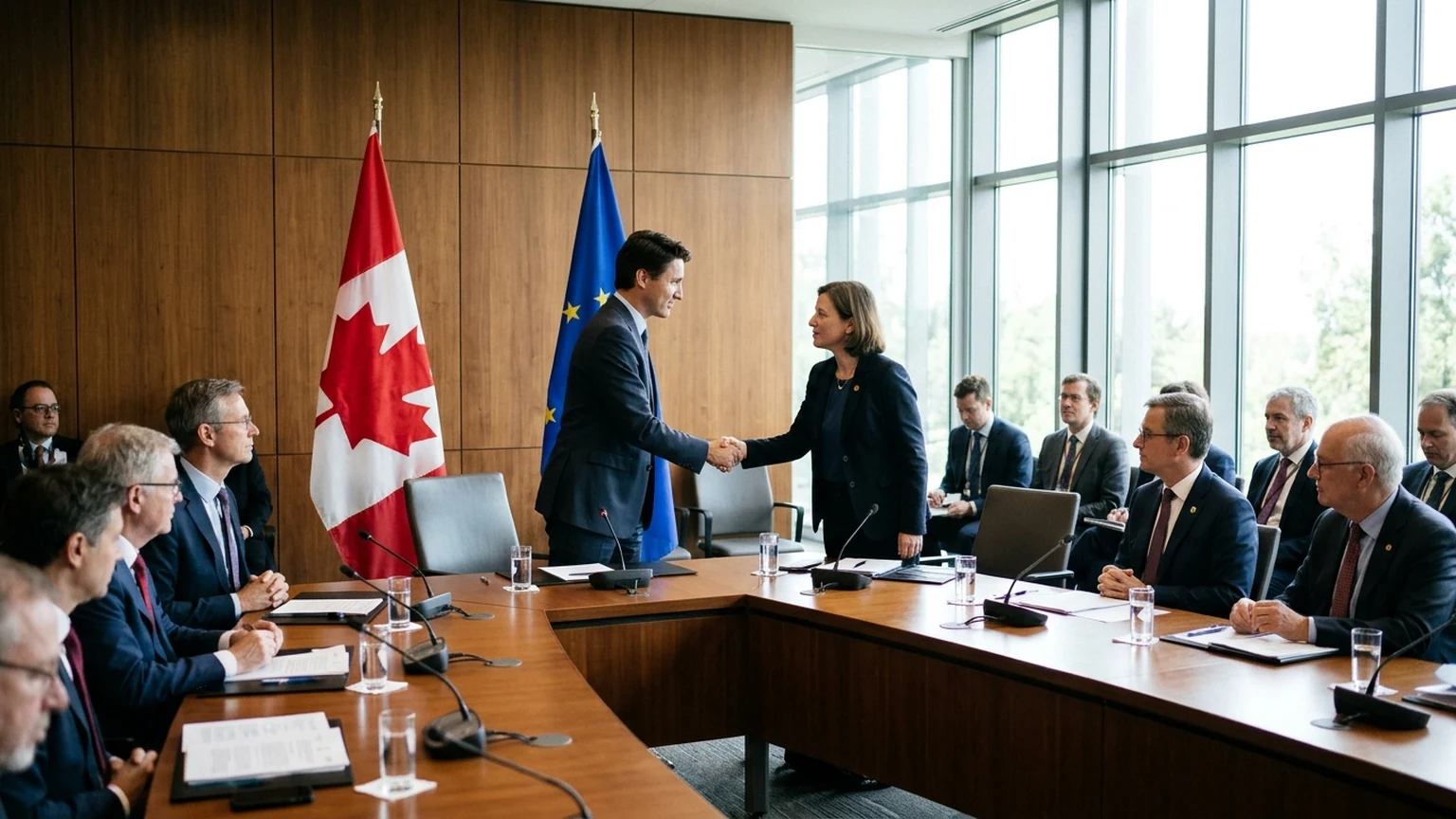
Canada and the European Union held a summit in Montreal on 30 October 2026, producing the most significant bilateral framework between the partners in years. The centerpiece is the 'Alliance for the Future,' designed to create a common space for growth, prosperity, resilience and economic security — specifically outside the technology supply chains dominated by the United States and China.
The summit also opened discussions on making Canada the first associate member of the European Union. Associate membership would give Canada the ability to shape EU policies on issues from climate to technology without full EU membership, a status that would be unprecedented for a non-European country.
The AI dimension
The alliance includes several joint AI projects announced at the summit, focused on building shared AI infrastructure, research collaborations and governance frameworks that are explicitly designed to reduce dependence on US and Chinese AI models and platforms. The framing aligns with Canada's national security strategy (released the same week) and Cohere's Series E sovereign AI funding.
The AI projects are a direct policy response to 'frontier fatalism' — the concern that only US and Chinese companies can build frontier AI. The EU and Canada are positioning their alliance as a democratic third way, combining Canada's research talent (responsible for roughly 10% of top AI researchers despite 0.5% of world population) with the EU's market scale and regulatory infrastructure.
Critical minerals
A key pillar of the alliance is critical minerals. Canada holds large deposits of lithium, nickel, cobalt and rare earth elements that are essential for AI hardware supply chains — from GPU manufacturing to energy storage. The EU depends on China for most of its rare earth processing. The alliance aims to develop secure supply chains between Canada and EU member states.
The critical minerals agreement is as important as the AI cooperation for the alliance's strategic rationale. Without secure access to the physical inputs of AI hardware, software-level cooperation between democratic economies is vulnerable to supply chain leverage.
What it means
The EU-Canada alliance is the most concrete example yet of democratic economies organizing AI cooperation outside the US-China binary. It establishes a template that other countries — the UK, Japan, South Korea, Australia — could join over time.
For AI companies, the alliance signals a more fragmented regulatory landscape ahead. Products that comply with US or Chinese standards may not automatically comply with the emerging EU-Canada framework. Companies building global AI products will need to track at least three sets of standards rather than two.
Caveats
The alliance is a framework and a set of announced projects, not binding regulation or a trade agreement. Associate membership discussions are at an early stage. The joint AI projects have not been funded at the scale of the investments made by the US or Chinese private sector.
AI Lookout covered the summit reporting; it did not obtain the summit declaration text.
The sovereign AI context
The EU-Canada alliance arrives in the same week as Canada's national security strategy naming frontier AI a top threat, and Cohere's record $7 billion Series E round with a $1.6 billion Canadian government equity stake. The summit brings the policy and investment pieces together: Canada is building AI sovereignty through public investment (Cohere), defensive posture (security strategy) and international partnerships (EU alliance).
For the EU, the partnership with Canada complements its existing AI regulatory framework (the EU AI Act) with a supply-side strategy. The EU has strong regulation but limited compute, talent and rare earth resources. Canada offers compute infrastructure built from domestic energy, research talent and critical minerals. The alliance pairs regulatory capability with resource capability — each side filling the other's gap.
What associate membership means
The proposal to make Canada the first associate member of the European Union is a structural innovation in international relations. Associate members would participate in EU decision-making on select policy areas without voting on all EU matters or being bound by all EU treaties. For Canada, the status would give it a formal voice in shaping AI, digital and trade policy at the EU level — a significant advantage for a non-European country competing for influence in the world's largest single market.
For the EU, associate membership for Canada creates a precedent that could be extended to other like-minded countries — the UK, Switzerland, Norway, Japan, South Korea — forming a bloc of democratic economies aligned on AI governance and technology standards. The summit did not set a timeline for the associate membership process, which would require treaty changes.
Competing with the US-China binary
The alliance's ambition is to create a third technology ecosystem that is neither US-aligned nor China-aligned but democratically governed. This is not about autarky — neither Canada nor the EU can fully replace US chips or Chinese manufacturing — but about having enough independent capacity to negotiate from strength. The rare earths and AI partnerships create leverage.
The question is whether the alliance can attract enough compute investment, research talent and market scale to matter. The combined EU-Canada economy is roughly $22 trillion, comparable to the US, but its AI venture capital spending and compute infrastructure lag significantly. The Cohere round and the alliance announcements are early steps; sustaining them will require multi-year budget commitments from both sides.
Reactions and outlook
The summit was covered by major international media as a significant step in democratic tech alliance-building. The European Commission posted the summit materials on its official website. France24 covered the event with a focus on the associate membership proposal.
For the next 12 months, the key milestones to watch are: whether the associate membership proposal advances to formal negotiations, whether joint AI projects receive committed funding, and whether other countries (UK, Japan, Australia) signal interest in joining the framework. The alliance is a structure that can scale if it attracts members and investment; without them, it is a statement of intent.
Common questions
What is the EU-Canada Alliance for the Future?
A strategic partnership launched Oct 30 covering AI, critical minerals and trade to reduce dependence on US and Chinese tech.
What is the associate membership proposal?
Canada could become the first associate member of the EU, giving it influence over EU policy without full membership.
What AI projects were announced?
Joint AI infrastructure and research projects to build parallel democratic AI capabilities.
Sources & further reading
How this story was made
Written by Kristian Kostov with AI assistance and checked against the linked sources. Company performance claims are attributed to the company. Analysis reflects AiLookout’s interpretation; we have not independently tested the products discussed. The cover is an AI-generated editorial illustration, not a photograph or evidence of an actual event.
Our editorial standards