Announced 28 Oct 2026 · Sources checked
The inquiry
CNBC reported on 28 October 2026 that the US Department of Justice is investigating Nvidia and has asked it for information about how its $12.9 billion acquisition of Hugging Face could impact competitors. Reuters separately reported the DOJ has made inquiries about how the deal would affect competition in AI, citing people familiar with the matter.Nvidia declined to comment, and a DOJ spokesperson declined to discuss matters before the department. The inquiry does not necessarily lead to a formal challenge, but it signals that the antitrust review is substantive.
Why Hugging Face matters
Hugging Face runs a widely used, open-source platform for hosting and testing AI models, and sells infrastructure and collaboration tools to the tech industry. It is effectively the main distribution channel for open-weight models: developers publish, share and benchmark models there, and companies build tooling around its ecosystem.
That is why the antitrust concern is more than procedural. If Nvidia — the dominant supplier of AI chips — also controls the main open-source model distribution platform, the deal could give it visibility and leverage over the entire open-model ecosystem, from model hosting to the hardware those models run on.
The deal's place in Nvidia's M&A
The Hugging Face acquisition marked Nvidia's second-biggest purchase, after it paid $20 billion for Groq assets at the end of last year — a deal that has also attracted DOJ scrutiny. Taken together, the two deals show Nvidia moving aggressively beyond chips into the software and infrastructure layers of AI.
The Groq deal gave Nvidia alternative inference silicon and a foot in competing architectures; Hugging Face gives it the open-source distribution channel. Both are the kind of vertical and horizontal consolidation that antitrust regulators are watching closely in AI.
The antitrust backdrop
The inquiry lands amid broader regulatory scrutiny of AI consolidation. Regulators on both sides of the Atlantic have been reviewing whether a small number of companies are capturing the AI stack — chips, models, distribution and cloud — in ways that could chill competition. The DOJ has already scrutinized Nvidia's earlier Groq assets deal.
For the industry, the practical question is whether the deal closes on its announced terms, is restructured to answer the DOJ's concerns, or is challenged outright. Any of those outcomes would reshape the open-source AI ecosystem, which is currently built heavily around Hugging Face's platform.
What it means
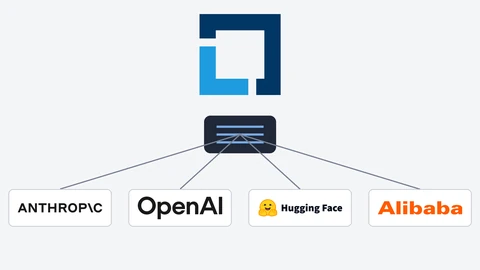
If the deal proceeds, the open-source AI world's most important neutral platform would sit inside the world's most important AI hardware company. That changes incentives: Hugging Face's neutrality as a host for models from OpenAI, Anthropic, Google and Meta could be tested by its owner's competitive position.
If it does not proceed, Nvidia loses a strategic piece of its AI software strategy, and the startup ecosystem loses the certainty of a well-funded steward for the platform. Either way, the DOJ's interest confirms that open-source AI distribution is now a central antitrust battleground.
What to watch
Watch whether the DOJ escalates from information requests to a formal second request, which would signal a serious investigation.
Watch how Nvidia responds publicly and whether it offers commitments to protect Hugging Face's neutrality.
Watch whether the deal's timeline slips, since prolonged antitrust review changes the economics of the acquisition.
The open-source stakes
Hugging Face's centrality in the open-source AI world is hard to overstate: it hosts hundreds of thousands of models, datasets and Spaces demos, and its Transformers library is the default way developers load open models. Its neutrality — hosting competitors' models side by side — is part of why it became the industry standard.
An Nvidia-owned Hugging Face raises the question of whether that neutrality survives. Nvidia competes across the stack with the labs whose models sit on Hugging Face, and it has commercial incentives to steer open-model development toward its own hardware. The DOJ's concern is not that Nvidia will necessarily abuse the platform, but that the merger eliminates an independent neutral steward of a critical AI distribution channel.
The regulatory pattern
The inquiry fits a pattern of US antitrust authorities moving on AI consolidation: the DOJ has separately examined Nvidia's Groq assets deal, regulators have scrutinized big cloud-model partnerships, and the Federal Trade Commission has been active on AI investments and model licensing. The theory of harm is often the same — a vertically integrated incumbent using an acquisition to control a chokepoint.
For deals of this size, an information request is early-stage; the DOJ typically escalates to a second request and then either clears, extracts remedies or challenges. The absence of a formal challenge so far means the deal is not blocked yet, but the review is real and its timeline is uncertain.
Caveats
The inquiry is based on reporting from Reuters (citing people familiar) and CNBC; the DOJ has not confirmed the investigation publicly, and Nvidia has not commented. An information request does not constitute a finding of a violation or a decision to challenge the deal.
The $12.9 billion figure is the announced deal value; the final consideration could differ depending on closing conditions.
Common questions
What is the DOJ looking at?
How Nvidia's $12.9 billion acquisition of Hugging Face could impact competitors and competition in AI.
How big is the deal?
$12.9 billion, Nvidia's second-biggest purchase after the $20 billion Groq assets deal.
What does Hugging Face do?
It runs a widely used open-source platform for hosting, testing and collaborating on AI models, plus infrastructure and collaboration tools.
Sources & further reading
How this story was made
Written by Kristian Kostov with AI assistance and checked against the linked sources. Company performance claims are attributed to the company. Analysis reflects AiLookout’s interpretation; we have not independently tested the products discussed. The cover is an AI-generated editorial illustration, not a photograph or evidence of an actual event.
Our editorial standards