Announced 22 Oct 2026 · Sources checked
What the foundation announced
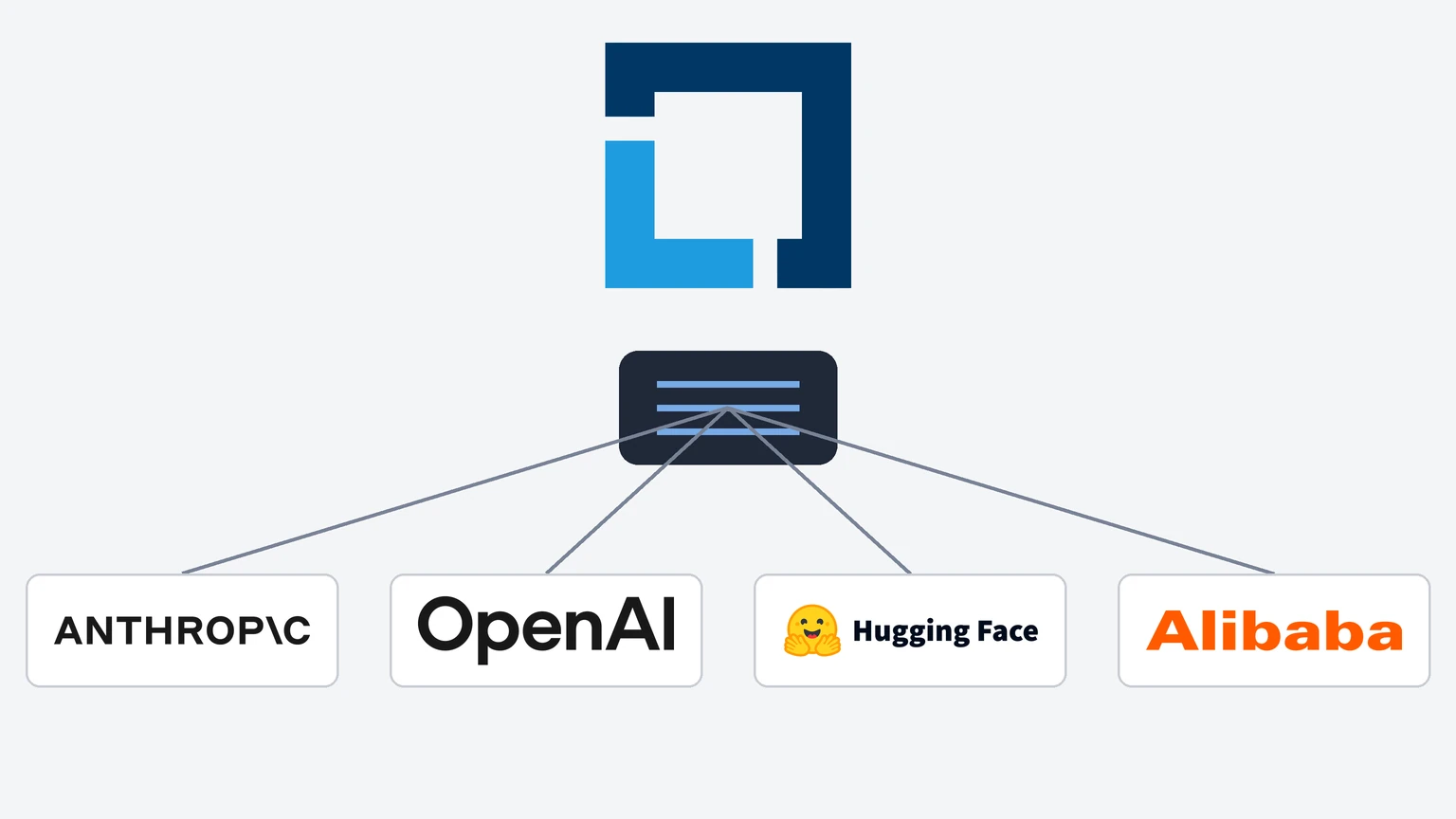
The Agentic AI Foundation (AAIF), the Linux Foundation group that already looks after Anthropic's Model Context Protocol, said on 22 October 2026 that it is taking on four more open projects. The announcement names Agent Skills from Anthropic, Open Responses from OpenAI, OpenEnv from Hugging Face and OpenSandbox from Alibaba.
The news came at AGNTCon + MCPCon North America, the foundation's conference at the San Jose McEnery Convention Center on 22 and 23 October. With the additions, AAIF says it has gone from three projects at launch to ten in its first year. The four newcomers join the Agent2Agent (A2A) protocol, Agent Router, agentgateway, AGENTS.md, goose and MCP.
The foundation frames the new set as covering four layers of an agent system: how agents pick up new skills, how applications talk to models from different providers, how agents are trained and evaluated, and where they run safely. "Four different companies chose to contribute them to neutral governance," said Manik Surtani, the foundation's CTO and co-founder, adding that the aim is "no single company controlling the outcome."
The four new projects
Agent Skills is Anthropic's open format for giving an agent new abilities. A skill packages instructions, scripts and other files that an agent loads only when it needs them, so a piece of know-how can move between agent products. Anthropic launched the format about a year ago, and AI Lookout's guide to skills for teams covers how companies use them. David Soria Parra, co-creator and lead maintainer of MCP at Anthropic, said the company is donating it "to ensure that anyone building with skills can shape what's next."
Open Responses is an open specification based on OpenAI's Responses API. It defines one request and response format, consistent streaming events and a way to describe tools, so developers can write a request once and send it to different model providers. Steve Coffey of OpenAI's technical staff described the goal as "simple, clean, and unified interfaces."
OpenEnv, from Hugging Face, is a framework and community hub for reinforcement learning environments, the practice worlds in which agents are trained and scored. Each environment runs as a container that speaks both MCP, the interface agents already use, and Gym, the protocol training libraries use. Hugging Face's Ben Burtenshaw said the committee behind it includes Hugging Face, Microsoft, Reflection, Meta-PyTorch, Fleet, Mercor, RadixArk, Modal and Prime Intellect.
OpenSandbox, from Alibaba, is a general sandbox platform for running agent code in isolation. It ships SDKs in several languages, one sandbox API and Docker and Kubernetes runtimes, and its own protocol for starting, running and stopping sandboxes so teams can add their own runtimes. Our explainer on agent sandboxing describes why that isolation matters. "We don't want its future to be defined by a single company," said Xiaobin Xu, Alibaba's head of development infrastructure.
What Open Responses changes for developers
Of the four, Open Responses is the one most likely to change everyday code. In a foundation blog post published the same day, Angie Jones explains the problem it targets: every provider formats the same basic exchange differently. Her example is a single prompt asking a model why a test fails. Anthropic's Messages API puts it in a messages list, while Google's generateContent API wraps it in contents and parts, so an app that supports both needs separate code to build each request.
With Open Responses, the request carries a model name, an input and an output limit, and the endpoint address and model identifier become settings rather than branches in the code. The shared format also covers tool calls and streaming, while the agent keeps control of which tools run and with what permissions. Because the specification only describes the API, no model has to be changed or retrained to support it.
Providers can still add their own features. The specification allows extra fields and streaming events, such as timing or cache details, under provider-specific names, and clients that do not understand them are meant to ignore them. A feature that spreads widely can be proposed for the shared standard through the project repository.
Two services already accept the format, according to the post. Databricks Model Serving exposes an Open Responses endpoint for Claude, Gemini and open models it hosts, translating each request into the provider's native format, and Vercel AI Gateway offers an OpenResponses API. That matters for routers and gateways, which today spend much of their effort on exactly this translation, as our report on OpenAI's new approval rule for model routers described.
Why OpenAI and Anthropic are handing over their formats
Handing a format to a foundation gives up some control over it. Changes are meant to go through open discussion rather than one company's roadmap, and competitors can help decide what comes next. The foundation argues that is the point: as more services implement a contract, a change affects every endpoint and app that relies on it, so providers and developers need a neutral place to agree on changes.
For OpenAI, putting a format based on its own API under shared governance could make it the default way other providers expose their models, much as its earlier chat format became an unofficial standard. For Anthropic, Agent Skills follows the same path as MCP, which it donated less than a year ago and which AI Lookout's MCP explainer covers in detail. Soria Parra said the foundation has "done important work in giving the Model Context Protocol (MCP) a neutral home."
None of this means OpenAI's own Responses API stops changing. OpenAI keeps adding features to its hosted API, such as the 12-hour prompt caching it launched this week. Those would reach Open Responses only as provider extensions or through the community process.
Who else has joined
In a separate release the same day, the foundation said it now has 305 members, less than a year after it launched in December 2025, and that 60 organisations joined this quarter. New Gold members are Ant Group, the Gates Foundation, MongoDB, Nutanix, Royal Bank of Canada, Vercel and Vultr.
New Silver members include Dell Technologies, SoftBank Corp., Tenable, Deepgram and Mastra, and new Associate members include Mozilla, the US National Institute of Standards and Technology, SLAC National Accelerator Laboratory and The Chinese University of Hong Kong.
Executive director Mazin Gilbert said the mix shows agents are becoming "institutional infrastructure" and that members are asking "how agents authenticate, how their actions are verified, and who is accountable when one acts on their behalf." Vercel's chief technology officer, Malte Ubl, said standards such as AGENTS.md "should belong to everyone building, not any single platform."
What we could not verify
Everything above comes from the foundation's two releases and its blog post. The releases do not say when each project's repository and trademarks move to the foundation, who sits on each project's technical committee beyond the companies named, or whether Google, which has its own model API formats, plans to implement Open Responses. AI Lookout did not test the specification, OpenEnv or OpenSandbox for this article.
What to watch next
The real test for Open Responses is adoption. Watch whether Anthropic, Google or other large model providers add native Open Responses endpoints, or whether translation stays with gateways such as Databricks, Vercel and the services in our Vercel AI Gateway usage report. For OpenEnv and OpenSandbox, watch whether training labs and agent builders outside the named committees start publishing environments and runtimes for them, and for Agent Skills, whether other agent products adopt the format.
Common questions
What is Open Responses?
An open specification based on OpenAI's Responses API that defines one format for model requests, responses, tool calls and streaming, so the same code can call models from different providers.
What is the Agentic AI Foundation?
A Linux Foundation group launched in December 2025 that governs open agent standards such as MCP, AGENTS.md and goose. It says it has 305 members and now ten projects.
Do developers have to change models to use Open Responses?
No. The specification covers only the API format, so services such as gateways can translate requests for existing models without retraining them.
Sources & further reading
How this story was made
Written by Kristian Kostov with AI assistance and checked against the linked sources. Company performance claims are attributed to the company. Analysis reflects AiLookout’s interpretation; we have not independently tested the products discussed. The cover places the companies’ own logos, taken from public-domain or openly licensed files credited in the caption, on a plain background. It is not a product photograph, a screenshot, or an endorsement.
Our editorial standards