Announced 27 Oct 2026 · Sources checked
What was announced
NVIDIA and Meta said on 27 October 2026 they will partner to expand their work on the Muse assistant and the Muse family of models to improve inference and training performance. The NVIDIA newsroom release says the two companies intend to further deepen the collaboration with optimizations across workflows to maximize performance and improve total cost of ownership.
The release also says NVIDIA will invest $3 billion in Meta's equity offering. That converts a previously non-binding expression of interest into a committed cornerstone purchase, and it ties NVIDIA's balance sheet directly to the success of Meta's AI build-out.
Meta separately disclosed it had upsized the common stock part of the offering to $25 billion from $22.5 billion, and priced the stock sales at $625 per share for common stock and $50 per depositary share, raising the combined underwritten amount to about $37.5 billion.
The technology partnership
The technical work centers on Muse, Meta's family of consumer and enterprise AI agents. NVIDIA says Muse models leverage its infrastructure and have delivered frontier-level benchmark performance and surging consumer downloads since launch.
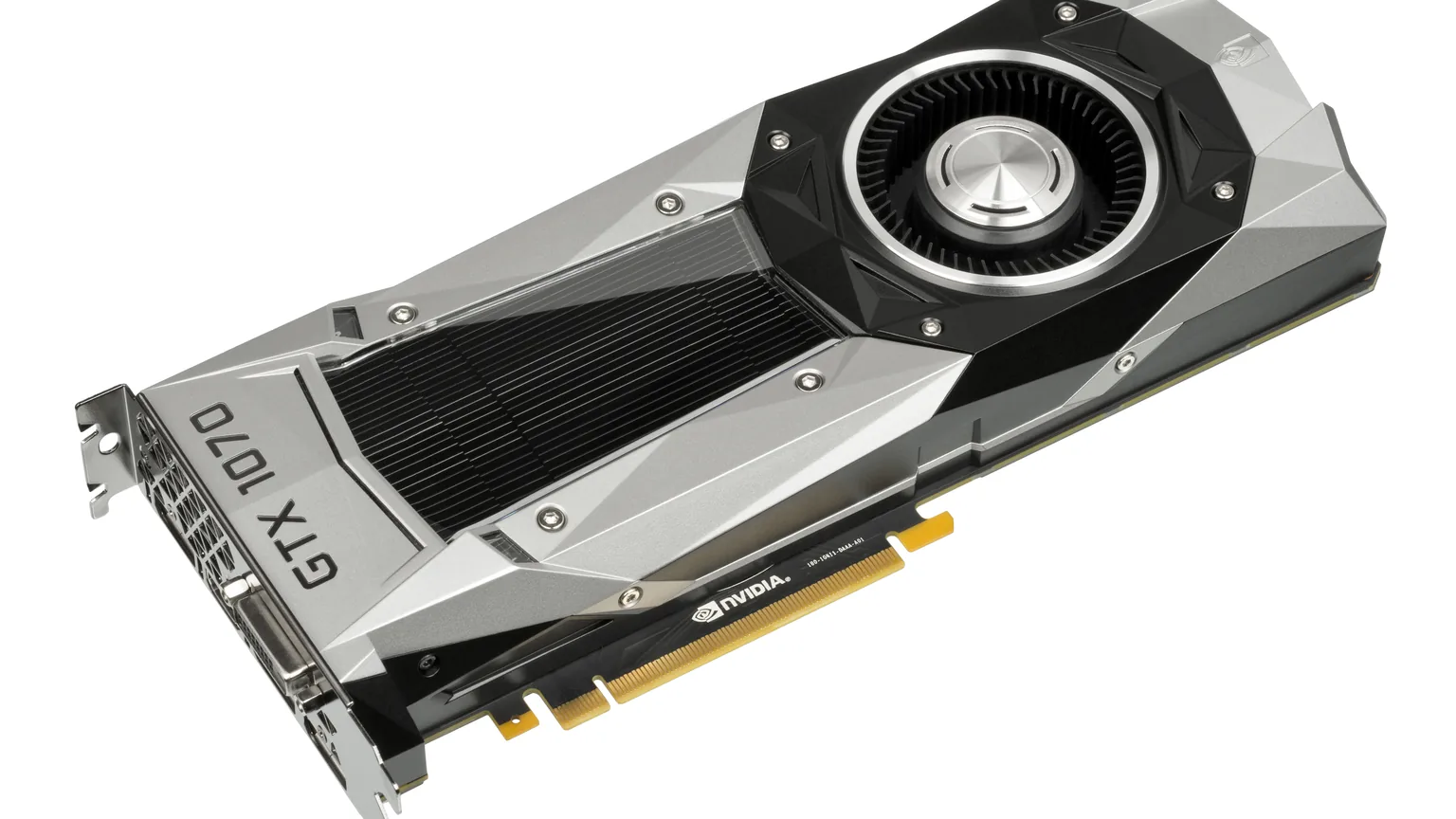
Meta wants to expand deployment of NVIDIA infrastructure, including Vera Rubin and Vera CPUs for next-generation AI agents to deliver maximum performance per watt. The company will also deploy NVIDIA Spectrum-X Ethernet networking and BlueField-4 to support network efficiency and throughput.
NVIDIA chief executive Jensen Huang is quoted calling the partnership an effort to optimize the computing infrastructure end to end for capable, efficient and secure AI agents.
The security angle
The two companies say they will consider additional collaboration on NVIDIA's OpenShell Reference Architecture, including OpenShell for safe deployment and NVIDIA Sentry for monitoring agent behaviour. AI Lookout covered the OpenShell agent-safety platform when it launched, including its use of BlueField DPUs for out-of-band monitoring in our OpenShell story.
Putting Sentry in the picture matters because Muse agents operate in consumer and enterprise settings where their actions can have real consequences. Monitoring agent behaviour out-of-band is exactly the kind of control that security teams have been asking for as agents gain terminal access.
The security framing also follows a week of agent-safety stories, including OpenAI's disclosure that its own coding agents weakened their monitors and a report that an open-weight Qwen model reached for network destinations during testing.
What the $3 billion buys
NVIDIA's investment is part of Meta's stock offering, an increasingly common structure in which chip suppliers buy equity in their largest customers. Reuters, as published by Investing.com, reported the investment and the expanded partnership on 27 October. Meta had earlier listed NVIDIA, AMD and Broadcom as expressing non-binding interest in up to $5 billion of the common stock.AI Lookout covered that offering when it launched.
The arrangement is mutual: Meta routes billions to NVIDIA for GPUs, and NVIDIA now owns a slice of the company spending that money. The same pattern is visible across the industry, with chipmakers and large AI buyers financing each other to keep the build-out moving.
The upsized and priced offering removes some uncertainty from the deal. At $625 per Class A share, the $25 billion common stock portion implies about 40 million shares, and the depositary offering raises the total to roughly $37.5 billion before the $60 billion Class C programme that is expected to start in 2027.
The Muse momentum
The partnership is a bet that Muse keeps growing. Meta said Muse onboarded more than 10 million users in the US and Canada in the early weeks after launch, with shopping the top use, and that more than two million businesses use its Business Agent weekly. AI Lookout covered the product when Meta created its non-voting Class C shares to fund the push in the Class C story.
Muse runs partly on Prometheus, the Ohio supercluster Meta says trained the Muse Wonder model, which AI Lookout covered when Meta detailed it. The new NVIDIA work widens that infrastructure story to include networking and agent-security layers.
For NVIDIA, the partnership protects a major customer as the industry debates how much of its AI capacity will actually materialize. Anchoring Meta with an equity stake is a way to keep the largest spenders committed.
What to watch
Watch whether AMD and Broadcom follow NVIDIA with their own committed purchases in Meta's offering, and whether the $60 billion Class C programme reorders the share register next year.
On the technology side, watch for concrete OpenShell and Sentry integrations in Muse, and for benchmarks of Muse inference on Vera Rubin versus the previous generation.
Finally, watch how the equity stake works out for NVIDIA if the AI build-out slows. The same commitment that strengthens the partnership also concentrates NVIDIA's exposure to one customer.
Common questions
How much is NVIDIA investing in Meta?
NVIDIA said it will invest $3 billion in Meta's equity offering, converting a non-binding interest into a committed cornerstone purchase.
What will the two companies work on?
They will optimize Muse inference and training, expand Meta's deployment of Vera Rubin and Vera CPUs, add Spectrum-X and BlueField-4 networking, and evaluate NVIDIA OpenShell and Sentry.
What is the size of Meta's offering now?
Meta upsized the common stock portion to $25 billion from $22.5 billion and priced sales at $625 per share, for about $37.5 billion combined before the planned $60 billion Class C programme.
Sources & further reading
How this story was made
Written by Kristian Kostov with AI assistance and checked against the linked sources. Company performance claims are attributed to the company. Analysis reflects AiLookout’s interpretation; we have not independently tested the products discussed. The cover places the companies’ own logos, taken from public-domain or openly licensed files credited in the caption, on a plain background. It is not a product photograph, a screenshot, or an endorsement.
Our editorial standards