Announced 4 Nov 2026 · Sources checked
What Uber disclosed
Uber CFO Balaji Krishnamurthy dropped a single-digit number that cut through the hype around AI agents during the company's Q3 2026 earnings call on 4 November. 'For our rides business, it was a grand total of four trips that we fulfilled from agents,' he said, according to earnings call transcripts published by Benzinga. The phrase 'grand total' was not apologetic. Krishnamurthy was setting expectations early, before analysts or the press built a story around agent-driven demand that does not yet exist.
The food delivery side fared better but still barely registered. Krishnamurthy said Uber Eats received about 500 orders from AI agents during the week of Halloween, a number that he described as 'very, very early and very limited.' Against Uber's total of roughly 320 million rides and Uber Eats transactions in a comparable period, agent-originated orders account for roughly 0.00016 percent — rounding error territory.
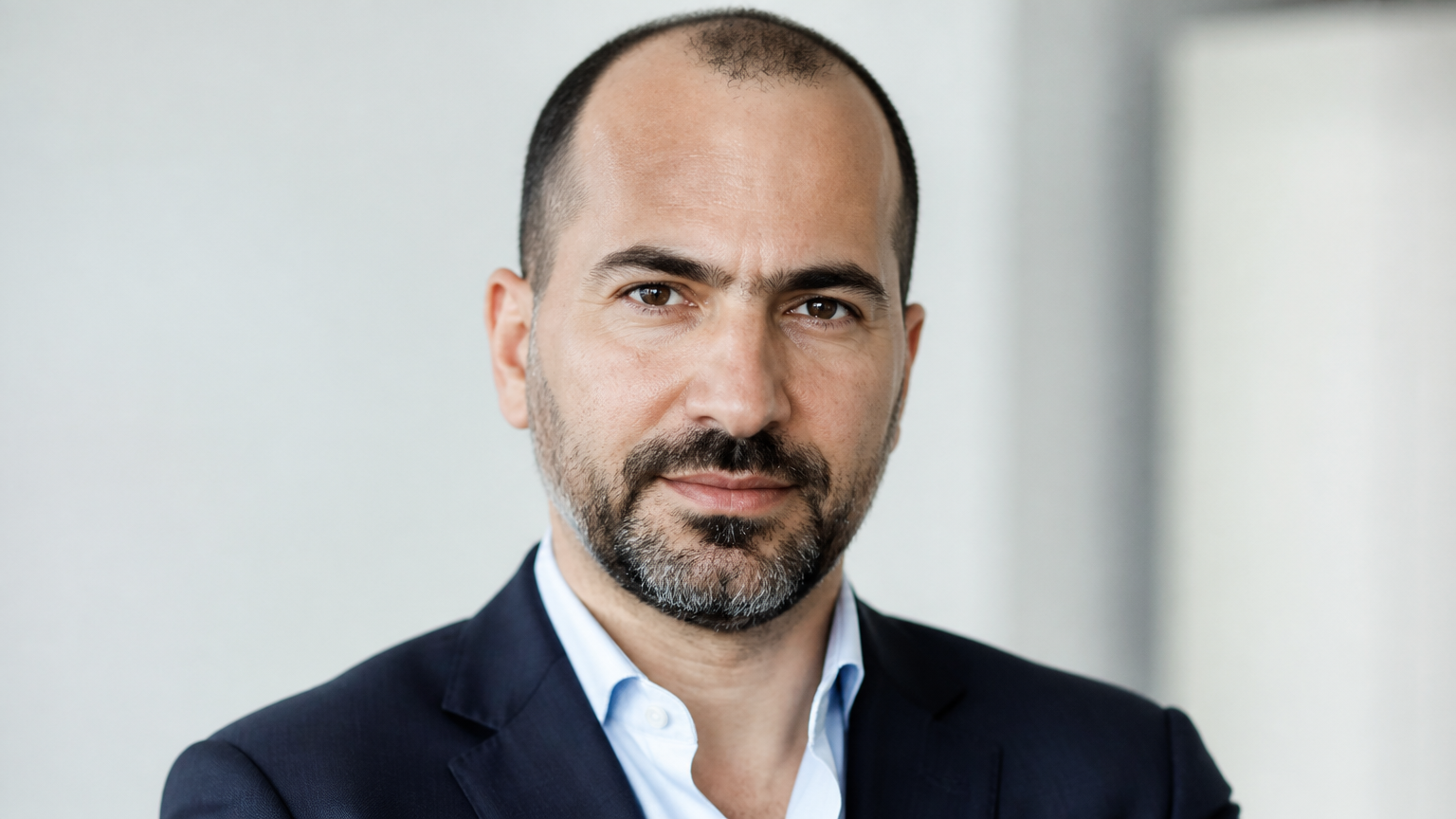
Uber CEO Dara Khosrowshahi struck a measured tone on the call. 'We hope that there will be more traction,' he said. 'We do think that we want to make services that are available to consumers in a delightful, easy way. We think our direct services are going to be the most delightful and easy, but we will work with these third parties.' He added that Uber wants to avoid dependence on any single AI platform and believes the company is well positioned regardless of how agent adoption evolves.
Why the gap between rides and delivery matters
The 125-to-1 ratio between Eats orders and rides is the most revealing number in the disclosure. It fits the structural differences between how people use the two services — differences that agent builders will need to address before rides become a meaningful channel.
A food order is planned in advance: you pick a restaurant, accept a rough delivery window, and wait. An agent can place that order while you finish a meeting. A ride is different. You want a car within minutes at a specific pickup point, often with luggage or a child seat, at a price that can shift while you decide. An agent that gets the timing or curb wrong strands a passenger, not a pizza.
Rides also require live context that text-only agents rarely have. Where you are standing right now, which entrance you use, and whether you are traveling with extra gear are hard to capture in a prompt. The Uber app already knows all of it. For most riders, opening the app takes seconds and eliminates the friction the agent would introduce.
What the numbers mean for agentic commerce
The broader AI industry has spent 2026 describing agents that shop, book, and pay on a user's behalf. Uber is one of the most obvious proving grounds: a ride is a bounded, repeatable transaction with a clear start and end. If agents cannot move the needle there, the thesis deserves harder questions.As we covered in our explainer on evaluating AI agents, benchmarks and controlled tests often outpace real-world adoption. Uber's disclosure offers a rare concrete data point against which to measure those claims.
The disclosure arguably reduces near-term pressure on Uber's stock narrative by removing a bear case about disintermediation. Companies that built forecasts on rapid agent adoption face a harder conversation: the AI sector is spending hundreds of billions on infrastructure, but a leading consumer marketplace reporting a handful of fulfilled orders gives skeptics a concrete data point to cite.
That said, one company's quarter is not a verdict on an entire category. Rides may be among the hardest transaction types for agents to handle. Delivery, scheduled services, and recurring purchases are more likely to see early traction. The Uber disclosure provides a baseline, not a ceiling.
How the broader earnings call framed the disclosure
The agent numbers were a footnote in an earnings report that showed a mixed picture. Uber reported $14.77 billion in revenue, beating the $14.69 billion analyst consensus compiled by LSEG, but net income plunged 92 percent to $512 million compared to $4.9 billion in the year-ago quarter, when a tax valuation release inflated the bottom line.
The mobility segment, Uber's core ride-hailing business, saw revenue decline 2 percent to $7.52 billion, missing the $7.71 billion estimate. Revenue in the food delivery business climbed 23 percent to $5.49 billion, narrowly trailing expectations. The freight division was the bright spot, with sales jumping 34 percent to $1.76 billion, well above the $1.49 billion consensus.
Khosrowshahi attributed the mobility miss to international headwinds, telling CNBC that elevated fuel prices and tighter driver availability weighed on supply growth in several markets. He emphasized that Uber has more demand than supply in most markets and is making targeted investments to strengthen driver supply in India, Brazil, and the United States.
The context matters for the AI agent narrative because it explains why Uber is both cautious and open to third-party agents. The company needs new growth channels for its mobility business while protecting its margins in a capital-intensive market. Third-party agents could become a low-cost acquisition channel, but only if and when the technology reliably converts.For that reason, a single-digit rides figure in Q3 does not mean Uber sees agents as irrelevant. It means the company is watching, waiting, and building internal alternatives - exactly the posture a marketplace operator with 320 million weekly transactions would take toward a technology that has shown no meaningful demand signal.
Uber's own AI investments continue
While third-party agents barely registered, Uber is investing heavily in its own AI capabilities. Khosrowshahi said on CNBC that Uber has committed about $10 billion to bring autonomous vehicles to its platform through partnerships with Rivian, Nuro, AVRide, and others. The company expects over 2,000 automated vehicles on its platform by the end of 2027.Uber is also rolling out its own AI tools to keep customers within its ecosystem. Earlier this year it launched a Cart Assistant for Uber Eats that builds grocery lists from a photo of a recipe, and the company recently gave all 30,000 employees access to OpenAI's ChatGPT Work agent.
The bottom line
Four rides and 500 delivery orders. Those are the numbers Uber chose to disclose, and the company's finance chief delivered them with deliberate framing: very early and very limited. For an industry that has treated agentic commerce as an inevitability, Uber's data suggests the distance between demo and habit is still measured in the millions-to-one ratio.
The most useful reading is also the most mundane: different transaction types will adapt to agents at very different speeds. Delivery and other planned purchases will move first. Real-time services with location and pricing complexity will take years longer. Uber's disclosure does not disprove the agent thesis — but it establishes a meaningful baseline for how small the starting point actually is.
Common questions
How does Uber know a transaction came from an AI agent?
Uber tracks agent-originated transactions through its API and partnership integrations. When a third-party agent books a ride or places an Eats order through an authorized interface, Uber's systems can identify the source. The four rides and 500 Eats orders represent only those transactions that arrived through documented agent channels.
Does this include Uber's own AI assistant?
No. The figures cover only third-party AI agents — bots built by other companies that interact with Uber through its platform. Uber's own AI features, including the Uber Eats Cart Assistant and any internal tools, are not counted in these numbers.
Could the number be higher next quarter?
Uber executives left that possibility open. Krishnamurthy described the current traction as 'very, very early,' implying growth is expected but not imminent. Khosrowshahi said Uber will work with third-party AI platforms, suggesting the company is positioning itself to capture more agent-sourced demand if and when it materializes.
Sources & further reading
How this story was made
Written by Kristian Kostov with AI assistance and checked against the linked sources. Company performance claims are attributed to the company. Analysis reflects AiLookout’s interpretation; we have not independently tested the products discussed. The cover is an AI-generated editorial illustration, not a photograph or evidence of an actual event.
Our editorial standards