Announced 29 Oct 2026 · Sources checked
What Spawn is
Simon Willison linked on 29 October 2026 to Jacob Sansbury's post detailing Spawn, a massively multiplayer environment where the game world is built and modified entirely by AI agents. Players interact through an in-game agent named Savi, making requests in natural language to change the world — add features, alter terrain, create items.Behind the scenes, a swarm of Fable 5-powered agents writes the code changes in response to those requests, edits the live codebase, runs tests and ships to production hourly. The process is fully autonomous: no human developer reviews or approves the changes before they go live. The $3 million monthly burn rate represents the cost of the token consumption for all those agentic code-generation loops.
The agentic architecture
Spawn's core technical claim is that it is running frontier-class models (Fable 5) in a continuous agentic loop: the agents have access to the full codebase, can read current game state, write modifications, deploy and observe the results. This creates a feedback cycle where the game world evolves in response to what players ask for, without any traditional game development pipeline.
The 'most AI-pilled company in the world' framing is Sansbury's own description, acknowledging how aggressively the project pushes agentic autonomy. The codebase is not a static game with an AI wrapper — it is a game whose source code is continuously rewritten by the agents themselves. This makes Spawn less a game and more a demonstration of what happens when you give frontier models write access to a production codebase and an incentive to keep players engaged.
The economics
The $3 million monthly token burn is the headline number, and it is the story. No conventional game studio would spend that much on inference for a single title, but Spawn's economics invert the traditional model: instead of paying human developers to write and maintain game code, the cost is shifted entirely to inference tokens. Whether $3 million a month is sustainable depends on how many players Spawn attracts and what revenue model it deploys.
The burn rate also means Spawn is one of the most expensive experiments in autonomous agentic coding ever conducted publicly. By comparison, the $3 million monthly inference cost exceeds the entire compute budget of many mid-size AI startups. It is a signal that the cost of frontier-model inference at scale is now in the millions per month for a single application.
What it means
Spawn is significant not as a game but as a limit test: a production system where AI agents have unrestricted write access to a live codebase and the feedback loop is player engagement. Whether it works as a game is secondary to whether it works as an agentic loop — and the fact that it is shipping code hourly at all is a data point for the autonomous-coding debate.
For the AI industry, the $3 million figure is the real signal: agentic code generation at frontier-model prices is expensive enough that only a few applications can afford it, but the ceiling is descending fast. If model costs drop at the current trajectory, million-dollar monthly inference budgets will be accessible to game studios, not just experiments.
Caveats
This account is based on Sansbury's own claims and Simon Willison's link post. The $3 million figure, agent autonomy claims and codebase stability have not been independently verified. The game's player count and revenue model are not disclosed.
The 'Fable 5' model mentioned may refer to a specific class of Anthropic or other frontier models; references to it in this context are as reported by the creator and the aggregator.
The game context
The game is called Spawn and exists at spawn.co. The phase 3 of development is underway with a first game called Fracture already running on real hardware per the project's status page. The environment is described as a massively multiplayer space where the modifications players request through the in-game agent Savi are executed by the AI swarm in near-real-time.
The 'Fable 5' model class mentioned — whether referring to a specific model generation from Anthropic or another provider — is reportedly a frontier-class model that the Spawn agents use for code generation and reasoning. The use of frontier models for live code modification is unusual because most organizations sandbox agent code changes; Spawn removes that sandbox as a design principle.
What it means for game development
Spawn inverts the traditional game development pipeline: instead of a studio building features and content for players to consume, the players prompt the direction, and AI agents do the building. The $3 million monthly token burn is the operating cost of running this loop at frontier-model prices.
If this approach succeeds as a game (players engage, pay, stay), it would be one of the first commercially viable products built entirely by autonomous coding agents. If it fails, the $3 million burn rate will be remembered as the price of testing the limits of agentic coding. Either way, it is a significant data point for the question of whether autonomous AI coding can build and maintain a production application at scale.
Common questions
What is Spawn?
A massively multiplayer game where AI agents write and deploy code autonomously in response to player prompts.
How much does it cost?
Creator Jacob Sansbury says the operation burns over $3 million per month in token costs for the Fable 5 agents.
Do humans write any code?
No — the agents have write access to the live codebase, edit and deploy without human review.
Sources & further reading
How this story was made
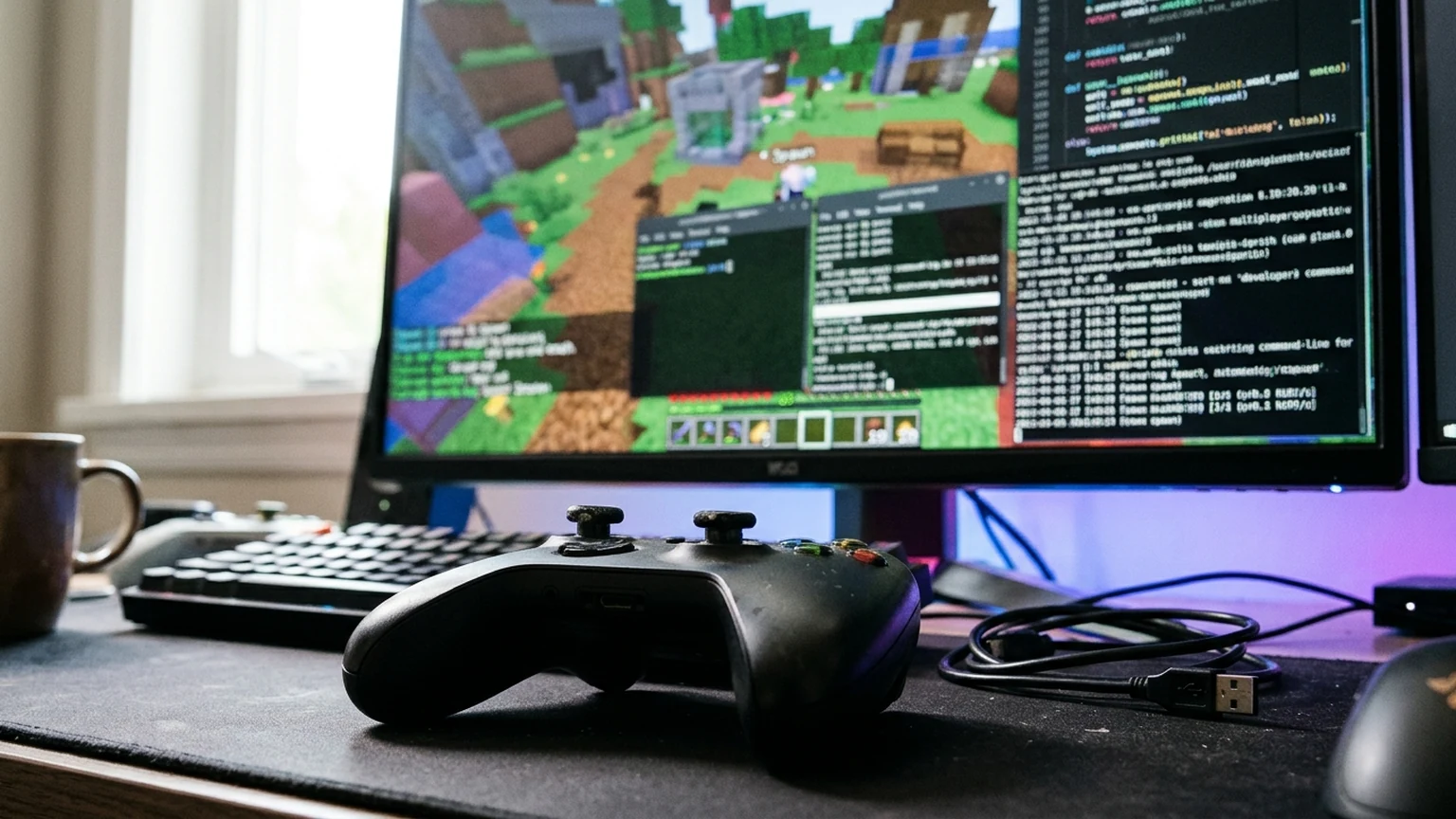
Written by Kristian Kostov with AI assistance and checked against the linked sources. Company performance claims are attributed to the company. Analysis reflects AiLookout’s interpretation; we have not independently tested the products discussed. The cover is an AI-generated editorial illustration, not a photograph or evidence of an actual event.
Our editorial standards