Announced 28 Oct 2026 · Sources checked
What AP reported
The Associated Press reported on 28 October 2026 that social media videos believed to be produced with artificial intelligence and linked to Russia are misusing real people's names and photographs to spread disinformation about two Democratic Senate candidates in the final stretch of midterm voting.One target is Sherrod Brown of Ohio, running against Republican Sen. Jon Husted. The video against him depicts a newscast and includes pictures of Haya Akbik, who interned for Brown several years ago, and other former staff members. Akbik told AP any claims attributed to her in the clip are 'completely made up.'
The Texas video
The other target is James Talarico of Texas, running against Republican Ken Paxton. The video against him, also believed to include some AI manipulation, is framed as a direct-to-camera confessional from a former student of Talarico. Talarico's spokesperson JT Ennis said in a statement: 'The most powerful people in the world know they can't beat James Talarico with the truth, so they're slandering him with AI deepfakes, foreign bots, and conspiracy theories to protect their broken, corrupt political system.'
The Russia connection
The videos resemble clips from a Russian network known as Storm-1516 that targeted former Democratic presidential candidate Kamala Harris and her running mate, Minnesota Gov. Tim Walz, two years ago, AP reports. Clemson University professor and media forensics expert Darren Linvill found that accounts sharing the recent material had also shared former Storm-1516 content.
Hany Farid, a Dartmouth College professor who studies AI deepfakes, said his analyses showed that videos targeting Brown and Talarico were likely either generated or manipulated using the technology. The US Cybersecurity and Infrastructure Security Agency and the Russian Embassy in Washington did not respond to comment requests.
Platform response
The social media company X has taken down the initial posts that shared the videos and suspended the users for violating the platform's rules. However, copies could still be found online Tuesday with hundreds of shares, demonstrating how difficult it can be to contain disinformation that proliferates in the final days of an election.
What it means
The episode shows the evolving playbook of foreign influence operations: instead of crude fake accounts, operatives now use AI to fabricate realistic video that borrows the names and faces of real people, making the material far harder to dismiss at a glance. The videos demonstrate how foreign adversaries continue a familiar playbook, with AI as a force multiplier for fabricating damaging information that can sometimes appear very real.
For voters, the practical lesson is the same one election officials have been repeating: verify claims from official sources and treat dramatic video accusations circulating in the final days of a campaign with skepticism, especially when platforms have already removed the original posts. For platforms and researchers, the case highlights how hard containment is once AI-generated content spreads.
What to watch
Watch whether attribution to Storm-1516 is confirmed by the platforms and by security researchers in the coming days.
Watch whether additional candidates become targets as the midterms approach, especially in competitive Senate races.
Watch how platforms enforce synthetic-media policies during the final days of voting and whether takedowns keep pace with re-uploads.
How AI changes the disinformation playbook
The use of real people's names and faces marks an escalation from earlier AI disinformation, which was often easy to spot because it used synthetic faces or obviously generated footage. Borrowing Haya Akbik's name and images, or framing a fake video as a confession from a former student, makes the material plausible enough to circulate widely before it is debunked.
Experts quoted by AP stress the scaffolding: the videos reuse a familiar Russian playbook but with AI as a force multiplier, allowing operations to produce more content faster and to target more races with bespoke material. The difficulty of containing re-uploads means platforms are always chasing copies, and the spread in the final days of an election gives the material its window of effect.
The detection challenge
Detection is asymmetric: generating convincing fake video is now cheap and fast, while verifying that a specific clip is AI-generated and attributing it to a specific network takes expertise and time. Hany Farid's analysis involved detailed forensics; platforms deploying automated synthetic-media detectors can catch obvious cases but struggle with lightly edited material.
The attribution to Storm-1516 is also probabilistic — shared hallmarks and account histories rather than a definitive link. That is normal for influence-operation reporting, but it means the public should treat the attribution as expert analysis rather than a government or platform determination.
Caveats
This account relies on AP's reporting, which in turn relies on the candidates' spokespeople, the affected individuals and the forensic experts quoted. The videos themselves are not reproduced here, and AI Lookout has not independently verified the AI-generation or the Russia link.
The platforms' takedown timeline and the extent of remaining copies are as reported by AP on 28 October; these details change quickly in an active disinformation cycle.
Common questions
What do the videos do?
They misuse real people's names and photographs to spread disinformation about Democratic Senate candidates Sherrod Brown and James Talarico.
Are they linked to Russia?
Experts say the videos resemble Russia's Storm-1516 network; one forensic analyst found the accounts had also shared former Storm-1516 content.
How is AI involved?
Dartmouth's Hany Farid said analysis indicates the videos were likely generated or manipulated using AI; the clips include deepfake-style fabrications.
Sources & further reading
How this story was made
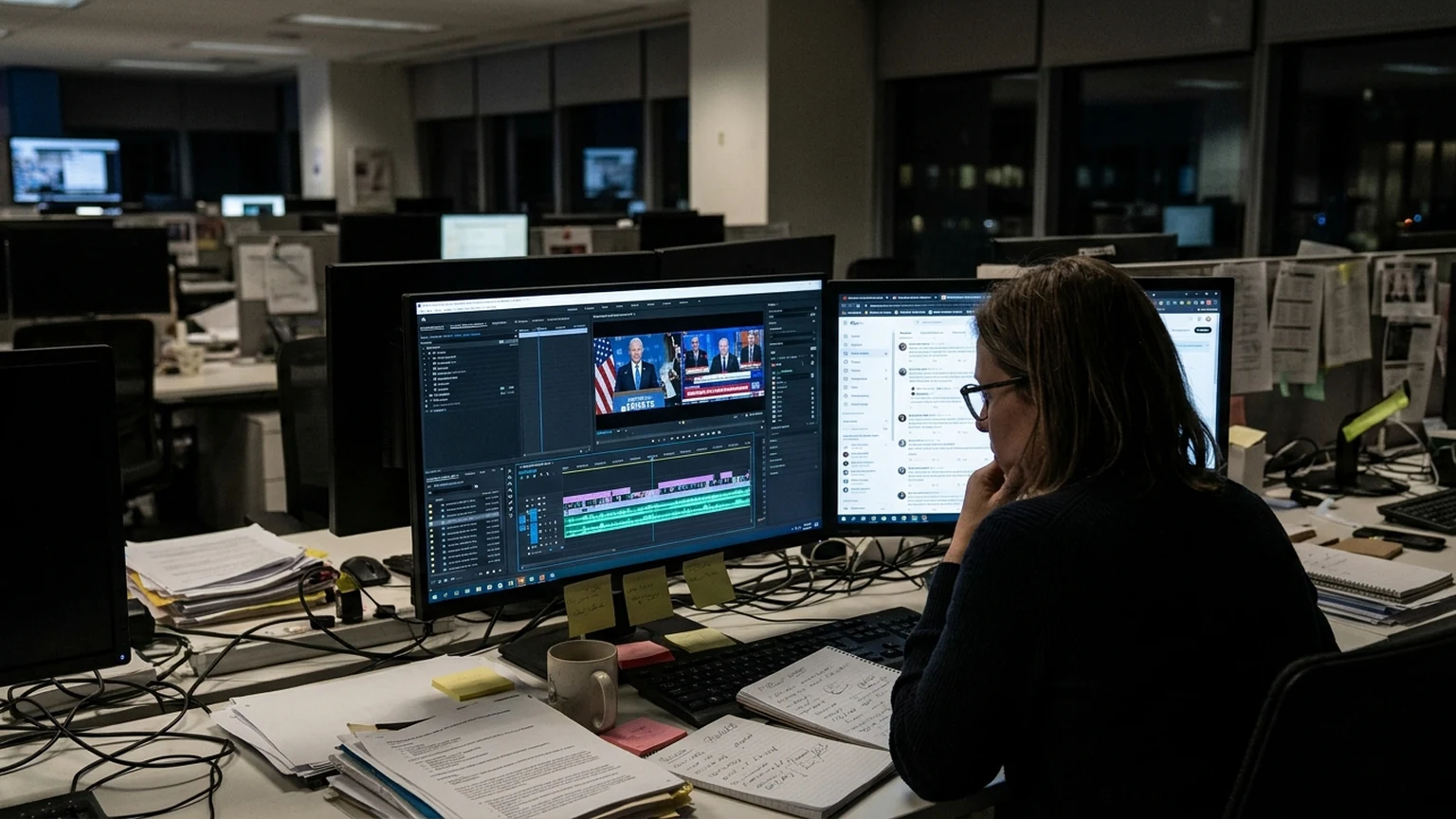
Written by Kristian Kostov with AI assistance and checked against the linked sources. Company performance claims are attributed to the company. Analysis reflects AiLookout’s interpretation; we have not independently tested the products discussed. The cover is an AI-generated editorial illustration, not a photograph or evidence of an actual event.
Our editorial standards