Announced 22 Oct 2026 · Sources checked
What Rivian bought
Rivian announced on 22 October 2026 that it has acquired Third Dimension AI, a company that turns real-world data into controllable 3D simulation environments. The electric vehicle maker says the deal will speed up synthetic data generation and full-world simulation for its driver-assistance and self-driving systems.
Financial terms were not disclosed. Third Dimension's leadership and technical staff will join Rivian's autonomy research and engineering teams, led by James Philbin, Rivian's senior vice president for autonomy and AI.
TechCrunch, which interviewed Philbin and Third Dimension's chief executive, describes the startup as a world model company: one that uses AI to turn images and videos into lifelike 3D worlds.
Who Third Dimension is
Third Dimension was founded in 2024 by Tolga Kart, its chief executive, and Piotr Sokolski. According to TechCrunch, the founders are veterans of the gaming and autonomous vehicle industries, and the company has 15 people, most of them based in the UK.
It raised 7 million dollars in seed funding from venture firms including Abstract Ventures, MVP, Soma Capital and Solari Capital. Its technology was first built to speed up video game development by generating 3D worlds for real-time game engines. The founders also saw uses in defence and autonomous vehicles; under Rivian, the team will work only on driving.
Kart told TechCrunch that serving many kinds of customers had been hard for a small company, and that the team is glad to focus on one problem at a scale where its technology makes a real difference.
What the technology does
Rivian's release says Third Dimension's platform transforms real-world data into high-fidelity, controllable 3D environments. Once a real street has been rebuilt in 3D, engineers can recreate complex driving scenarios and vary them at scale, for example by changing the weather, the time of day or what other road users do.
The company's own description says its platform lets teams building autonomous systems and robots reconstruct real-world environments, create variations and edge cases, and generate data for training and validation. In the release, Philbin said the technology lets Rivian recreate challenging driving situations, vary the conditions and improve how its systems respond, across both its consumer cars and its robotaxi plans.
Why simulation matters for self-driving cars
Self-driving systems are trained and tested on huge amounts of driving data, but the most dangerous moments are rare. A child running between parked cars or a lorry shedding its load may happen once in millions of miles. Waiting for the fleet to meet each of these situations is slow, so developers recreate them in simulation.
Kart told TechCrunch that simulators have traditionally been built on rendering or video game engines and often rely on synthetic data. They can look like the real world, but a gap remains between the two, and the usual fix is to feed the simulator ever-larger amounts of data in the hope of closing it.
Third Dimension's approach is to use AI to match the physical world more closely from the start. Combined with Rivian's own driving data, TechCrunch notes, that could become a valuable simulator. Philbin said it will let Rivian simulate complex driving conditions without waiting for rare real-world edge cases to occur.
Rivian's data flywheel
Rivian already collects a lot of real data. TechCrunch reports that it gathers driving data from tens of thousands of R1 pickups and SUVs, delivery vans and R2 SUVs whose owners have enabled external camera sharing. The data is aggregated and anonymised, and Philbin said Rivian receives more than 400,000 driving sequences from its customer fleet every day.
Rivian calls the loop of collecting data, training models and sending improved software back to cars its data flywheel. The acquisition adds a virtual half to that loop: real sequences can be rebuilt as 3D scenes and then multiplied into many variations.
The hardware side is also changing. When Uber and Rivian announced their partnership, Uber's release recapped Rivian's third-generation autonomy platform, announced in December 2025 for the R2 from late 2026. It has 11 cameras totalling 65 megapixels, 5 radars and a lidar sensor, and runs on two of Rivian's in-house RAP1 chips with 1,600 TOPS of AI compute. Rivian said lidar point clouds from customer cars would feed its end-to-end driving models.
The robotaxi deal with Uber
Simulation matters more because Rivian has promised robotaxis. Uber and Rivian said they plan to deploy 10,000 fully autonomous R2 robotaxis in a first phase, available only through Uber, with an option to negotiate up to 40,000 more from 2030. The first deployments are planned for San Francisco and Miami in 2028, expanding to 25 cities in the US, Canada and Europe by 2031.
Uber will invest up to 1.25 billion dollars in Rivian through 2031, tied to Rivian hitting certain autonomy milestones by specific dates. An initial 300 million dollars was committed after signing, subject to regulatory approval. That structure means Rivian is paid for progress, and better simulation is one of the few ways to test a driverless system against thousands of rare situations before it carries passengers.
A bigger London AI hub
Philbin told TechCrunch the deal also gives Rivian a chance to expand its AI hub in London. Most of Third Dimension's team is in the UK, which has become a busy place for self-driving and simulation research.
Rivian did not say how many people it plans to hire in London or whether Third Dimension's product will still be offered to outside customers. The release describes the platform as being brought in-house.
Where this fits in the robotaxi race
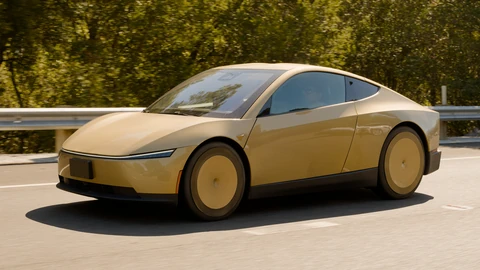
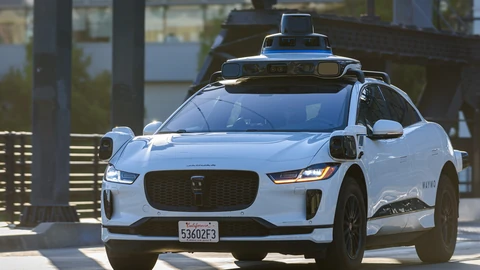
The deal lands in a busy week for robotaxis. A day earlier, Bolt said it would use NVIDIA's Alpamayo software for Lucid robotaxis starting in Madrid, and Tesla said Cybercab rides will start in Dallas next month. Waymo said on 16 October that it is heading to Toronto with riders planned for 2028.
Each company is betting on its own mix of data, chips and simulation. Rivian's approach is to own the whole stack, from the vehicle and the chip to the software, and now a piece of the simulation tooling too. In the partnership release, Uber cited that vertical integration as a reason for backing Rivian.
What is not known yet
Rivian has not said what it paid, when Third Dimension's technology will be part of its training pipeline, or how it will measure whether simulated scenes improve real-world driving. TechCrunch's story was marked as developing and may add detail.
There is also no public benchmark yet showing how closely Third Dimension's reconstructed worlds match reality for driving, which is the gap Kart says the technology closes. The first evidence will likely come indirectly, through Rivian's progress on the autonomy milestones tied to Uber's investment and the launch of the R2's driver-assistance features. AI Lookout will update this story if Rivian shares more.
Common questions
How much did Rivian pay for Third Dimension AI?
Rivian did not disclose the financial terms. Third Dimension had raised 7 million dollars in seed funding.
What will Rivian use the technology for?
To generate synthetic data and simulate driving scenarios for its driver-assistance features and the self-driving system for its planned Uber robotaxis.
Sources & further reading
How this story was made
Written by Kristian Kostov with AI assistance and checked against the linked sources. Company performance claims are attributed to the company. Analysis reflects AiLookout’s interpretation; we have not independently tested the products discussed. The cover places the companies’ own logos, taken from public-domain or openly licensed files credited in the caption, on a plain background. It is not a product photograph, a screenshot, or an endorsement.
Our editorial standards