Announced 21 Oct 2026 · Sources checked
What Bolt announced
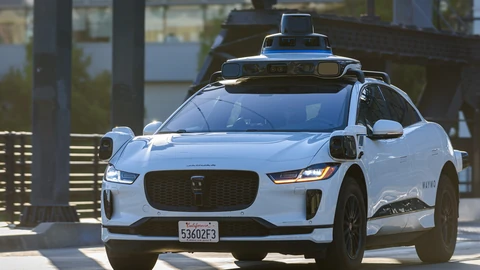
Bolt, the Estonian ride-hailing and delivery company, said on 21 October 2026 that it has chosen NVIDIA's Alpamayo Stack, the chipmaker's full self-driving software, to drive the vehicles in its European autonomous ride-hailing programme. In a press release on its blog, Bolt says the programme will start in Madrid during 2027, with Germany and France named as key markets for later deployment, and will begin with vehicles from the US electric carmaker Lucid.
Bolt describes the Madrid work as laying the foundations for a rollout of "at least 25,000 Level 4-ready Lucid vehicles equipped with NVIDIA Hyperion", NVIDIA's reference computer and sensor design for self-driving cars. Level 4 means a car can drive itself without a human fallback within a defined area. The programme is part of a larger target: Bolt wants 100,000 autonomous vehicles on its platform across Europe and the wider UNECE region by 2035.
The announcement was timed to NVIDIA's GTC Berlin conference, where NVIDIA's own release listed Bolt alongside Lucid, Mercedes-Benz, Volkswagen Commercial Vehicles and Einride as European companies showing autonomous-driving work on Hyperion. "Robotaxis are the first mass-market application of robotics and physical AI, reinventing how people and goods move," NVIDIA chief executive Jensen Huang said in that release.
What Alpamayo Stack and Hyperion do
The deal fills a gap left open when Bolt and Lucid first outlined their partnership in September. The cars were always meant to be built around Hyperion, but Hyperion is a hardware and sensor blueprint, not a driver. Bolt has now picked the software that will make the driving decisions, and it is NVIDIA's.
Bolt says Alpamayo Stack "combines reasoning AI with classical perception and planning", runs on Hyperion, and is backed by NVIDIA's Halos safety system. In practice that means a large AI model that can interpret a scene and explain its choices sits alongside the more conventional modules that detect objects and plan a path. Bolt and NVIDIA say they will adapt the software for European roads and integrate it into vehicles from several manufacturers, starting with Lucid.
The two companies split the work along familiar lines. NVIDIA supplies the computer, the sensor reference, the driving software and the safety tooling. Bolt's autonomous unit, Bolt Autonomous Driving Solutions, says it will lead development and commercialisation of the service, bringing fleet management, regulatory work and local market knowledge from a platform that it says serves more than 200 million customers.
Rishi Dhall, NVIDIA's vice president of automotive, framed the pitch as standardisation: "NVIDIA Hyperion standardizes the compute and sensor architecture across vehicle platforms, while NVIDIA Alpamayo Stack and Halos provide the driving intelligence and safety foundation." Bolt is not the first European company to take the full NVIDIA package; earlier in October Mercedes-Benz extended its partnership with NVIDIA around Hyperion and Alpamayo, and Volvo Cars announced similar plans.
Madrid first, and only for data at the start
The Madrid start is more modest than the 25,000-vehicle figure suggests. Bolt says the programme "is expected to begin with Lucid vehicles in 2027, initially gathering real-world driving data to support the development and validation of the autonomous driving technology, subject to regulatory approval." In other words, the first cars will collect data, not carry paying riders, and even that step still needs a regulator's approval.
Bolt's president and head of autonomous driving, Jevgeni Kabanov, said the Region of Madrid "is pioneering a structured framework for commercial autonomous mobility in coordination with national authorities", and that Germany "will also be a priority for what comes next, with cities already setting out clear ambitions for autonomous mobility." He added that Bolt's ambition "isn't to bring autonomous driving to just a handful of cities."
Neither Bolt nor NVIDIA gave a date for rides without a safety driver. Electrek notes that there is no timeline for driverless passenger service, and that the Lucid platform the September deal was designed around has itself slipped, so the first Madrid data cars could be existing Lucid models if the purpose-built vehicle is not ready.
Where Lucid fits
For Lucid, the deal adds a second robotaxi customer on a different software stack. Lucid already supplies Gravity SUVs for Uber's US robotaxi programme, which uses Nuro's driving software. Kay Stepper, president of Lucid Technologies, said Lucid's vehicle architecture "provides an ideal foundation for integrating NVIDIA Alpamayo technology with Bolt's mobility platform", and called the "launch of data collection next year" one of the first steps toward autonomous mobility in Europe.
The numbers on paper are large for a small carmaker. Electrek calculates that Uber's programme with Lucid and Nuro now calls for at least 35,000 Gravity vehicles, and Bolt's adds at least 25,000, against 15,841 vehicles Lucid delivered in all of 2025. That gap is one reason to read the 25,000 figure as a long-term ceiling for the programme rather than a production schedule.
The rest of NVIDIA's European push
Bolt's choice was one of several self-driving announcements NVIDIA made in Berlin. Volkswagen Commercial Vehicles showed its autonomous ID. Buzz AD platform with Hyperion, Einride said it is building its next-generation driver for autonomous freight trucks on Hyperion, and TIER IV and the Technical University of Munich said they plan to use Hyperion to develop autonomous public transport in Germany. Mercedes-Benz said its MB.DRIVE ASSIST PRO system, built with NVIDIA, will soon be approved for urban point-to-point driver assistance in Germany.
NVIDIA also introduced Halos SAFE, a framework meant to tie simulation, hardware-in-the-loop tests, road testing and fleet monitoring into traceable safety evidence, with TÜV Rheinland among the partners on evaluation workflows. On the model side it announced Alpamayo 2 Edge, a 2-billion-parameter reasoning model built on Cosmos that NVIDIA says is designed to run at 10 Hz on its DRIVE AGX Thor computer for in-car scene understanding and motion planning, plus new Cosmos 3 Nano variants and an Alpamayo Agentic Factory blueprint expected in early 2027.
The Berlin event followed a political push: two days earlier Germany signed a physical AI pact with NVIDIA. NVIDIA's release is careful to say many of these products "remain in various stages" and will be offered on a when-and-if-available basis.
How Bolt's plan compares
Bolt is not betting on one supplier. Its release says the NVIDIA and Lucid programme sits alongside its work with Pony.ai and Stellantis, which Electrek says began with a pilot in Luxembourg announced in June. Elsewhere the race is moving on different timelines: Tesla is taking its Cybercab to Dallas and promises owner robotaxis for 2027, while Waymo is mapping Toronto with driverless rides planned for 2028.
What distinguishes Bolt's plan is the business model. Bolt does not build cars or write driving software; it is betting that a ride-hailing network with local regulatory relationships can stitch together other companies' vehicles and NVIDIA's off-the-shelf driver, city by city. For NVIDIA, Alpamayo Stack moves it from selling chips and reference designs toward selling the driver itself, which puts it in competition with Waymo, Nuro and Tesla's software.
What is still uncertain
The obvious caveats are time and regulation. Madrid's data collection depends on approval, there is no date for paid or driverless rides, and the vehicle Bolt and Lucid planned around is behind schedule. Bolt has not said how many cars Madrid will start with, what the programme costs, or how the 25,000 vehicles will be paid for and phased in.
Alpamayo Stack also has to prove itself on European streets, which differ from the US roads where much of NVIDIA's driving data was gathered. Both companies say adapting the software for Europe is part of the work. For now the announcement settles one question, which software will drive Bolt's Lucid robotaxis, and leaves the harder ones, when and where riders can use them, for 2027 and beyond.
Common questions
When can people ride in a Bolt robotaxi in Madrid?
No date has been given. Bolt says the Madrid programme starts in 2027 with Lucid vehicles gathering real-world driving data, subject to regulatory approval, before any passenger service.
What is NVIDIA Alpamayo Stack?
NVIDIA's full-stack self-driving software. Bolt says it combines reasoning AI with classical perception and planning, runs on NVIDIA Hyperion hardware and uses NVIDIA Halos for safety.
How many robotaxis does Bolt plan with Lucid?
At least 25,000 Level 4-ready Lucid vehicles built on NVIDIA Hyperion, as part of Bolt's goal of 100,000 autonomous vehicles on its platform by 2035.
Sources & further reading
How this story was made
Written by Kristian Kostov with AI assistance and checked against the linked sources. Company performance claims are attributed to the company. Analysis reflects AiLookout’s interpretation; we have not independently tested the products discussed. The cover places the companies’ own logos, taken from public-domain or openly licensed files credited in the caption, on a plain background. It is not a product photograph, a screenshot, or an endorsement.
Our editorial standards