Sources checked
What does Counsel Health do?
Oura announced on Tuesday that it is acquiring AI-native primary care company Counsel Health for $625 million. The deal comes weeks after Oura postponed its up-to-$2.2 billion IPO indefinitely, citing uncertainty in the IPO market.
Counsel Health is an AI-powered healthcare platform that combines a chat-based medical experience with access to licensed physicians.
Its service was integrated into the Oura app in June, letting users get personalized medical advice from the company's medical AI and escalate to a physician when needed, all from the Oura app.
The startup raised a $25 million Series A led by Andreessen Horowitz and GV about a year ago. PitchBook estimates it had raised $36 million total before the acquisition.
Counsel employed about 70 people across engineering, clinical operations, and product roles.
Counsel's AI triage system starts with a symptom questionnaire, cross-references the user's answers against clinical guidelines, and determines whether self-care advice, a prescription refill, or a physician consultation is appropriate.
The physician network handles the cases the AI cannot resolve independently, creating a supervised model that regulators accept but keeps costs below traditional telemedicine.
What changes for Oura users?
The companies plan to expand their existing integration across preventative care, acute care, and specialty and chronic care.
Oura CEO Tom Hale said in a statement that the ring helps members understand their physiology, and with Counsel's capabilities, users can take action on their health across quick questions, prescriptions, lab results, chronic care, and referrals.
The expanded service could turn Oura's subscription from a passive tracking feed into an active medical tool.
Instead of just seeing that their heart rate variability dropped, a user could message Counsel's AI, get triage advice, and have a prescription sent to their pharmacy, all without leaving the Oura app.
Counsel CEO Muthu Alagappan will join Oura as chief clinical AI officer, alongside about 70 employees, per Bloomberg. He said Counsel built its medical AI around trust, safety, and responsibility, keeping physicians in the loop for clinical decisions.
Oura's biometric data gives clinicians objective context, trended measurements, and member engagement data to deliver more informed care, he added.
Why is Oura buying a medical AI company?
Oura has dominated the smart ring market for years, but rivals like RingConn and Ultrahuman are gaining ground with cheaper devices and longer battery life. The Counsel acquisition creates a clinical moat that commodity hardware competitors cannot easily replicate.
A $625 million purchase brings medical credibility, licensed physicians, and regulatory know-how that would take years to build internally.
The IPO postponement adds strategic urgency. Without public-market funding, Oura needs to show investors it can grow revenue per user.
Adding a paid clinical AI tier to the monthly subscription is one clear path to higher ARPU.
If Oura can convince insurers to subsidize the ring plus clinical service for plan members, the revenue model shifts from consumer electronics to healthcare SaaS.
What about the regulatory path?
Adding clinical AI to a consumer wearable brings regulatory scrutiny from the FDA and international health authorities. Counsel Health already operates within the US healthcare regulatory framework, with licensed physicians supervising clinical decisions rather than relying on fully autonomous AI.
That supervised model is the same approach that companies like Epic Systems are adopting for their healthcare AI agent connectors.
The acquisition means Oura inherits Counsel's regulatory posture rather than starting from scratch.
The company will need to navigate FDA clearance for any clinical claims tied to Oura's biometric data, but having an existing compliance team and physician network makes that path shorter than building one from zero.
What stays and what changes for Counsel's partners?
Oura said Counsel will continue serving existing and new enterprise partners after the acquisition.
The goal is to expand the AI-native care model to more people beyond Oura's membership, making Counsel a standalone distribution channel as well as an Oura feature. For enterprise customers, that means no immediate disruption.
Counsel's physician-backed AI service keeps running for existing partners while the combined teams build deeper integrations.
How does this fit the broader wearable AI healthcare trend?
The deal is the largest bet yet that wearable biometrics and clinical AI belong together as a single product category.
Apple has been adding health sensors to the Watch for years but has stopped short of acquiring a clinical AI practice. Google's Fitbit acquisition in 2021 was about hardware and data, not real-time clinical triage.
Samsung's Galaxy Ring launched in 2024 with health tracking but no AI physician layer.
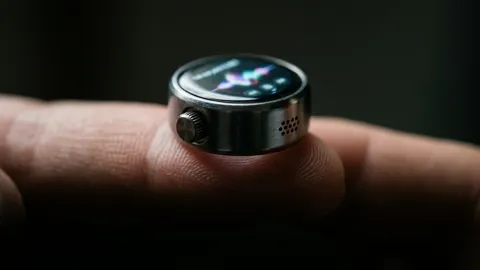
Among smart ring makers, Aina launched a screen-equipped AI ring for $399 earlier this year, also angling at the intersection of wearables and AI assistance but without a clinical focus.
The acquisition comes as AI healthcare startups attract record funding. Pathos AI raised $237 million led by Bristol Myers Squibb in September to apply AI to Alzheimer's drug discovery.
Epic Systems launched AI agent connectors for healthcare apps last month. Ant Group's Ling-3.0-flash-Sante became one of the top open health models on HealthBench.
The market for AI-native clinical tools is expanding fast, and Oura is positioning itself as the wearable gateway to those services.
What Wall Street is watching
The $625 million price tag is roughly 17 times Counsel's estimated total funding, a multiple that signals Oura sees the startup as a platform acquisition rather than a feature buy.
The deal values the AI-healthcare space at a premium consistent with recent M&A in the sector.
Oura's quarterly earnings, published alongside the acquisition announcement, will give analysts the first look at whether the smart ring maker can absorb a $625 million purchase without further diluting shareholders ahead of a potential IPO.
The company's cash position and recurring revenue growth are the key metrics to watch.
For the wearable AI industry, the message is clear: the next battleground is not hardware specs but clinical integration. The company that can turn a wrist sensor into a trusted medical advisor will own the category.
Oura just paid $625 million to place its bet.
Common questions
How much did Oura pay for Counsel Health?
Oura agreed to acquire Counsel Health for $625 million.
Will Counsel Health continue serving non-Oura customers?
Yes. Oura said Counsel will continue serving existing and new enterprise partners after the acquisition.
What happens to the Oura IPO?
Oura postponed its up-to-$2.2 billion IPO indefinitely weeks before this deal, citing uncertainty in the IPO market. No new date has been announced.
Sources & further reading
How this story was made
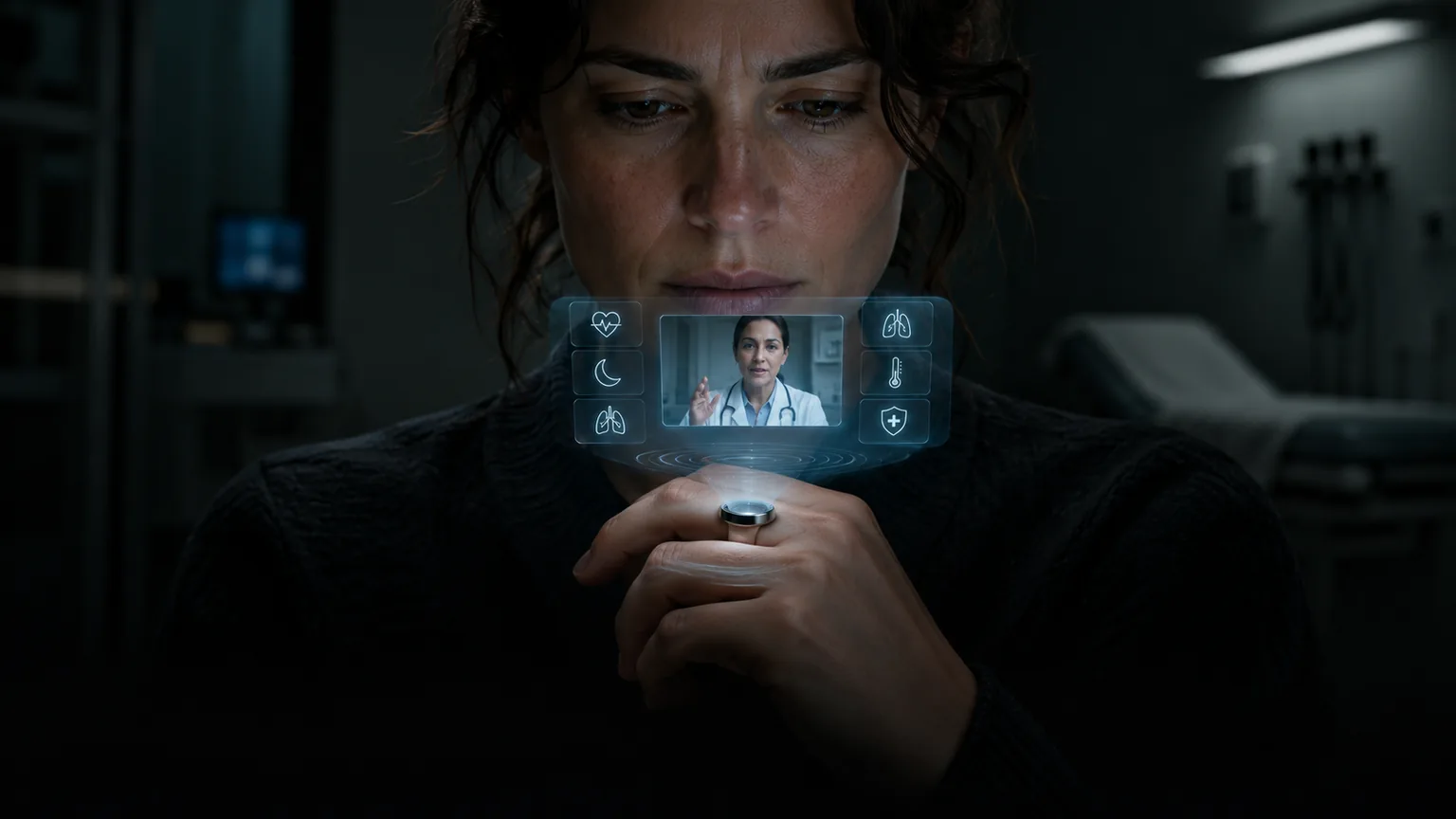
Written by Kristian Kostov with AI assistance and checked against the linked sources. Company performance claims are attributed to the company. Analysis reflects AiLookout’s interpretation; we have not independently tested the products discussed. The cover is an AI-generated editorial illustration, not a photograph or evidence of an actual event.
Our editorial standards