Announced 21 Oct 2026 · Sources checked
What NVIDIA announced
At its GTC Berlin event on 21 October 2026, NVIDIA said it is working with six suppliers to expand manufacturing capacity across substrates, advanced packaging, testing and optical engines. The companies are Amkor Technology, IBIDEN, King Yuan Electronics (KYEC), Samsung Electro-Mechanics, Siliconware Precision Industries (SPIL) and Unimicron Technology.
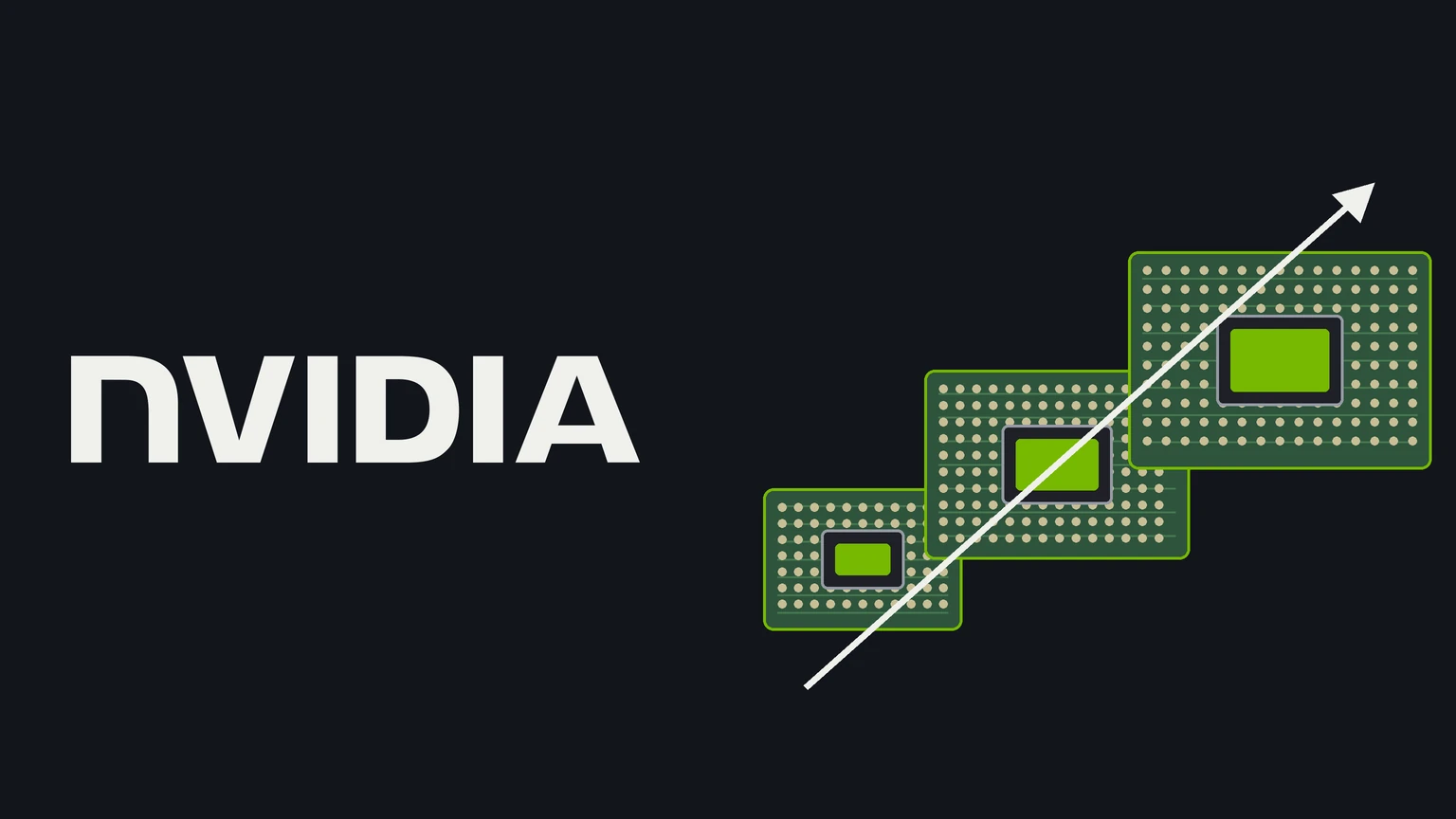
The headline numbers are specific. NVIDIA plans to increase substrate capacity for its products by 2.5 times over the next three years. Amkor is targeting more than 300% more interposer wafer capacity in South Korea by the end of 2028. NVIDIA expects its total semiconductor testing capacity to double from calendar 2026 to 2027. And SPIL is targeting a 15-fold increase in optical-engine capacity by mid-2027, with another doubling planned by the end of 2028.
Jensen Huang, NVIDIA's founder and chief executive, framed it bluntly in the announcement: "Demand is extraordinary. Capacity is the constraint." He called the current period the largest infrastructure buildout in human history and said the partners are expanding capacity around the globe so NVIDIA can deliver its AI systems.
NVIDIA said the moves are meant to strengthen the resiliency and redundancy of its supply chain, which is a polite way of saying it wants more than one source for each critical step and more of them outside a single region.
Why substrates are the bottleneck
Most attention on AI chip supply goes to the silicon itself, made by TSMC, and to high-bandwidth memory. But a finished accelerator also needs a package substrate, the multilayer board the chip sits on. The substrate carries power and signals between the chip and the circuit board, and for large AI processors it is a hard part to make.
The substrates in question are ABF substrates, named after Ajinomoto Build-up Film, the insulating layer used to build up their fine wiring. As AI packages grow, the substrates get bigger and denser. Samsung Electro-Mechanics says ultra-fine circuit patterns are needed to limit signal loss, while warpage control and flatness are critical to keep yields up on large panels.
There is also more being built into the board. Next-generation AI chips need careful power delivery to suppress electrical noise at very high speeds, so packaging processes now embed passive components, including multilayer ceramic capacitors (MLCCs) and silicon capacitors, inside the substrate itself.
Few companies can make these parts at the size and quality NVIDIA needs, and a shortage at any one of them limits how many finished GPUs can ship regardless of how many wafers TSMC produces. That is why NVIDIA is paying suppliers in advance to reserve capacity rather than simply placing orders.
Samsung Electro-Mechanics joins the substrate list
The newest name on the list is Samsung Electro-Mechanics, the electronic components affiliate of Samsung Electronics. In its own release, the company called the deal a strategic partnership to supply ABF substrates and said the two companies will jointly invest in dedicated production lines at its Sejong and Busan sites in South Korea.
Under the multiyear agreement, deliveries start in 2026. Samsung Electro-Mechanics says it will first supply NVIDIA from existing Korean operations, then add capacity through factory upgrades and new facilities. The deal covers substrates for NVIDIA's compute chips and for high-speed networking switches that link chips inside data centres.
Samsung Electro-Mechanics says volumes supplied to NVIDIA should grow at a double-digit annual rate from 2026, and both companies said that by 2028 production allocated to NVIDIA is projected to be a significant portion of Samsung Electro-Mechanics' total annual package substrate capacity.
Duck-Hyun Chang, its president and chief executive, said the company would combine its FC-BGA manufacturing, the flip-chip ball grid array packages used for large processors, with its MLCC expertise to deliver NVIDIA's platforms on time. Debora Shoquist, NVIDIA's executive vice president of operations, said the work "broadens our network of substrate partners and adds manufacturing capacity."
The deal matters for the Korean firm. The Korea Herald reported that its package solutions division had second-quarter revenue of 771.6 billion won, about $583 million, up 37% from a year earlier on demand for AI accelerator substrates. It adds to Samsung's growing NVIDIA ties after a recent report that Samsung will make base dies for NVIDIA's NVHBM memory.
IBIDEN and Unimicron
IBIDEN, the Japanese company long seen as NVIDIA's main substrate supplier, is expanding its Ono Plant in Japan. Under an agreement IBIDEN announced earlier this year, NVIDIA is providing a multibillion-dollar capacity reservation advance. The expansion targets three times current capacity at that plant, with new capacity expected to begin ramping in the first quarter of 2028.
In Taiwan, NVIDIA is backing Unimicron's expansion of its KF substrate plant with a capacity reservation agreement. That expansion should start adding capacity in the second quarter of 2027 and reach full capacity by mid-2028.
NVIDIA said these three agreements contribute to the 2.5-fold substrate target, "with more underway", so the three-supplier list may not be final. The geographic spread, across Japan, South Korea and Taiwan, fits the redundancy goal NVIDIA described.
Amkor and interposer capacity
Amkor, the US-based packaging and test company, will expand advanced packaging in South Korea. The target is a greater than 300% increase in interposer wafer capacity by the end of 2028, alongside new Amkor facilities in the country.
An interposer is a thin layer, usually silicon, that sits between the substrate and the chips above it. In NVIDIA's data-centre GPUs it lets the GPU dies and stacks of high-bandwidth memory sit side by side with thousands of short, fast connections. TSMC's CoWoS packaging, which uses interposers, has been one of the tightest points in AI chip supply over the past two years.
NVIDIA said the Amkor capacity will support its current and next-generation platforms, which include the Vera Rubin systems it is packaging into products such as the DSX pod containerised AI factory.
Testing, and a new US plant
Every chip is tested before it ships, and NVIDIA says testing capacity is set to double between 2026 and 2027 through build-outs in the US, Taiwan and Singapore.
The largest single figure disclosed is a $1.1 billion capacity reservation advance to KYEC, a Taiwanese testing company, to support new US testing facilities and equipment. High-volume production there is targeted for April 2027. In Singapore, expanded testing operations are expected to start high-volume production in February 2027.
The US testing plant is the clearest nod to American manufacturing in the package, at a time when chip companies face pressure to move more production steps onshore. Test data also feeds into reliability tools NVIDIA has been building, such as Minerva, its system for tracing faults in AI factories.
Optical engines for co-packaged optics
The final piece concerns light rather than electrons. NVIDIA and SPIL plan to expand capacity in Taiwan for optical engines used in co-packaged optics, which put the parts that convert electrical signals into light right next to the switch chip instead of in pluggable modules at the front of a server.
Co-packaged optics cut the power spent moving data between racks, which grows quickly as AI clusters get larger. NVIDIA already sells co-packaged optics switches. SPIL is targeting a 15-fold increase in optical-engine capacity by mid-2027 and aims for another doubling by the end of 2028, a sign NVIDIA expects optical networking to spread well beyond its first products.
What was not disclosed
NVIDIA did not give the size of most of the advances, apart from the KYEC figure and the multibillion-dollar description for IBIDEN. Yonhap and the Korea Herald noted that specific supply volumes and financial terms for the Samsung Electro-Mechanics deal were not disclosed.
The percentages are also relative to each supplier's current capacity, which NVIDIA did not publish, so the announcement does not say how many additional GPUs the expansions would allow. Several key dates fall in 2027 and 2028, so the new substrate, interposer and optics capacity does little for supply over the next year. The release carries NVIDIA's standard forward-looking statement warning that results could differ.
Why it matters
Investors have spent the year asking whether AI spending will last. NVIDIA's answer here is to commit billions in advance payments to suppliers for capacity that arrives in 2027 and 2028. Companies do not usually prepay for factory lines they expect to sit idle.
For the rest of the industry, the deals tighten NVIDIA's hold on scarce capacity. Substrate, interposer and optics capacity reserved for NVIDIA is capacity rival chip designers and cloud companies building their own accelerators cannot easily buy. The announcement shows the AI hardware race is now also a race for the less visible parts of the factory: the boards, layers, testers and optical engines without which the most advanced chip cannot leave the building.
Common questions
What is a package substrate?
The multilayer board an AI chip is mounted on. It routes power and signals between the chip and the circuit board, and large AI chips need big, dense ABF substrates that few companies can make.
When does the new capacity arrive?
Samsung Electro-Mechanics deliveries start in 2026, but most expansions land in 2027 and 2028, including IBIDEN's Ono ramp in early 2028 and KYEC US testing in April 2027.
How much is NVIDIA paying?
It disclosed a $1.1 billion advance to KYEC and a multibillion-dollar advance to IBIDEN. Other terms, including the Samsung Electro-Mechanics deal, were not disclosed.
Sources & further reading
- NVIDIA and Supply Chain Partners Expand Capacity to Accelerate AI Infrastructure Buildout ↗
- Samsung Electro-Mechanics and NVIDIA Announce Strategic Partnership to Supply ABF Substrates ↗
- Nvidia adds Samsung Electro-Mechanics to substrate supply chain, plans capacity expansion in S. Korea ↗
- Nvidia taps Korean component makers for AI chips, robots ↗
How this story was made
Written by Kristian Kostov with AI assistance and checked against the linked sources. Company performance claims are attributed to the company. Analysis reflects AiLookout’s interpretation; we have not independently tested the products discussed. The cover places the companies’ own logos, taken from public-domain or openly licensed files credited in the caption, on a plain background. It is not a product photograph, a screenshot, or an endorsement.
Our editorial standards