Announced 3 Nov 2026 · Sources checked
What Netflix actually shipped
Netflix said on Tuesday that its TV app is getting an AI Discover tab, a dedicated home for experimental, AI-powered ways to find something to watch. The first experiment inside the tab suggests titles based on a mood or an occasion rather than on the last thing you finished.
The feature is starting to roll out in the United States to members who use Netflix in English on supported TVs, with a Discover tab marked by a red gem-shaped icon and a New label in the top navigation bar. Netflix says it plans to bring the tab to more regions and more customers in the coming weeks.
Variety notes that AI Discover is the first user-facing application that Netflix is branding as powered by artificial intelligence, even though machine learning has driven its recommendations for years. That distinction matters more than the feature list: Netflix is now putting the AI label on the front door, not just in the ranking system behind the rows.
How the theme picker works
The first AI Discover experience is a theme picker. Netflix offers a range of themes, each previewed with a clip from a show or a movie. Some map to a mood, such as Something Light or Scare Me. Some map to an audience or an occasion, such as Family Movie Night. Some map to time, such as Quick Watches. Variety also lists Workplace Comedy Favorites, Family Scandal Sagas and Royal Court Intrigue among the options shown at launch.
Pick a theme and the app returns an array of matching films and series. Netflix says those recommendations are produced in real time from a member's viewing history and preferences, along with what is trending on the service. From there you can narrow down with more specific themes or choose Something Different to start over with a fresh set.
Every title in the results carries a Tune Your Recommendations button next to Play and My List. That button lets a member keep a suggestion or tell Netflix not to recommend it again. When the tab loads, the interface shows a short message promising to find your next obsession.
Two limits are worth stating plainly. AI Discover is not a chatbot-style conversation, and it will not be available on kids profiles. Both details come from Netflix's description of the rollout, and both narrow the feature's reach at launch far more than the press coverage suggests.
Under the hood, Netflix describes the system as a new intelligence layer, one the company says responds to what members tell it in real time and keeps learning.
Why Netflix is doing this now
Netflix has spent years arguing that its recommendation system is the product. In its blog post the company frames AI Discover as an addition, not a replacement: "We've spent years refining how you discover, with recommendations tailored to your tastes, from what you Thumbs Up to what you add to My List. Now, AI Discover joins the mix as a new way to explore."
The commercial context is less flattering. Variety reports that Netflix has seen viewer engagement slide in recent quarters, and that the company overhauled its content leadership, replacing content chief Bela Bajaria with industry veteran Peter Rice in a bid to produce more hits. The Verge notes the launch follows Netflix laying off around 1,000 employees as growth has slowed and users are reportedly watching the service less.
Netflix has also been pushing AI into production. About 300 titles across its library have used generative AI somewhere in the production process, and the company paid $587 million this spring for InterPositive, the company founded by Ben Affleck that builds AI tools for filmmakers.
So AI Discover is not a research demo bolted onto a healthy product. It is a discovery feature launched into a service that needs people to watch more of what it already owns, and it is aimed at the part of the experience where viewers give up.
What the company is promising, and what it is not
Netflix is deliberately setting expectations low. In its blog post the company calls the tab a test kitchen, a place where it tries out recipes for discovery and lets member feedback decide which ones to keep, improve or serve up next. The company adds that some experiments may make their way into the main experience.
On the interaction model, Netflix is selling feel rather than accuracy. It says the thing it is most excited about is how the tab feels to use, and that telling the system a recommendation is not for you will make it stop turning up inside AI Discover.
What Netflix is not offering is any evidence. There are no accuracy figures, no engagement targets, no completion-rate data and no timeline beyond a vague expansion in the coming weeks. A memory of rejected titles inside one experimental tab is a modest claim, and it is the only concrete behavioural promise in the announcement.
The framing also leaves room to retreat. Because AI Discover sits in its own tab and is described as a set of experiments, Netflix can retire individual features without touching the main recommendation rows that drive most viewing.
Discovery is where streaming now competes
The interesting part of this launch is not the AI label. It is that the biggest subscription streamer has decided that navigation, not catalogue size, is the bottleneck. Everyone in streaming has a deep library now. The failure mode is the endless scroll, and the theme picker is an attempt to replace browsing with a short, opinionated choice: tell us what kind of night you are having.
That is a different problem from the one Spotify has been fighting. Spotify said this year that it pulled 50 million AI-generated tracks from its recommendations, which is a supply-side problem: too much synthetic material polluting the pool. Netflix's problem is demand-side. Its members have more titles than they can evaluate, so the product has to narrow the choice before the ranking can help. Both companies are using the same word, AI, for opposite jobs.
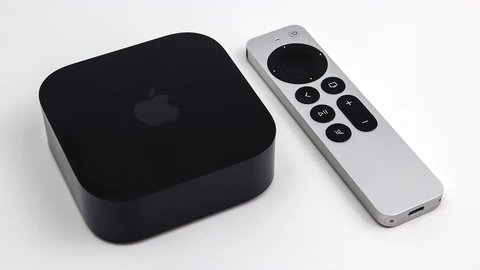
The comparison to Apple is also instructive. Apple put Siri and far-field microphones on the Apple TV 4K at $299, betting that the remote and the voice layer are the natural way into a big screen. Netflix is betting on the interface inside the app instead, which is cheaper to iterate and does not depend on hardware owners upgrading.
The other platform lesson sits on the supply side. YouTube Music started labelling songs made primarily with generative AI, a disclosure play rather than a discovery one. Netflix is choosing to spend its AI effort on moving viewers into content it already paid for, not on labelling what it serves.
For advertisers and for the studios licensing to Netflix, the signal is that the front page of the TV app is becoming a model-driven surface. Whatever wins there will shape what gets watched, and therefore what gets commissioned.
The open questions that decide whether it matters
First, distribution. A US-only, English-only, TV-only rollout with no kids profiles is a narrow test. Until AI Discover reaches mobile, where most Netflix viewing starts, the feature cannot move the numbers Netflix cares about.
Second, measurement. Netflix has not said how it will judge the experiment, and its blog post treats feedback as the metric. If the company never publishes a comparison against the standard rows, the industry will be left guessing whether a theme picker beats a well-tuned carousel.
Third, feedback loops. The Tune button teaches the system what a member rejects inside AI Discover. Netflix has not said whether that signal feeds back into the main recommendation engine, or stays quarantined in the experimental tab. That difference separates a real product change from a decorated side door.
Fourth, the AI label itself. Netflix is putting the word AI in the navigation bar at a moment when several platforms have started downplaying it. If members read the label as a warning rather than a promise, the tab will need a rename faster than it needs a better model.
None of that makes the launch meaningless. It makes it early. A theme-based entry point is the kind of small, testable interface change that streaming has needed for years, and Netflix is at least running the experiment in public rather than shipping another row of thumbnails. The next few weeks of rollout will show whether members treat it as a shortcut or as clutter.
Sources & further reading
How this story was made
Written by Kristian Kostov with AI assistance and checked against the linked sources. Company performance claims are attributed to the company. Analysis reflects AiLookout’s interpretation; we have not independently tested the products discussed. The cover is an AI-generated editorial illustration, not a photograph or evidence of an actual event.
Our editorial standards