Announced 28 Nov 2026 · Sources checked
Restaurant owners battle Muse bots
Britain's top restaurants are fighting a wave of AI bots that call pretending to be human diners, with one owner saying he argued with a bot and told it to never call again.
Dave Strauss, co-owner of Bouchon Racine, recently crowned UK Restaurant of the Year, said he picked up the phone to what sounded like a real human caller. Something felt wrong.
When he asked if it was a bot, the voice replied: Yes, this is an AI booking process.
I had an argument with the AI bot and told it to never call me again, Strauss told The Guardian. But that wasn't very satisfying as it didn't argue back.
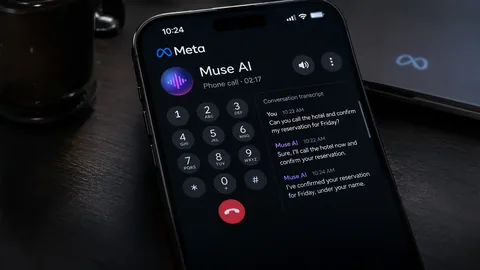
The chaos follows Meta launch of its Muse AI assistant in the UK on November 24. Muse is Meta personal agent that can book travel, shop online and make restaurant reservations on behalf of users.
It has been downloaded millions of times in the US, where it already caused problems for restaurants long before the UK rollout.
Resy bans automated agents
The online booking platform Resy has banned bots altogether after restaurants on the platform were swamped with automated agents that refresh pages thousands of times and snap up every available table.
Resy told The Guardian that multiple accounts using AI bots to book at popular restaurants were being banned, with 4 Charles Prime Rib in New York a particular target for bot armies.
The problem has been particularly acute in New York, where hard-to-get reservations at restaurants like 4 Charles Prime Rib have become a status symbol and a target for AI bot armies.
The bots are so aggressive that they outperform even the most determined human bookers, refreshing available slots at machine speed and grabbing tables within milliseconds of them opening.
Kimberley Coke, a high-end restaurant concierge who books tables for celebrities, called the trend terrifying and warned it could cause absolute chaos. She does all her bookings through personal relationships via WhatsApp or phone calls, bypassing online systems entirely.
With apps, you don't know who the client is, she said. There is no background on who is coming in, and they still might not show up.
For restaurants, an empty table in December is the worst outcome.
The return to the telephone
Some of London acclaimed restaurateurs are deliberately moving away from automation. Jeremy King, who owns Simpson in the Strand, Arlington and The Park, said the push toward impersonal AI interactions is pushing him to go more analogue.
King said diners will find it much easier to snag a prime table by simply picking up the phone.
He is happy to embrace new technology, he said, but if it works against us, we will have to return to managing without.
Strauss, who answers phones at Bouchon Racine from 11am daily to take reservations, said the constant pressure to automate everything is making him more determined to keep human interaction central.
He receives emails offering to outsource bookings to AI agents and rejects every one. If I could get rid of online booking, I would, he said.
The resistance is not just about bots booking tables. The owners argue that hospitality is fundamentally a human business.
A bot cannot gauge whether a caller is celebrating an anniversary, needs a quiet corner for a business meeting, or has mobility requirements that affect table placement.
Those nuances matter for a restaurant that charges premium prices and built its reputation on personal service.
Muse is here and it has deals
Meta UK launch of Muse on Tuesday gave users a personal AI agent that connects to email, calendar, messaging apps and dozens of retailer platforms.
The agent can carry out tasks autonomously, including making purchases and booking reservations, with approval gates for important actions.
Meta has signed partnerships with more than a dozen UK brands including Marks and Spencer, Sainsbury, Ocado, Currys, Trainline, easyJet and OpenTable, meaning Muse users in the UK can now book tables through the bot.
The company also said Muse can navigate any website even without a formal connector, making it effectively impossible for restaurants to opt out of being booked by bots.
Meta said Muse is private and secure by design, with each agent getting its own virtual computer in the cloud.
The UK Information Commissioner Office issued a statement alongside the launch urging users to be careful about what they let the agent access. The Competition and Markets Authority also held talks with Meta about Muse terms before the launch.
Muse is free for most everyday tasks, with subscription plans for heavier use. It is available on iOS, Android, the web and WhatsApp.
What this means
The restaurant booking chaos is a preview of what happens when AI agents that act for individual users collide with the real-world systems those users interact with. Each individual booking agent saves a user a few minutes.
Aggregated across thousands of users, they overwhelm reservation systems, force restaurants to rebuild booking processes and push hospitality staff back to manual operations.
It is a classic collective action problem dressed in an AI wrapper. No single user benefits less from their agent, but every restaurant suffers from the swarm.
The same dynamic will play out across other industries as AI agents become the default way people book services.
Ticketing, appointments, customer support queues and delivery slots are all vulnerable to the same pattern of bot-driven demand spikes that reservation systems now face.
Meta is encouraging users to let Muse handle more tasks across more services. Whether restaurant owners will tolerate the bots long enough for the industry to adapt is an open question.
Some are already answering it: the telephone is back.
The AI agent commerce problem
The restaurant chaos is the first visible symptom of a much broader shift. AI agents like Muse are being trained to navigate the web and transact on behalf of users.
That means the websites and platforms designed for human-scale traffic will increasingly be accessed by machine-scale agents running at speeds humans cannot match.
This is not a bug in Muse. It is the product.
Meta built Muse specifically to act autonomously, opening browsers, filling forms and chasing refunds. The company promotes this as a feature.
For the businesses on the other end of those agents, it is an operational crisis they did not ask for and cannot easily opt out of.
The UK's Information Commissioner's Office raised concerns about Muse before launch. The Competition and Markets Authority also pushed for changes to the app's terms.
But neither regulator addressed the fundamental question: when an AI agent books a table and does not show up, who is responsible? The user who delegated the task?
Meta? The restaurant left with an empty table in a December service?
Those questions do not have clear answers yet. But restaurants in London are already finding their own: pick up the phone.
Common questions
What is Meta Muse?
Muse is Meta personal AI agent that can book travel, shop online, make restaurant reservations and carry out other tasks on behalf of users. It launched in the UK on November 24, 2026.
Why are restaurants angry about Muse?
AI bots using Muse and similar agents are flooding restaurant booking systems, snapping up reservations, calling restaurants pretending to be human, and forcing owners to revert to manual phone bookings.
What is Resy doing about AI bots?
Resy, the online booking platform, has banned automated agents after AI bots were found to be refreshing pages thousands of times to grab all available tables.
Sources & further reading
How this story was made
Written by Kristian Kostov with AI assistance and checked against the linked sources. Company performance claims are attributed to the company. Analysis reflects AiLookout’s interpretation; we have not independently tested the products discussed. Cover photography is illustrative and does not depict the specific announcement or product.
Our editorial standards