Announced 30 Oct 2026 · Sources checked
The investment
Fujifilm announced on 30 October 2026 that it will invest roughly 10 billion yen — about $63 million — to increase its production capacity for magnetic tape fivefold by 2028. The investment, to be made over fiscal 2026 through fiscal 2028, will expand manufacturing facilities and increase personnel at the Kanagawa factory in Odawara, Japan.
The target is the latest LTO (Linear Tape-Open) tape generations, used for long-term data archiving. Fujifilm says the investment will strengthen its stable supply system for magnetic tape in response to growing data archiving demand accompanying the spread of generative AI.
Why tape
Magnetic tape has a cost advantage over hard disk drives for cold storage: tape cartridges are cheaper per petabyte, consume negligible energy when not being read, have a lifespan measured in decades, and are physically air-gapped by default — you cannot hack a tape that is not mounted. For AI training operators that generate petabytes of training data and checkpoint files on a regular cadence, tape archiving is the economical option.
The tape industry has been written off for decades, but the same narrative has recurred since the 1990s and magnetic tape has consistently remained in use for archival workloads precisely because its economics improve with scale. The AI boom does not change that — it amplifies it, because the training data volumes are unlike anything the enterprise storage industry has seen before.
What this tells us about AI storage trends
The fivefold production increase is a signal that tape-intensive archiving workflows are no longer a corner case. If Fujifilm — the dominant producer of LTO tape media — sees enough demand to justify a 10 billion yen production-line expansion, then the hyperscaler AI operators are buying tape at industrial scale.
Cold storage is the neglected side of AI infrastructure discussion, which usually focuses on GPU clusters and interconnect bandwidth. But the training run itself is only half the story: storing the resulting model, the training checkpoints and the dataset provenance requires archival capacity that the cloud model alone does not economically provide. Tape fills that gap, and the Fujifilm investment is the clearest market signal yet that it is doing so at scale.
Caveats
The fivefold capacity increase is a target for 2028, not an immediate expansion. The actual volume of tape shipped and the share attributable to AI vs. enterprise archiving are not broken out in the announcement. Tape remains a niche for all but the largest data operators, and the economics depend on volume — for small-to-medium AI workloads, cloud cold storage tiers may remain more practical.
AI Lookout covered the Fujifilm press release and Ars Technica reporting; it did not independently verify the factory's current capacity.
How tape works for AI
Modern tape storage for AI workloads uses the LTO (Linear Tape-Open) standard, currently at generation LTO-14 with LTO-15 in development. A single LTO-14 cartridge holds up to 576 TB of compressed data. A tape library with robotic arm loading can handle multiple petabytes with near-zero power consumption when idle — compared to disk arrays that require constant power for spinning drives and cooling.
For AI companies, the use case is usually: train a model on a GPU cluster, archive the dataset and checkpoints to tape, and keep the tape offline until a reproducibility audit, retraining run or regulatory request requires access. The archival duty cycle is low, so tape's slow access time (tens of seconds to load a cartridge) is irrelevant. The economic equation favors tape by a factor of 5-10x per petabyte over disk or flash for this workload.
The revival narrative
Fujifilm's investment is the latest data point in a broader tape revival. IBM, Western Digital and others have reported increased enterprise demand for tape libraries. The LTO Consortium continues to push the standard forward with higher capacities each generation. The technology that the streaming era was supposed to have killed is now essential infrastructure for the AI era.
The contrast is worth noting: while AI companies spend billions on the most advanced silicon, the data storage for their output depends on a physical medium that traces its lineage to reel-to-reel recorders from the 1950s. Tape's persistence in the data center is a reminder that the cheapest way to store something is often the oldest way to store something.
Market context
The tape storage market was valued at roughly $3.5 billion in 2025 and is projected to grow around 6% annually, driven primarily by hyperscaler archival demand. Fujifilm's dominance in LTO tape coating technology means this investment is effectively a bet that the hyperscalers' need for cold storage will continue to grow faster than hot storage costs fall.
Competing cold-storage technologies — hard disk drives, optical discs and cloud archival tiers (like AWS Glacier) — each have different cost and latency profiles. HDDs are faster but more expensive per petabyte and consume more power at rest. Optical discs have similar endurance but lower density. Cloud archival tiers add retrieval fees that can surprise operators who do not carefully model egress costs. Tape remains the most straightforward option for the 'write once, read rarely' workload that characterizes AI dataset archiving.
Common questions
How much is Fujifilm investing?
Roughly 10 billion yen ($63 million) to 5x tape production capacity by 2028.
Why are they expanding tape production?
Generative AI is driving exponential growth in data archiving needs — tape is the cheapest cold-storage medium.
Where is the expansion?
At Fujifilm's Kanagawa factory in Odawara, Japan, targeting the latest LTO tape generations.
Sources & further reading
How this story was made
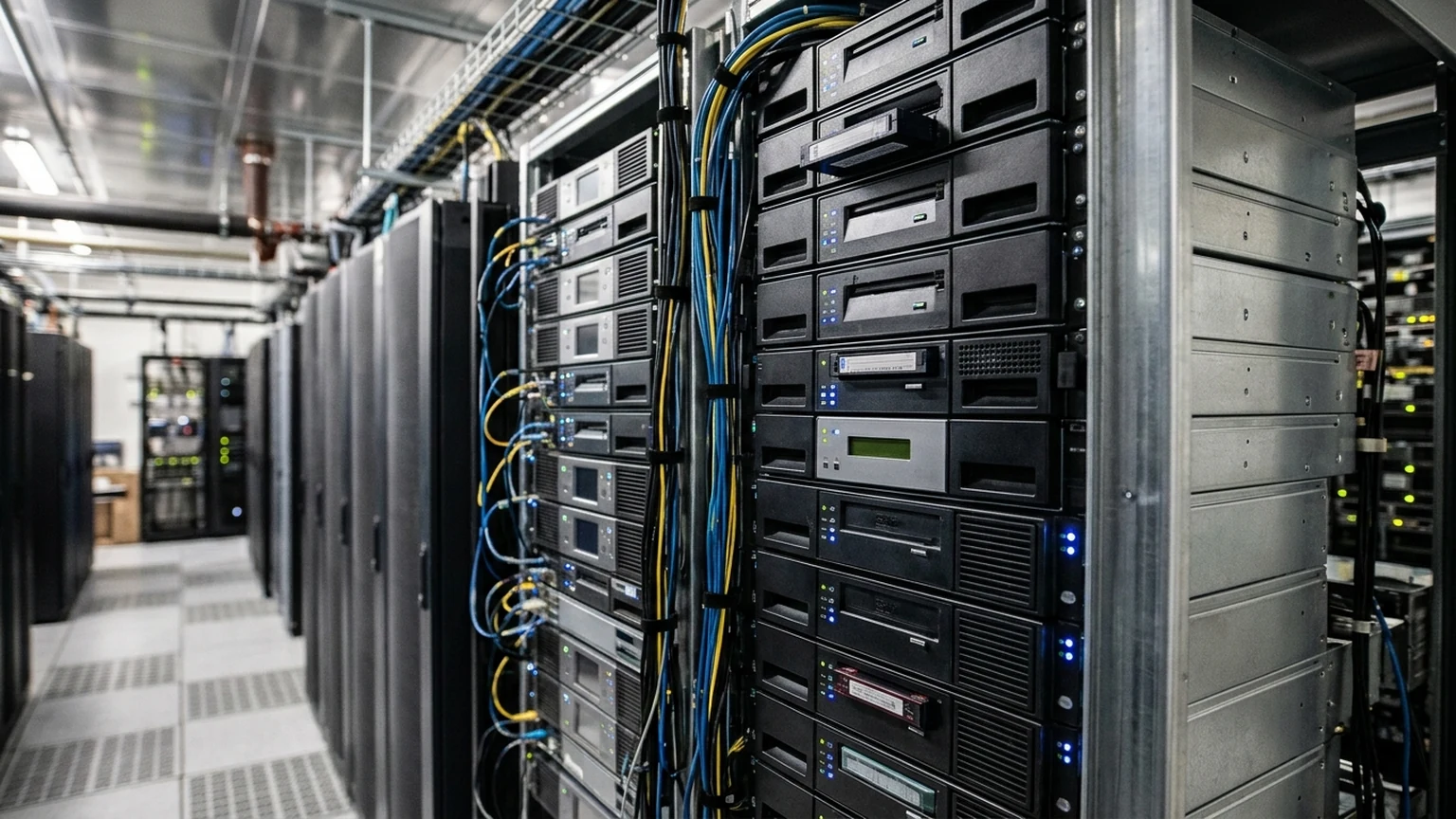
Written by Kristian Kostov with AI assistance and checked against the linked sources. Company performance claims are attributed to the company. Analysis reflects AiLookout’s interpretation; we have not independently tested the products discussed. The cover is an AI-generated editorial illustration, not a photograph or evidence of an actual event.
Our editorial standards