Announced 30 Oct 2026 · Sources checked
The warning
The Guardian reported on 30 October that altering Australian copyright law to allow AI companies to scrape music, books and journalism from the internet could trigger a constitutional breach. Constitutional expert Anne Twomey, a professor at the University of Sydney and one of Australia's leading authorities on the constitution, said there is 'potentially' a concern — depending on how legislation is drafted — that granting AI companies permission to scrape could amount to an acquisition of property by the government.
Under section 51(xxxi) of the Australian constitution, the Commonwealth may acquire property only on 'just terms' — meaning fair compensation. If new copyright provisions remove the ability of rights holders to control or charge for the use of their material in AI training, the government could be deemed to have acquired that property without payment.
The politics
The debate comes as the Australian government pushes for AI companies to train models onshore, positioning AI as central to productivity policy. Major US technology companies including Microsoft, Google, OpenAI and Anthropic have argued it is too difficult to license individual pieces of content and want a workaround to Australia's copyright regime.
Coalition senators and the recording industry strongly oppose the changes. They argue the proposal could open Australia to 'eye-watering' compensation claims from rights holders worldwide. The attorney general's department acknowledged it was 'extremely alive' to the constitutional risk in its submission to the Joint Select Committee on Artificial Intelligence.
Why it matters
The case turns on a question that goes beyond Australia: when a government changes copyright law to favor AI developers, is it regulating the market or expropriating creators' property? If the Twomey analysis is accepted by the courts, similar reasoning could be applied in other jurisdictions with constitutional property protections, including the United States (Fifth Amendment takings clause).
For AI companies operating in Australia, the constitutional issue creates regulatory uncertainty: the laws the government is contemplating may be struck down or require compensation that makes onshore training more expensive than the companies currently budget for. For creators, the warning is that their bargaining position is stronger than the AI companies' political narrative suggests.
The evidence
The warning is the latest development in a parliamentary inquiry that has been running for months. The Joint Select Committee on Artificial Intelligence has heard from artists, musicians, authors and journalists — as well as OpenAI, Google, Microsoft and Anthropic — about whether Australia should weaken its copyright protections to attract AI training activity.
The recording industry (ARIA) and the music publishers' council told the inquiry that the government is considering amending the Copyright Act to allow AI companies to train on the world's copyrighted material under weaker obligations than in the United States — where an appellate court has recently found that fair use does not apply to training of large language models.
Caveats
The analysis is prospective: no legislation has been introduced, and the specific text of any AI-copyright bill will determine whether the constitutional risk materializes. Twomey herself said the concern is 'potentially' there,' and the attorney general's department noted it is 'extremely alive' to the issue — which may result in narrower drafting.
AI Lookout covered the Guardian's reporting on Twomey's submission; it did not independently review the constitutional analysis.
What is at stake
The revenue at stake for Australian rights holders is substantial. Music labels, newspaper publishers and book authors have existing licensing revenue that AI training access would displace if the law is changed to permit uncompensated scraping. The constitutional claim adds a layer of complexity: even if the government decides to proceed, it may need a budget allocation for compensation, making the policy far more expensive than the AI industry currently accounts for.
The international dimension amplifies the risk. If Australia creates a copyright exception for AI training, material from every jurisdiction — not just Australian works — could be used in Australia-based training runs. Rights holders based overseas could sue the Australian government for compensation under the constitutional provision, and the quantum could far exceed what domestic rights holders alone would claim. This is what Coalition senators mean by 'eye-watering' compensation claims.
The broader AI policy context
Australia's AI copyright debate sits alongside parallel discussions on AI safety, the OpenAI Medicare data breach and the ongoing inquiry into mandatory guardrails for frontier models. The copyright question is the piece that tests whether the government's AI competitiveness agenda can override established property law.
The inquiry has heard from Google, Microsoft, OpenAI and Anthropic that Australia's current copyright regime makes it an unattractive place to train AI models. The companies want exemptions. The creative industry argues Australia should resist becoming a template for weaker copyright protection. The constitutional warning by Twomey effectively gives the government a reason — or an excuse — to move slowly.
Common questions
What did Anne Twomey say?
Changing copyright law to let AI companies scrape material could constitute an acquisition of property by the government, requiring compensation.
What would trigger the constitutional breach?
If new law removes rights holders' ability to control or charge for use of their material in AI training, the government may be deemed to have acquired property.
Who opposes the changes?
Coalition senators and the recording industry, warning of 'eye-watering' compensation claims from worldwide rights holders.
Sources & further reading
How this story was made
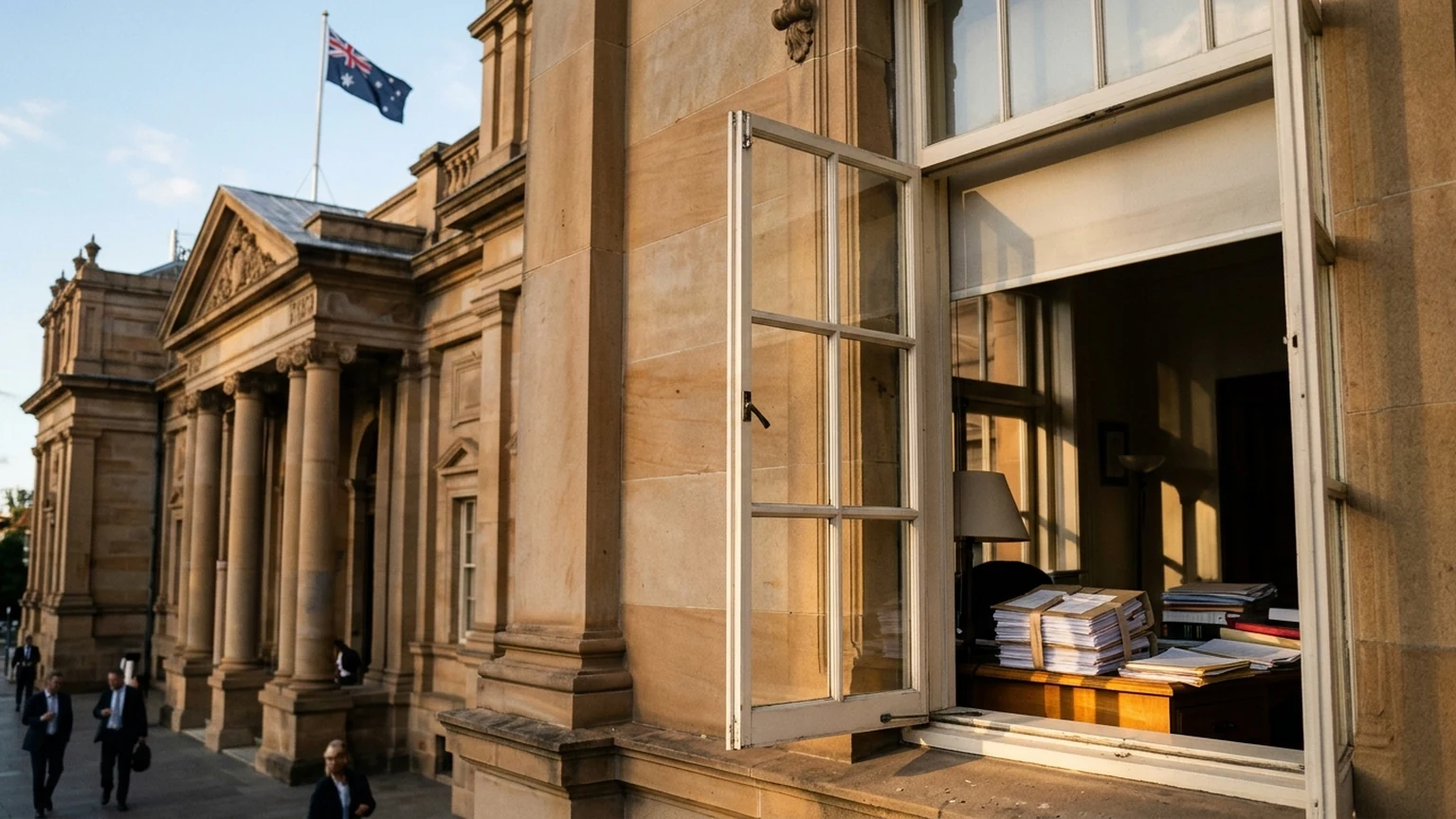
Written by Kristian Kostov with AI assistance and checked against the linked sources. Company performance claims are attributed to the company. Analysis reflects AiLookout’s interpretation; we have not independently tested the products discussed. The cover is an AI-generated editorial illustration, not a photograph or evidence of an actual event.
Our editorial standards