Announced 5 Nov 2026 · Sources checked
The first pure-play humanoid stock on a U.S. exchange
Agility Robotics began trading on the Nasdaq on Thursday, November 5, under the ticker AGLT, after completing its merger with Churchill Capital Corp XI, a special-purpose acquisition company led by former Citigroup executive Michael Klein. Warrants are listed separately under AGLTW. The debut makes the Salem, Oregon, company the first U.S. publicly listed pure-play humanoid robotics company.
The listing was expected to price the company at about $2.5 billion for its existing equity, and the company says it expects about $465 million in gross capital before expenses, including $100 million in equity funding received before closing and a Foxconn-led private investment in public equity.
The humanoid robotics category has drawn heavy investor attention in 2026 even though most builders remain private. Agility's listing puts one commercially deployed player on a U.S. exchange while rival Figure AI remains private and Tesla's Optimus program sits inside a much larger automaker.
Agility's path to the public market is a continuation of a story we covered in late October, when the company moved its Digit 5 humanoid onto NVIDIA IGX Thor compute ahead of the listing. The Nasdaq debut is the first day the company's financials are visible to public investors.
What the financial disclosures show
Agility's merger filings give Wall Street its first hard look at the economics of a dedicated humanoid robot maker. The company brought in about $1.8 million in revenue last year while reporting a $138.1 million net loss, according to reporting based on the filings. More than half of that revenue came from five robots purchased by one of its investors.
The losses are not purely paper. While about $38 million of the $138.1 million net loss came from non-cash expenses tied to employee stock awards, the filings show the company used about $99.8 million in cash to run the business in 2025. Agility lost $2.7 million on its sales even before research and other company expenses.
The small commercial book has continued into 2026. In an interview with TechCrunch ahead of the debut, CEO Peggy Johnson said Agility deliberately focused on manual, very repetitive jobs rather than backflip-style demos. TechCrunch reported the company recorded about $174,000 in revenue in the first six months of 2026, mostly from related parties, and lost about $362 million in the same period.
Johnson told Business Insider that the Digit 5 commitments she announced were one of the driving factors behind going public, without naming the buyers. The company has said the platform carries more than $300 million in committed multi-year orders that still depend on contractual milestones, product features, and specifications.
Digit's commercial footprint
Agility says Digit, its bipedal warehouse and factory robot, has logged more than 65,000 hours in the field with enterprises including GXO, Schaeffler, and Toyota Motor Manufacturing Canada. Investors in the company include Amazon, Foxconn, Nvidia, SoftBank, and venture firm DCVC.
The deployments are real but still small in industry terms. George Chowdhury, a principal analyst at ABI Research, told Business Insider that Agility is unique in the industry because its robots are actually deployed, even if the overall scale remains modest. In the grand scheme of things the deployments are very small, he said, but they are big for commercial humanoids.
GXO has expanded its partnership to two more U.S. logistics sites expected to start in early 2027, after Digit moved more than 100,000 totes at a Georgia site, according to Agility's trading-day release. AGCO has signed for a Digit pilot at its Hesston, Kansas, plant in 2027, and Agility lists a pipeline of more than 30 prospective customers.
For the Digit 5 platform unveiled in September, Agility claims more than $300 million in committed multi-year orders. Early customer access is aimed at the first half of 2027, with general availability targeted for the end of that year. The platform is designed for closer work beside people, with cycloidal actuators for repetitive lifts up to 50 pounds, interchangeable end effectors, NVIDIA IGX Thor compute plans, FORT Robotics safety gear, and Nyobolt batteries the company says can recharge in nine minutes for more than 20 hours of work in a day.
Why a SPAC, and what the capital is for
Johnson said Agility chose the SPAC route to bring in Michael Klein, a sponsor known for taking Sam Altman-backed nuclear power company Oklo and electric vehicle maker Lucid public. SPAC mergers boomed in 2020 and 2021 before collapsing as interest rates rose in 2022, and they are drawing renewed interest as the IPO market recovers.
There is something to be said for being first, Johnson told Business Insider ahead of the debut. We will be able to set many of the metrics, if you will, on what customers need in a humanoid.
Existing Agility holders rolled 100% of their equity into the combined company, with a 180-day lock-up on those shares and the Churchill sponsor stake. Proceeds are earmarked for fulfilling orders, expanding deployments, scaling Digit production, and advancing the robotics and physical AI stack.
Agility's RoboFab plant in Salem spans 70,000 square feet and is designed for annual capacity of up to 10,000 robots. The company also runs hardware and physical AI work in Fremont, California, and has announced a 50,000-square-foot Pittsburgh expansion for software, deployment, and support. Fleet management runs through Agility Arc, its cloud software.
What the debut means for the humanoid race
Agility's listing gives investors a tradable vehicle for the humanoid category for the first time, but the financials make the gap between hype and revenue visible. The company reported roughly $1.8 million in 2025 revenue, and the largest single chunk of that came from a single investor buying five robots.
Rivals remain private or embedded in larger companies. Figure AI has raised significant capital without a public listing, and Tesla's Optimus program reports progress inside the automaker's financial statements without a standalone valuation. That makes AGLT the only way to buy pure humanoid exposure on a U.S. exchange today.
The stock starts trading against a backdrop of heavy midterm-related scrutiny of the robotics and AI buildout. Humanoid makers have argued that robots will ease labor shortages in warehouses and factories, while critics point to the thin revenue base across the industry as evidence that the category is priced on promise rather than delivery.
Agility's own guidance is measured: the $300 million-plus in Digit 5 commitments are milestone-dependent, and general availability is not targeted until the end of 2027. The company is selling a hardware roadmap and a deployment track record, with the first few quarters of public filings likely to show whether the pipeline converts into revenue.
What comes next
For AGLT holders, the near-term numbers to watch are Digit 5 order conversion, the cadence of new customer sites, and cash burn against the roughly $465 million in expected gross capital. The company used about $99.8 million in cash in 2025, so the war chest buys several years of runway at that pace.
The milestone dependence of the Digit 5 orders cuts both ways. If contractual milestones convert, the revenue line could move sharply off a very small base. If they slip, the market gets a quarterly reminder that humanoid revenue is still measured in single millions.
Agility's deployments at GXO, Schaeffler, and Toyota Motor Manufacturing Canada give it a claim to being the most commercially proven humanoid maker in the U.S. The first pure-play humanoid stock now has to prove it can grow revenue faster than it burns cash, with the entire category's credibility riding on the quarterly numbers.
Common questions
When did Agility Robotics start trading on the Nasdaq?
Agility Robotics began trading on the Nasdaq on November 5, 2026, under the ticker AGLT, with warrants listed as AGLTW. The debut followed the November 4 close of its merger with SPAC Churchill Capital Corp XI.
How much revenue does Agility Robotics generate?
Agility reported about $1.8 million of revenue in 2025 and about $174,000 in the first six months of 2026, according to merger filings and TechCrunch reporting. The company reported a $138.1 million net loss for 2025.
Is Agility Robotics the first humanoid robot company to go public?
Agility is the first U.S.-listed pure-play humanoid robotics company, meaning its business is focused exclusively on humanoid robots. Rival humanoid makers like Figure AI remain private, and Tesla's Optimus is part of a much larger automaker.
What is Digit 5 and are there orders for it?
Digit 5 is Agility's newest humanoid platform, unveiled in September 2026, designed for warehouse and factory work with lifts up to 50 pounds. Agility reports more than $300 million in committed multi-year orders for the platform, tied to contractual milestones, with early customer access targeted for the first half of 2027.
Sources & further reading
- Agility Robotics is taking humanoid robots public in a first for Wall Street - Business Insider via Yahoo Finance UK ↗
- Agility Robotics Starts Trading on Nasdaq as the First U.S. Pure-Play Humanoid Stock - WebProNews ↗
- The First U.S. Humanoid Robot Stock Starts Trading in November - Motley Fool ↗
- News - Agility Robotics ↗
How this story was made
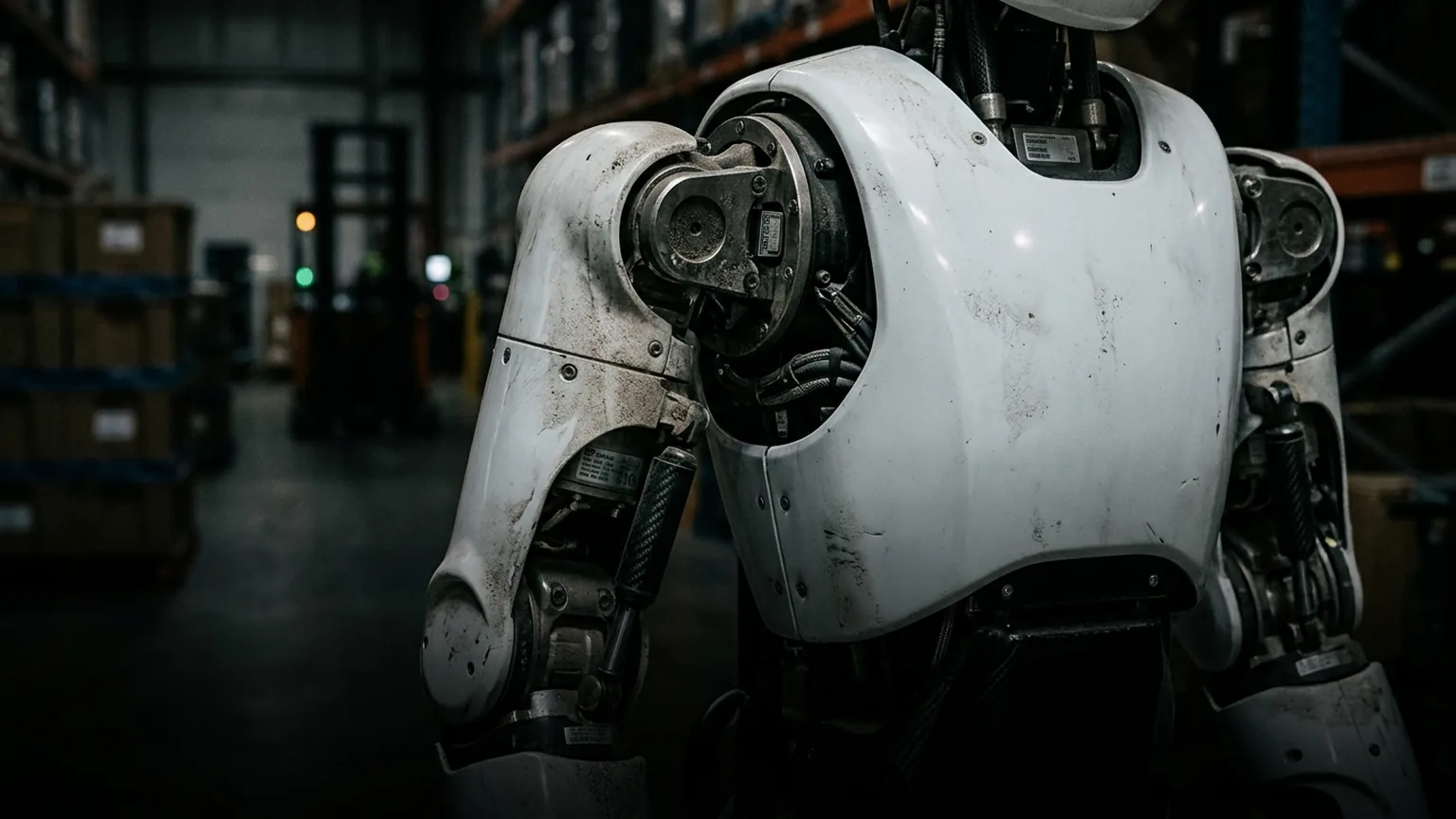
Written by Kristian Kostov with AI assistance and checked against the linked sources. Company performance claims are attributed to the company. Analysis reflects AiLookout’s interpretation; we have not independently tested the products discussed. The cover is an AI-generated editorial illustration, not a photograph or evidence of an actual event.
Our editorial standards