Sources checked
How the Saturn Funding Trust works
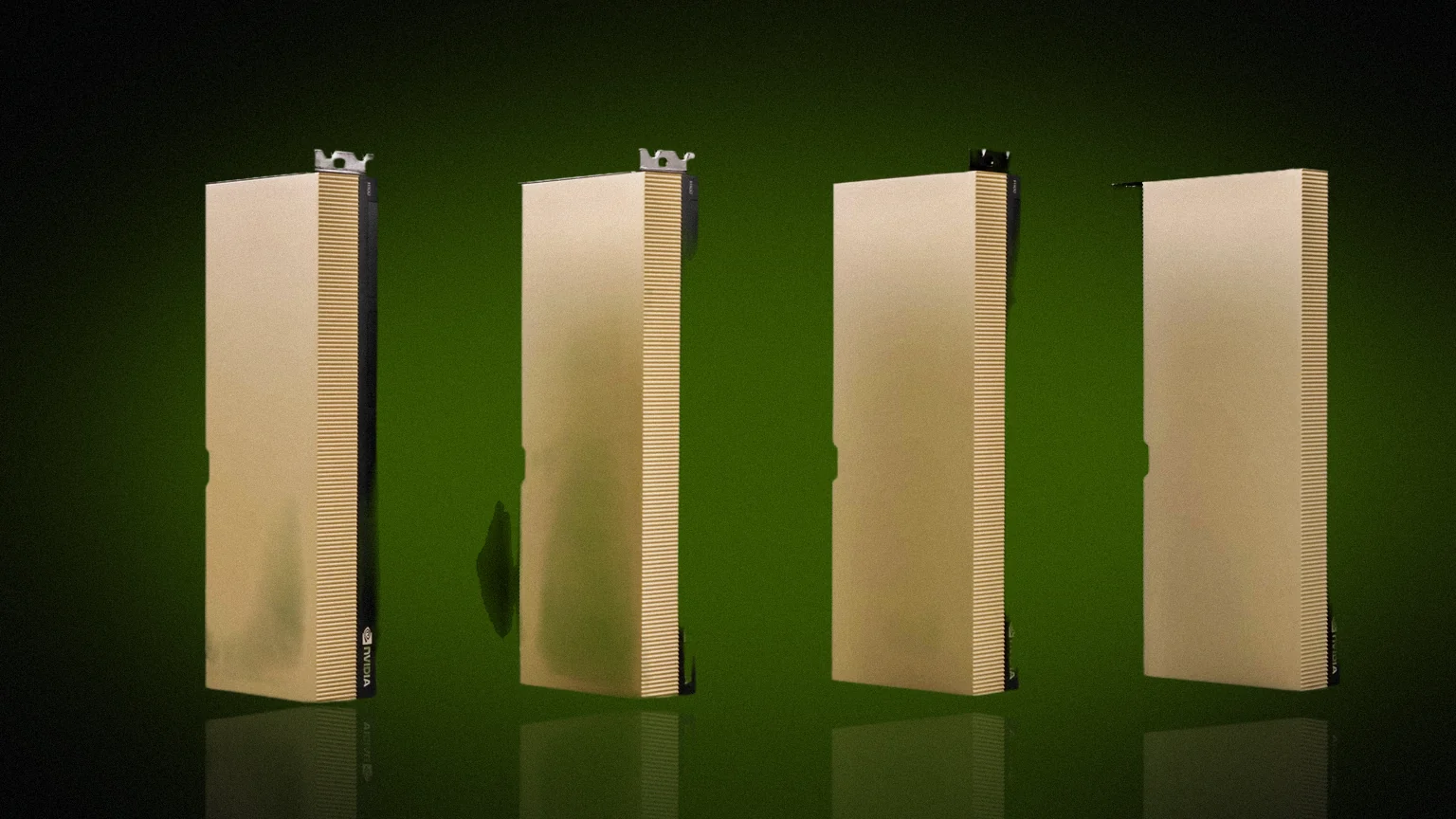
SpaceX has secured $43 billion in financing to acquire a massive fleet of Nvidia AI chips, using the semiconductors themselves as collateral in a deal that is anything but ordinary.
The arrangement is structured through the Saturn Funding Trust, a fully owned subsidiary of asset-backed lending company WHCO, which buys the Nvidia GPUs directly and leases them to SpaceX.
This structure is modeled on aircraft leasing: a leasing company buys the jets, an airline pays quarterly for their use, and neither party books the full asset value on its balance sheet.
SpaceX pays quarterly for five years under what Tom's Hardware describes as a "five-year triple-net, hell-or-high-water finance lease arrangement."
That means SpaceX must make every payment for the full five years regardless of whether the chips break, become obsolete, or the project turns unprofitable. The company is also on the hook for all operating expenses.
Despite these punishing terms, the off-balance-sheet structure preserves SpaceX's investment-grade credit rating. Moody's has stated the chips will be deployed in the company's U.S. data centers, according to the report.
Why lenders worry the chips could end up in space
The problem is not whether SpaceX can pay. It is where the collateral might end up if the company cannot.
TechCrunch reports that lenders specifically asked that none of the chips purchased through the deal be used for SpaceX's planned orbital data centers. It is not clear whether they succeeded in getting that provision into the signed debt instrument.
The worry is straightforward: a data center 300 miles above Earth moving at 17,500 miles per hour is not repossessable. Lenders cannot walk into a satellite and cart out the GPUs.
The Financial Times first reported the terms of the financing, and according to the TechCrunch story, some creditors are uneasy that Musk's publicly stated ambition to operate data centers in space could turn the Nvidia chips into irrecoverable assets.
SpaceX has said it will deploy the collateralized chips only on Earth, but without a written earth-only guarantee in the lease agreement, lenders remain exposed to the risk that the hardware could end up in orbit.
The Tom's Hardware report quotes the company's earth-bound assurances but notes lenders remain unconvinced.
Musk's dual-track data center strategy
Elon Musk is simultaneously building data centers on Earth and in space, and the Nvidia deal funds both tracks.
On Earth, SpaceX is developing the Colossus 1 and Colossus 2 facilities near the Tennessee-Mississippi border, plus the $24 billion gas-powered AI supercomputer in Starbase, Texas, that Musk revealed earlier this year.
On the earnings call, he said he was dispatching engineers from the rocket team to accelerate the terrestrial build-out by taking on challenges like casting turbine blades for power generators.
In space, Musk has shown off the first-generation AI1 satellite, a 120-kilowatt payload with a wingspan larger than a Boeing 747.
He has stated publicly that he believes space will be the "cheapest" place to run data centers within two to three years — a timeline that depends entirely on Starship reaching full reusability.
The most recent Starship flight test recovered the orbital stage but not the booster, so that milestone remains ahead.
The collateral problem in context
The repossession problem is not hypothetical. According to Compute Credit Index Research cited in the TechCrunch article, Nvidia H100s still sell for about half their 2023 cost, and some H200 configurations hold their original price.
There is a functioning secondary market for AI chips, and lenders rely on it as a backstop when data center operators default.
But chips in orbit change that equation entirely.
Even if the hardware physically survives the launch and space environment — and TechCrunch notes that chips can indeed survive in space — the cost of retrieval, if it is even possible, would far exceed the chips' residual value.
This makes the collateral effectively worthless from a lender's perspective if the chips ever leave the ground.
This tension is playing out across the broader space data center industry. Startups like StarCloud, Cowboy Space Corporation, Sophia Space, and Orbital all need chips for their planned orbital deployments, and the financing challenge applies to all of them.
Google's Project Suncatcher, which uses its own TPU chips, may have a structural advantage here since it is not dependent on debt-financed commercial GPU purchases.
What happens next
The Saturn Funding Trust is already operational — WHCO's subsidiary owns the chips, SpaceX makes quarterly payments, and the Nvidia GPUs are being deployed. The immediate question is whether the lease agreement actually includes an earth-only clause.
If it does, lenders are protected. If it does not, the entire $43 billion financing rests on Musk's verbal assurance that the chips will stay planetside.
Musk has also revealed that SpaceX and Tesla are working on their own chip foundry, Terafab, in the U.S. That project has not broken ground and will take years and billions of dollars before it produces a single semiconductor.
In the meantime, SpaceX needs Nvidia's chips, and Nvidia collects a $43 billion order regardless of where the hardware eventually runs.
For now, lenders have signed the deal. Whether they will regret it depends on how quickly Starship reaches full reusability — and whether those GPUs stay bolted to the ground.
But the parallels to aircraft leasing have a limit. Airlines lease planes that stay firmly on runways and in airports.
An aircraft repossession is a well-understood legal process with decades of case law and established recovery firms. A GPU repossession from orbit has no legal framework, no recovery infrastructure, and no precedent.
This legal vacuum is what makes lenders uneasy — not the creditworthiness of SpaceX or Musk, but the unprecedented nature of the collateral's potential location.
Rating agency Moody's weighed in on the structure, stating in its report that the chips will be deployed in SpaceX's U.S. data centers.
That gives lenders some comfort, but a verbal assurance from the company is not the same as a written covenant. The difference matters in bankruptcy court, where unsecured promises rank behind every signed provision in the debt instrument.
Common questions
How is the SpaceX GPU deal structured?
The Saturn Funding Trust, a subsidiary of WHCO, buys the Nvidia GPUs and leases them to SpaceX under a five-year hell-or-high-water lease. SpaceX pays quarterly regardless of whether the chips work or the project is profitable.
Why are lenders worried about the collateral?
Lenders fear the Nvidia chips could be launched into orbit as part of SpaceX's orbital data center plans, making repossession physically impossible. The lease reportedly does not include a written clause requiring the chips to stay on Earth.
What does this mean for SpaceX's data center plans?
SpaceX is pursuing both terrestrial data centers (Colossus 1 and 2, Starbase supercomputer) and orbital facilities (AI1 satellite). The Nvidia financing funds both tracks, but the orbital ambition creates a unique collateral risk.
Sources & further reading
How this story was made
Written by AI Lookout with AI assistance and checked against the linked sources. Company performance claims are attributed to the company. Analysis reflects AiLookout’s interpretation; we have not independently tested the products discussed. Cover photography is illustrative and does not depict the specific announcement or product.
Our editorial standards