Announced 20 Oct 2026 · Sources checked
What Perplexity launched
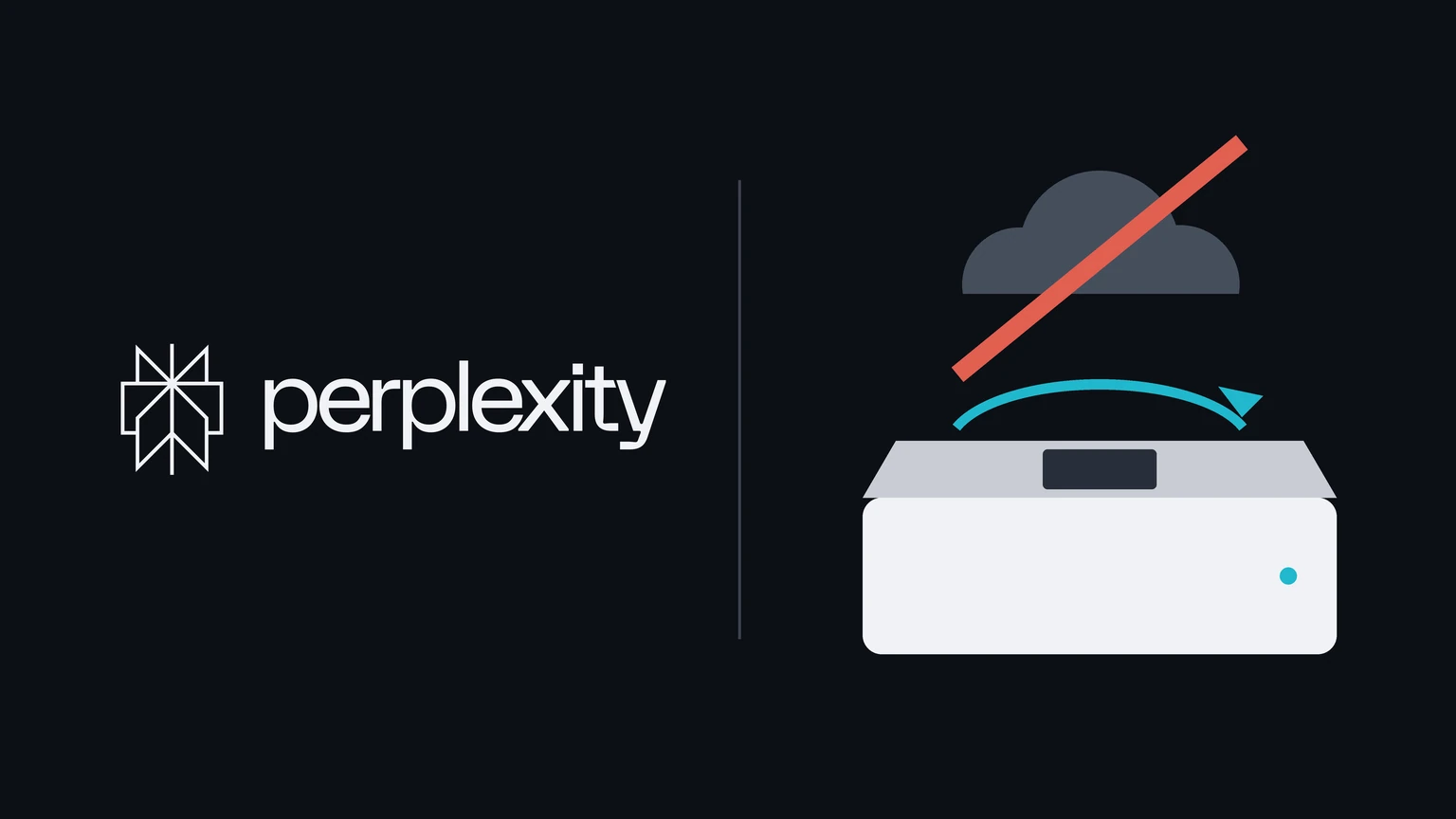
Perplexity has made its Computer agent able to run entirely on a Mac. In a blog post dated 20 October 2026, the company said it is launching Computer fully local on Mac, which means the AI model, the agent harness that plans and directs the work, and the execution of the task all stay on the device. With the user's permission, Computer can work across local files and Mac apps such as Notes and Mail without sending personal data to the cloud.
Perplexity frames the change as a matter of control over two things: sensitive data and credit spend. Computer is the company's agent for multi-step work, and in the cloud it consumes credits from a user's subscription. Running the whole task on the Mac's own processor and memory takes the cloud, and its costs, out of the loop unless the user chooses to bring them back in.
The launch is the third step in a sequence on the Mac. Perplexity says it first brought Computer to local files and native Mac apps with Personal Computer for Mac in May, then added Hybrid Compute last month, which coordinates frontier models in the cloud with a local model that processes private information on the Mac. The new mode removes the cloud half for tasks that do not need it.
Fully local versus Hybrid Compute
The Perplexity Mac app now offers two ways to run Computer, and the difference is where a task starts. Hybrid Compute starts in the cloud: cloud models handle research and reasoning, and the Mac works on private files and apps, with Computer combining both into one result. Fully local starts on the Mac and keeps the planning, the reasoning and the file processing there.
Perplexity gives examples of where it thinks each fits. A portfolio analysis based on private holdings and downloaded market data could run entirely on the device. A deal review that mixes current market research with confidential financials could use Hybrid Compute instead. The Hybrid Compute product page, as archived on 8 October, describes how that split protects data: an on-device classifier reads each task before anything is sent, swaps names, addresses and account numbers for stand-ins, and restores the real values when the answer comes back. Perplexity says it has open-sourced that PII classifier, which it trained with its Secure Intelligence Institute.
In practice, fully local is the stricter of the two modes. Hybrid Compute still relies on cloud models for part of every task and depends on the classifier catching sensitive details. The local mode avoids that dependency by not sending the task out at all, at the cost of using a smaller model that fits in the Mac's memory.
Which models run on the Mac
Local Computer launches with two model options: Qwen 3.6, Alibaba's open-weight family, and PPLX Pro, which Perplexity describes as a post-trained version of Qwen. Users download and set up the model through instructions inside the app. The blog post does not say which size of Qwen 3.6 it uses or how PPLX Pro was trained.
The archived Hybrid Compute page offered a clue to the sizes Perplexity is working with. For the local half of Hybrid, it listed three one-click downloads: Gemma 4 E4B, Qwen3.6 35B-A3B and a Perplexity model, with no need to set up Ollama or another runtime by hand. Perplexity has trained its own models on open bases before, as when it open-sourced its pplx-decider decision models, but it has not published a model card for PPLX Pro.
Running a capable model on a personal computer is becoming more practical as open-weight releases improve and Apple silicon Macs ship with more unified memory. At the far end, Meta has shown an 816-billion-parameter open model running on two Mac Studios. Perplexity's choice is far more modest, aimed at a single Mac with tens of gigabytes of memory rather than a rack of workstations.
What it can do with Mac apps
The point of an agent on the Mac is access to the user's own material. When given permission, Perplexity says, local Computer works across files and supported apps including Notes, Messages, Mail and Numbers, and MacRumors reported that Keynote is on the list too. The examples in the blog post also involve Excel and Outlook files.
One scenario Perplexity describes reads a project's to-do list in Notes, checks a teammate's request for a budget update in Messages and pulls planned and actual spending from a spreadsheet, then prepares a status update and sends a meeting invitation. Others include checking private holdings against investment guidelines and updating a workbook and a Keynote deck, turning confidential discovery notes and a rate sheet into a client proposal with a budget and a cover email, and reviewing recent messages and email to build a list of deadlines in Notes.
Several of these end with Computer drafting or sending something on the user's behalf, which is where local and private part ways. A task can be processed entirely on the Mac and still send an email or an invitation through a connected account. Perplexity's examples mostly prepare drafts for review, which is the sensible default for an agent touching mail and messages.
Privacy, sandboxing and cloud escalation
Perplexity says that with both the model and the agent running locally, sensitive work can stay on the Mac through every stage, from planning to the finished output. Code and tool execution run in isolated sandbox environments with controlled access to files and connected apps, and the company says the same security protocols apply in the cloud version of Computer. For the cloud side, Perplexity has open-sourced SPACE, the Firecracker-based sandbox behind Computer; the blog post does not say what isolation the Mac version uses.
The local mode is not sealed off. Users can authorize Computer to escalate to the cloud when a task needs current information, browser use or connected apps, and the local orchestrator can call on one of more than 15 frontier models for harder reasoning. 9to5Mac reported that files reach the cloud only when the user approves, and that the mode can run tasks without an internet connection at all.
That design puts the decision in the user's hands, task by task. It also means the privacy guarantee is only as strong as the user's choices: a task that is allowed to escalate becomes a hybrid task, with the data handling of the cloud models it calls.
Hardware, plans and setup
Local Computer on Mac is available now to Perplexity Pro, Max and Enterprise subscribers, in the Perplexity Mac app on supported Apple silicon Macs. Perplexity recommends 36 GB of unified memory or more for running Computer locally and points to the new Mac mini with M6 and M5 Pro chips as an example machine. The Verge's headline summed up the catch: you will need a lot of RAM.
Hybrid Compute has a lower bar. The archived product page listed Apple silicon with macOS 15 or later, 24 GB of unified memory as the minimum and 32 GB for best results, and MacRumors described Hybrid as the option for people whose Mac is not powerful enough for the fully local mode.
Setup has three steps: download and open the latest Perplexity Mac app, follow the in-app instructions to download a local model, and choose fully local for the task. Perplexity has not published pricing changes for the mode, and the Hybrid page said work handled by the local model uses no cloud credits.
What is still unclear
Perplexity published no benchmarks for the local mode. There are no figures for how long typical tasks take on a 36 GB Mac, how often a local Qwen-based model gets multi-step work right compared with the cloud models, or how much memory the agent leaves for other apps while it runs. The blog post also does not name the exact models, quantization or context length.
It is also unclear what logs or telemetry the app sends when a task runs fully locally, and how the sandbox limits what the agent can touch once it has permission to read Mail or Messages. Those are the questions privacy-minded users and IT teams will want answered before relying on the claim that nothing leaves the device. AI Lookout has not tested the feature.
Why it matters
The launch shows where agent products are heading on personal computers: the expensive cloud model becomes optional, and a smaller model on the user's own hardware does the routine work. For Perplexity it is also a way to compete on privacy and cost with assistants built into operating systems, using open-weight models rather than one of its own frontier models.
For users, the trade-off is simple to state. Fully local gives the strongest control over private files and no cloud credit spend, but it needs a well-equipped Mac and accepts a smaller model. Hybrid Compute and cloud escalation stay available when a task needs fresh information or more reasoning power.
Common questions
Can Perplexity Computer run offline on a Mac?
Yes, according to Perplexity's 20 October announcement and 9to5Mac. In the fully local mode the model and agent run on the Mac, and tasks that do not need the web or cloud apps can run without an internet connection.
What Mac do I need for local Perplexity Computer?
A supported Apple silicon Mac running the Perplexity Mac app. Perplexity recommends 36 GB of unified memory or more; Hybrid Compute works with as little as 24 GB.
Which plans include local Computer on Mac?
Perplexity Pro, Max and Enterprise subscribers can use it now.
Sources & further reading
- Perplexity Computer now runs fully local on Mac ↗
- Hybrid Compute on Mac (archived 8 October 2026) ↗
- Perplexity's Computer can now run entirely on your Mac, even offline ↗
- Perplexity Computer Can Now Run Fully Locally on Mac ↗
- Perplexity Computer can now run fully offline on Mac, but you'll need a lot of RAM ↗
How this story was made
Written by Kristian Kostov with AI assistance and checked against the linked sources. Company performance claims are attributed to the company. Analysis reflects AiLookout’s interpretation; we have not independently tested the products discussed. The cover places the companies’ own logos, taken from public-domain or openly licensed files credited in the caption, on a plain background. It is not a product photograph, a screenshot, or an endorsement.
Our editorial standards