Announced 23 Oct 2026 · Sources checked
What was announced
inDrive, the ride-hailing app that built its business around affordable rides, has signed a memorandum of understanding with Pony.ai and NVIDIA to explore offering robotaxis through its app, starting in Kazakhstan. The announcement, dated 23 October 2026 in Astana, names the capital as the first city and says the three companies will evaluate the technical, operational, regulatory and commercial feasibility of a service built on Level 4-ready vehicles.
It is an agreement to study a launch, not a launch. The release says service "would follow an agreement with the government of Kazakhstan", and it gives no fleet size, investment figure or start date.
The deal landed on the day NVIDIA chief executive Jensen Huang made his first visit to Kazakhstan, where he met President Kassym-Jomart Tokayev and spoke at the Alem.AI center, according to NVIDIA's own blog post about the trip.
Who does what
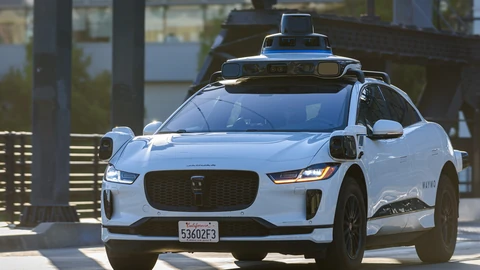
The roles are split cleanly. Pony.ai would supply its seventh-generation robotaxis, which it describes as using multi-sensor fusion, system-level redundancy and fail-operational design for driverless operation. inDrive would provide the ride-hailing platform and run the service, so riders would book an autonomous car in the same app they use for human drivers today.
NVIDIA would contribute its AI infrastructure. The release names three parts: Hyperion, a reference sensor and computing platform for Level 4 vehicles and robotaxis; the Alpamayo stack, NVIDIA's driving model and tools; and Halos, its safety system. In plain terms, NVIDIA is selling the car's brain and the development kit around it, Pony.ai is the self-driving company that integrates it into a vehicle, and inDrive owns the customer.
Why Kazakhstan, and why Astana
The companies say Kazakhstan was chosen for regulatory readiness. The country has created its first structured legal framework for driverless transport as part of what it calls its Year of Digitalization and Artificial Intelligence. TechCrunch reports that Kazakhstan announced plans last month to launch autonomous taxi services in 2027, with trials in Astana and two other cities, and has introduced rules for testing autonomous vehicles on some public roads.
Astana has about 1.7 million people and harsh winters, with months of snow and ice. inDrive founder and chief executive Arsen Tomsky told TechCrunch that launching there would be "an important opportunity to evaluate autonomous driving technology in challenging winter conditions". That is a real test. Most of the world's commercial robotaxi miles so far have been driven in mild, dry cities, and snow obscures lane markings, coats sensors and changes how cars brake.
Huang's visit also brought a wave of compute news. NVIDIA says Firebird has a US export license for 45,000 Grace Blackwell GPUs for a Kazakhstan AI factory with Kazakhtelecom, and that NVIDIA is investing in Higgsfield, the Kazakhstan-founded generative video startup. The robotaxi memorandum fits that broader pitch of Kazakhstan as a place to build and deploy AI, but the NVIDIA post does not mention the inDrive deal itself.
The timeline is softer than it looks
The official text has no dates, but inDrive chief technology officer Yuri Misnik gave TechCrunch one: testing in Astana should begin in the first half of 2027, initially with a safety operator on board, with fully driverless rides as the eventual goal.
That makes this a supervised pilot plan for next year, not a driverless service. inDrive's own track record suggests caution. TechCrunch notes that in December the company signed a separate agreement with Saudi Arabia's AI Driver to explore autonomous vehicles from WeRide, starting in Riyadh, with a pilot targeted for the first half of 2026, and it remains unclear whether that testing has started.
NVIDIA's robotaxi kit
For NVIDIA, this is another win for a strategy of selling a complete robotaxi package rather than individual chips. This week Bolt picked NVIDIA's Alpamayo software for Lucid robotaxis starting in Madrid in 2027, and earlier this month Mercedes-Benz expanded its Hyperion, Alpamayo and Halos partnership with NVIDIA. Ride-hailing platforms and carmakers can now buy the same reference stack instead of building their own.
NVIDIA says Hyperion could lower development costs by giving companies a ready-made base of sensors and computing rather than building everything themselves. Ali Kani, its vice president of automotive, told TechCrunch that "those savings are particularly relevant in emerging markets, where ride-hailing is already relatively affordable and autonomous services need to compete on cost". That is the core economic question in a market like Kazakhstan, where a human-driven ride is cheap.
Why inDrive wants robotaxis
inDrive says its app has been downloaded more than 400 million times and operates in more than 1,200 cities in 47 countries, with intercity travel, delivery and financial services alongside ride-hailing. Its brand is built on low prices, which makes robotaxis both a threat and an opportunity: autonomous fleets could eventually undercut human drivers, and a platform without them could be left behind.
Misnik described the strategy as "capital-light by design", meaning inDrive partners with vehicle and autonomy companies in each market rather than owning a fleet or building its own driving software. Uber follows a similar playbook. TechCrunch notes that Uber announced plans this month to test Pony.ai robotaxis in London, where it also offers supervised rides with Wayve. Misnik said inDrive is looking at other markets and that a "favorable and collaborative regulatory environment" is one of its main requirements.
Pony.ai's push outside China
For Pony.ai, Kazakhstan adds another flag to a map that already includes driverless commercial operations in major Chinese cities and deployments in Europe, the Middle East and Asia. TechCrunch reports that the company aims to have more than 3,500 robotaxis operating in more than 20 cities by the end of 2026, up from 1,975 vehicles at the end of June.
Most of those partnerships share a pattern: a local platform or operator, Pony.ai's vehicles, and a long approval process before paid driverless rides. Competition for that role is growing, from Waymo, which is mapping Toronto ahead of rides planned for 2028, to Tesla, which plans owner-run robotaxis for 2027. A Central Asian city with a new legal framework and cold winters is a different proving ground from any of those.
What to watch
The signals to watch are concrete. First, a formal agreement with the Kazakh government, which the release makes a precondition. Second, a vehicle count and a date for the first supervised rides in Astana. Third, whether the Gen-7 cars and NVIDIA sensors cope with Astana's winter, and whether the partners publish any safety or disengagement data from it.
Finally, pricing. inDrive's whole model is cheap fares. If robotaxi rides in Astana end up costing more than a human driver, the experiment will say more about technology than about business. Until those details arrive, this is best read as three companies reserving a promising market, with real testing still at least a few months away.
Common questions
When can I ride a robotaxi on inDrive in Astana?
No public date exists. inDrive told TechCrunch that tests with safety operators should start in the first half of 2027, and the companies say a launch needs an agreement with the government.
What does NVIDIA provide in the deal?
NVIDIA Hyperion, a reference sensor and computing platform for Level 4 vehicles, plus its Alpamayo driving stack and the Halos safety system.
Sources & further reading
How this story was made
Written by Kristian Kostov with AI assistance and checked against the linked sources. Company performance claims are attributed to the company. Analysis reflects AiLookout’s interpretation; we have not independently tested the products discussed. The cover places the companies’ own logos, taken from public-domain or openly licensed files credited in the caption, on a plain background. It is not a product photograph, a screenshot, or an endorsement.
Our editorial standards