Announced 28 Oct 2026 · Sources checked
The preservation request
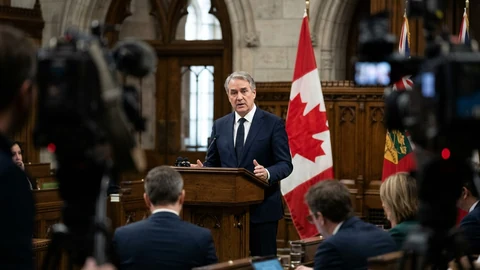
House Democrats reportedly want President Trump to hold on to his chat history — specifically, his conversations with Grok and other AI chatbots. The core request is simple: preserve any exchanges with AI bots, with Grok named directly. The push to save presidential chats arrives as Democrats ramp up oversight of AI companies ahead of the midterms.
The legal frame is familiar: preservation demands have long covered emails, texts and encrypted messaging apps. Now the argument has a chatbot in it. Because Grok is built by xAI — one of the companies already in Democrats' sights — the request connects the White House's use of the tool with federal records law and potential influence-operation concerns.
The company letters
On October 27-28, 2026, House Democrats who oversee technology policy sent letters to five major AI developers: Anthropic, Google, Meta, OpenAI and xAI. The letters came from representatives Frank Pallone, Zoe Lofgren and Jamie Raskin, and ask each company for detailed reports on AI safety incidents, due by November 11, 2026.
The company letters are focused on safety incidents and the companies' internal reporting structures, not on presidential chat logs specifically. The preservation request aimed at Trump sits as a separate thread in the same oversight push — evidence that Congress is treating AI logs as a distinct category of records with its own investigative value.
The Grok-and-records problem
Federal records law requires the preservation of records of presidential decision-making. Chatbot conversations raise novel questions: are exchanges with an AI system federal records? Do they have to be preserved even when the platform (xAI) controls the data? And can commercial AI companies delete logs that later become relevant to congressional or legal processes?
The reporting notes the preservation push lands alongside the broader campaign and that none of it establishes that a chatbot made any military or policy decision. The letter requesting a closed-door briefing by November 11 — from Raskin and Robert Garcia — is a request, not a subpoena, and the underlying Grok-Venezuela story rests on press reporting rather than confirmed decision logs.
What it means
The requests signal that AI chatbot usage by public officials is now squarely within congressional oversight territory. If Democrats win control of the House, the preservation request is a legal placeholder that could support formal investigations into the administration's use of generative AI tools — including automated decision-making or influence-operation concerns.
For AI companies, the letters preview a compliance burden that is becoming structural: incident reporting, record-keeping and closed-door briefings with lawmakers. The November 11 deadline for the safety incident reports means the five labs will need to produce internal documentation within roughly two weeks.
Caveats
The preservation request is a letter, not a subpoena; the White House says it preserves all required records doctrinally, but the scope of AI chatbot logging is not settled law. The reporting about the Grok-Venezuela connection relies on press accounts rather than confirmed records.
AI Lookout covered the CryptoBriefing and Nextgov reporting; it did not obtain the letters directly.
Why chatbot records matter
Chatbot conversations are a new class of records with no settled legal treatment. If a president uses an AI assistant to draft policy, summarize intelligence or explore options, the exchanges may be relevant to decision-making records — but they live on corporate servers, not in governmental archives, and platform terms usually allow the provider to retain or delete them.
The preservation request forces the question early, before any investigation exists: if the records are not preserved now, they may be gone when needed. That is why the letters combine the White House request with demands on the AI companies — the same dual-track approach used in the earliest email-preservation battles.
The November 11 deadline
The November 11 deadline applies to both the safety-incident reports from the five labs and the requested closed-door briefing. For the companies, producing an incident report means assembling internal documentation on safety incidents, model breakdowns, policy violations and any disclosures already made to regulators.
The deadline is tight — roughly two weeks — and it forces the labs to decide early whether they will cooperate fully or test the committee's ability to compel. The response will set the tone for post-midterm oversight of the AI industry regardless of which party controls the House.
The bigger oversight pattern
The requests are part of a pattern: Congress learning to oversee AI the way it oversees finance and telecom — with record-keeping demands, incident reporting, briefings and, eventually, subpoenas. The specific mechanism this cycle is the letter; the next cycle, depending on election results, could be formal hearings and legislation.
For the five labs named, the letters set a precedent that their internal safety practices are now congressional business. The companies that respond thoroughly and transparently may shape the regulatory template; those that stonewall will define the adversarial alternative.
Common questions
What did the Democrats ask?
They asked Trump to preserve his AI chatbot conversations, with Grok named directly, and sent letters to five AI labs for safety incident reports.
When are reports due?
The AI safety incident reports and a requested closed-door briefing are both due November 11, 2026.
Is this a subpoena?
No — the requests are preservation asks and letters, not subpoenas.
Sources & further reading
How this story was made
Written by Kristian Kostov with AI assistance and checked against the linked sources. Company performance claims are attributed to the company. Analysis reflects AiLookout’s interpretation; we have not independently tested the products discussed. The cover is an AI-generated editorial illustration, not a photograph or evidence of an actual event.
Our editorial standards