Announced 11 Oct 2026 · Sources checked
What did ArtCraft release?
ArtCraft is an open-source effort led by developer Brandon Thomas that first drew attention with free Rust alternatives to Adobe apps; its Photoshop-style PhotoCraft repository had about 50,000 GitHub stars when we checked on 12 October 2026. The new trio targets Microsoft 365. WordCraft replaces Word, GridCraft replaces Excel and DeckCraft replaces PowerPoint.
GitHub’s API shows all three repositories were created on 7 October 2026. Version 0.5.0 of each was published between 23:50 UTC on 10 October and 01:17 UTC on 11 October, after earlier 0.3 and 0.4 releases. Tom’s Hardware covered the launch on 11 October, and posts about it spread widely on X over the weekend. On 12 October WordCraft had about 7,300 stars, GridCraft about 3,300 and DeckCraft about 2,200.
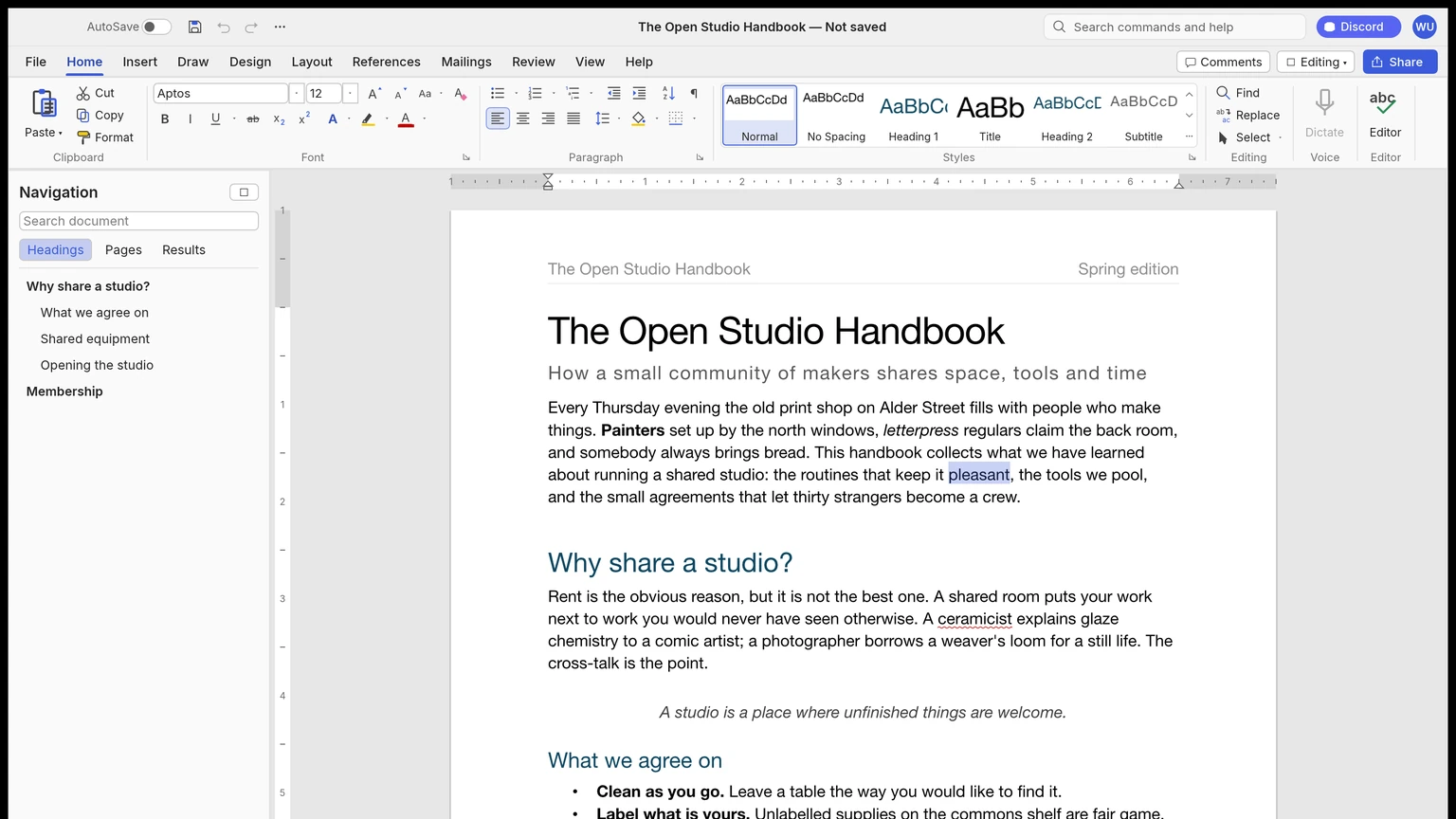
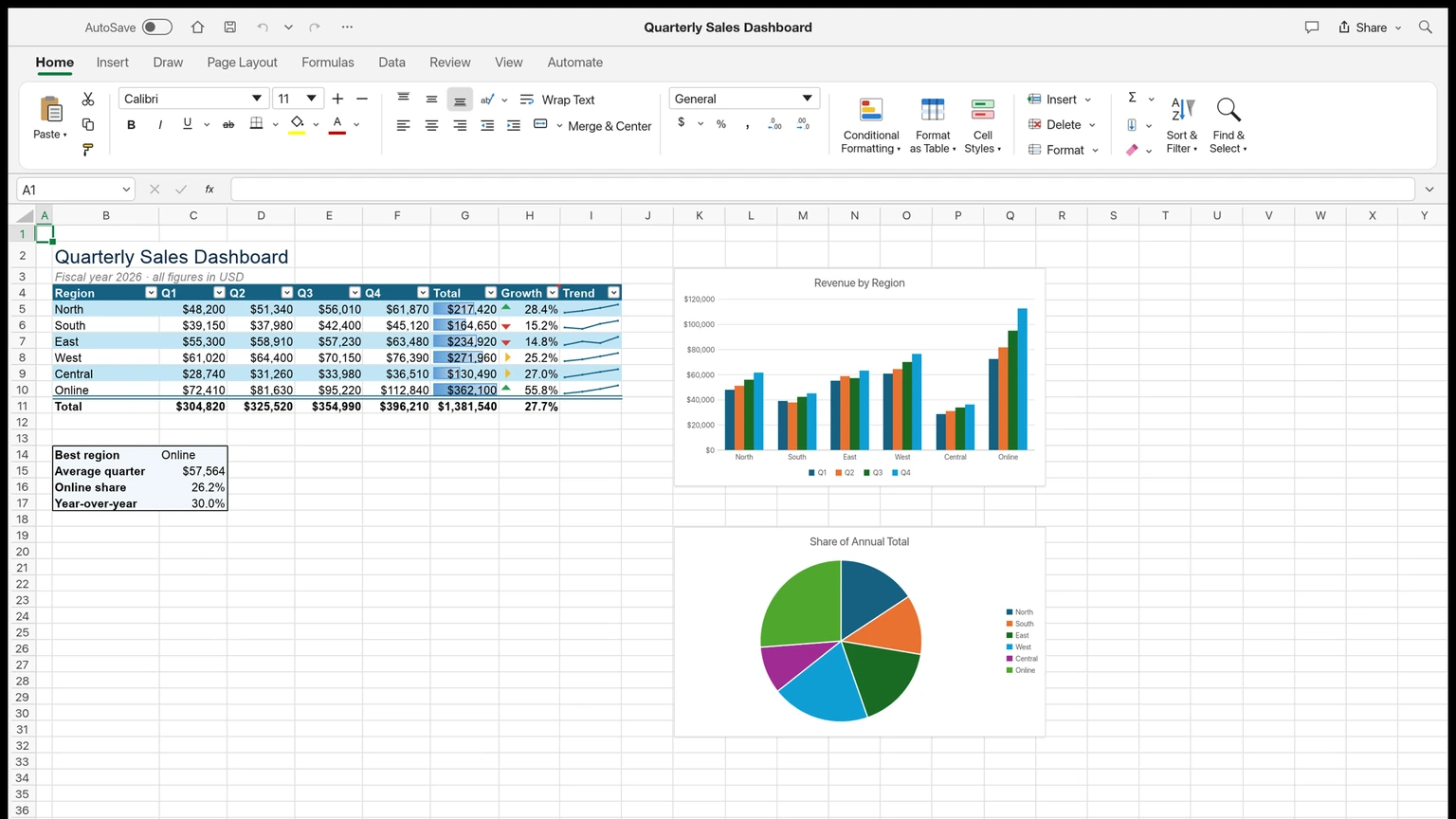
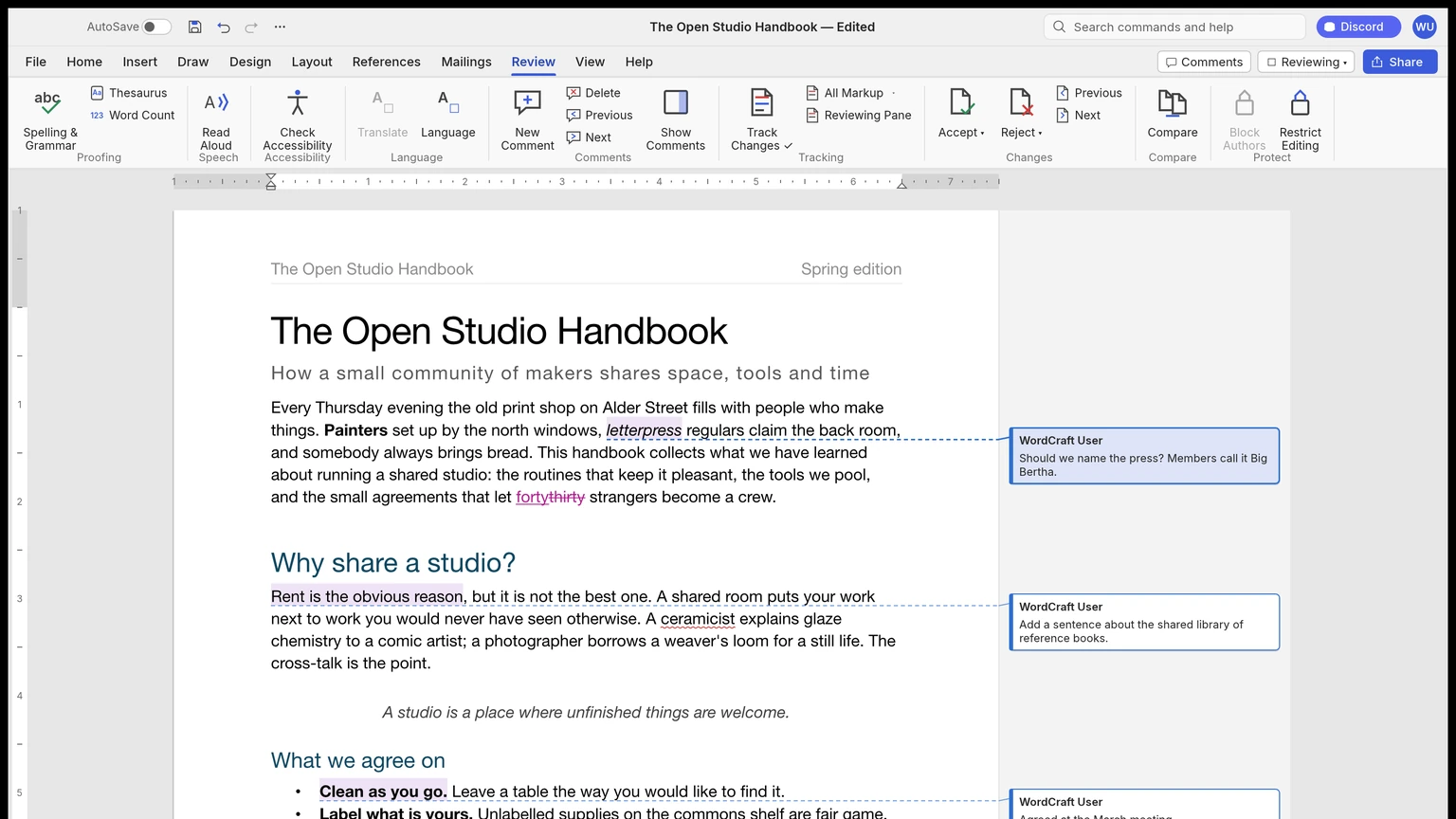
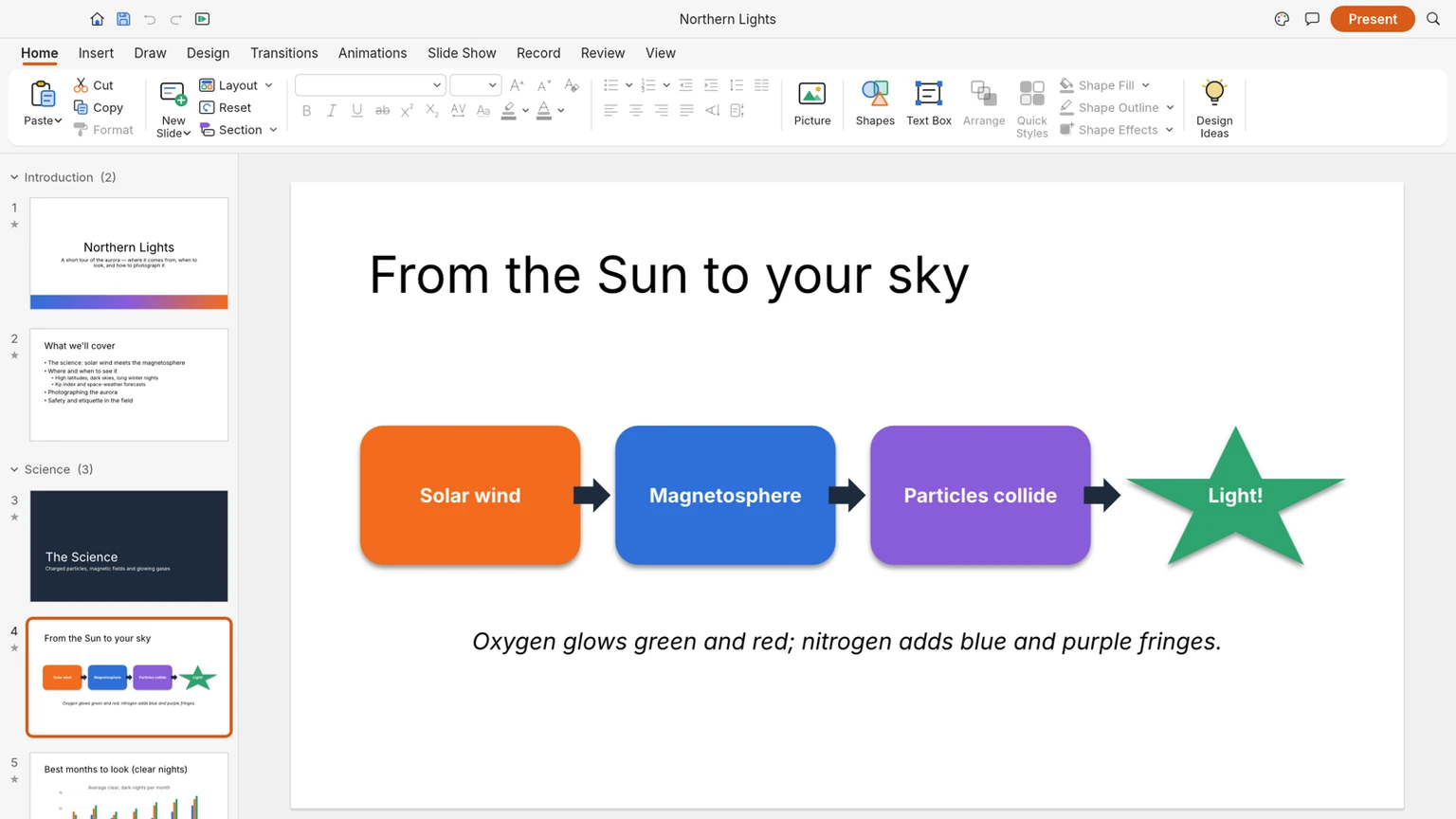
Each app follows the Office layout closely: ribbon tabs, a formula bar or Styles gallery, familiar shortcuts and backstage-style file menus. The READMEs stress that every screenshot is the app itself, rendered by its own test harness from original sample files, and that no Microsoft icons, templates, fonts or artwork are used.
How much of Office do the three apps cover?
The READMEs are unusually candid about how far each app has to go, and they separate breadth from real-world readiness. WordCraft says it covers 88% of Word’s ribbon features with commands but estimates it is about 60% of the way to replacing Word for real work, about 55% for a typical professional’s weekly work and about 63% for everyday essentials. Beta still needs testing on real-world .docx files, keeping charts and SmartArt through a round trip, pagination closer to Word’s and native printing.
GridCraft claims 89% of the Excel ribbon commands in its catalogue and 513 of Excel’s 523 worksheet functions, including dynamic arrays, LET and LAMBDA, PivotTables and seventeen chart types. Weighted by what Excel users rely on, it estimates about 50% readiness. DeckCraft claims 79% of PowerPoint’s features by breadth, 92% of the core ones, and about 55% of the way to replacing PowerPoint, with transitions including Morph, animations, presenter tools and PDF export.
| App | Replaces | Breadth claim | Real-work estimate |
|---|---|---|---|
| WordCraft 0.5.0 | Word | 88% of ribbon features | about 60% |
| GridCraft 0.5.0 | Excel | 89% of ribbon commands; 513/523 functions | about 50% |
| DeckCraft 0.5.0 | PowerPoint | 79% of features (92% of core) | about 55% |
How were they built, and where does Claude come in?
Tom’s Hardware reports that the apps were created with Claude, and the repositories bear that out. When we checked on 12 October, 77 of WordCraft’s latest 100 commits and 47 of DeckCraft’s 62 commits carried Co-authored-by trailers naming a Claude model, mostly Claude Opus 5.5, often alongside Brandon Thomas; a handful name Claude Sonnet 5.5, Claude Fable 5, Devin, ChatGPT or GitHub Copilot. Each repository ships an AGENTS.md and a CLAUDE.md that tell coding agents how to work: read the status file, follow the execution plan, and stop to ask only on licensing, publishing or secrets.
Those instructions double as an engineering standard. Production code may not panic: no unwrap, expect or unsafe, every input-derived number treated as hostile, and every crash fix landing with a regression test. WordCraft’s CI runs formatting, clippy, roughly 800 tests, an asset-attribution check, a layering check and the WebAssembly build. Thomas, who Tom’s Hardware says has 15 years of software experience, has pushed back online against claims that the project is careless “vibecoded” output.
The clean-room rules are explicit. Agents may observe the real Microsoft apps only as a black box with synthetic documents, may not read or disassemble anything inside the Office bundle, and must build file support from public specifications such as ECMA-376 for Office Open XML. GPL code from LibreOffice and similar projects is off limits. The v0.5.0 release notes also list fixes from outside contributors, a sign the projects are attracting human maintainers as well as agents. For a sense of how quickly agent-written code is moving, see Reason Agent 1.1’s coding-agent results.
Why are the apps designed to be driven by AI agents?
The most AI-relevant design choice is that every action is a command with a stable id. WordCraft exposes 422 commands that drive the ribbon, keyboard shortcuts, command search, a CLI, a JSON control channel and an MCP server; DeckCraft lists more than 200. If you are new to the protocol, start with how MCP connects AI to tools.
In practice an agent can run claude mcp add wordcraft -- wordcraft-cli mcp and get tools such as list_commands, execute, type_text, select_text, inspect_document, render_page and save_document. GridCraft’s server offers read_range, write_range, set_cell and evaluate_formula. With the desktop app running, agents can also take screenshots, click and press keys, but inspect_document lets them check their work as structured data rather than pixels.
That matters because most office automation today means scripting a closed app or generating files blind. Here the same command layer serves humans and agents, and the result is a real .docx, .xlsx or .pptx. It also contrasts with incumbents adding AI inside the editor, such as ONLYOFFICE Docs 10.0’s new AI tools: ArtCraft puts the editor inside the agent’s toolset instead.
How do you try them, and what is the licence?
Each repository’s releases page offers signed Windows installers and portable builds, signed and notarized universal macOS apps, Linux AppImage, Flatpak, .deb, .rpm and tarballs, a FreeBSD build, and a static WebAssembly bundle that runs in a browser. Building from source is a cargo run away. The interface is native egui on the GPU, with no Electron or Tauri layer, and spelling and grammar run offline. WordCraft says it re-lays out a 188-page document in about 1.4 milliseconds as you type.
The code is dual-licensed MIT or Apache-2.0, which allows commercial use and modification. Bundled fonts and icons keep their own open licences, recorded in ATTRIBUTION.md. The ArtCraft name and logos are trademarks outside that licence and must be removed from forks. The projects state they are not affiliated with or endorsed by Microsoft.
What are the limits and open questions?
Alpha means alpha. The developers’ own estimates leave large gaps, and the hardest part of replacing Office is not the ribbon but fidelity: complex .docx layouts, macros, charts and SmartArt surviving a round trip, and exact pagination that legal and publishing workflows depend on. Tom’s Hardware notes that most of the apps remain far from what they intend to replace, and commenters questioned support for businesses.
Speed creates its own risks. Code written this quickly, largely by agents, needs sustained human review and maintenance, and the long-term plan for funding that work is not stated in the repositories. The clean-room claim rests on the project’s own process rules rather than any outside audit. For how Anthropic itself is packaging longer-running agent work, see Claude Code Projects.
We read the three READMEs, the attribution files, the v0.5.0 release notes, recent commit metadata and the Tom’s Hardware report on 12 October 2026. We did not install the apps or test file compatibility ourselves.
Common questions
Are WordCraft, GridCraft and DeckCraft free for commercial use?
Yes. The code is dual-licensed MIT or Apache-2.0. The ArtCraft brand files are excluded and must be removed from forks, and bundled assets keep their own open licences.
Can they replace Microsoft Office today?
Not for most professional work. All three are alpha, and the project’s own estimates put real-work readiness at roughly 50–60%. They are worth trying for simple documents, scripting and agent workflows.
Were they written by AI?
Largely with AI help. Tom’s Hardware reports they were created with Claude, and most recent commits list Claude Opus 5.5 as co-author alongside Brandon Thomas, with human contributors also landing fixes.
What to remember
Try WordCraft, GridCraft or DeckCraft if you want free, scriptable, agent-drivable Office-format editors on any platform—but keep Microsoft 365 or LibreOffice for anything where exact formatting and long-term support matter until the projects reach beta.
Sources & further reading
How this story was made
Written by Kristian Kostov with AI assistance and checked against the linked sources. Company performance claims are attributed to the company. Analysis reflects AiLookout’s interpretation; we have not independently tested the products discussed. Cover photography is illustrative and does not depict the specific announcement or product.
Our editorial standards