Announced 15 Oct 2026 · Sources checked
What Tim Cook told The Paper in Shanghai
Apple executive chairman Tim Cook gave an exclusive interview to The Paper in Shanghai on 15 October 2026. The Paper reported that Cook said Apple Intelligence has already been approved in China, and that a test version would arrive later in the month. In the quotes The Paper published, Cook said Apple was "very happy" to have been approved to bring the first core Apple Intelligence features to Chinese users, and that the company looked forward to offering them in the forthcoming test build.
Cook's China trip came as Apple prepares the China launch of its folding iPhone Duo. The Paper's story is primarily about Apple Intelligence approval, with the Duo remarks as colour: Cook praised the hinge and the large unfolded screen. For this article, the binding facts are the approval claim, the late-October test timing, the named features and the explicit exclusion of Siri AI.
English-language outlets, including The Standard and a China Daily write-up of the same interview, repeated the same core points and attributed them to The Paper. AI Lookout treated The Paper as the primary record of Cook's words and treated the English pieces as secondary confirmations of that report, not as independent Apple statements.
Which features are in the first China test
According to The Paper, the first China test will include live translation, writing tools and image cleanup in the Photos app. Cook's quoted list matches that trio. The Paper is explicit that Siri AI is not part of the first batch.
That split matters because Apple has been rolling Apple Intelligence in stages elsewhere: on-device writing and image tools first, then deeper assistant behaviour. In China, the same pattern appears to apply, with the assistant rewrite held back while the more self-contained tools go into a test build. Readers should not assume that "Apple Intelligence is approved" means the full global feature set lands at once.
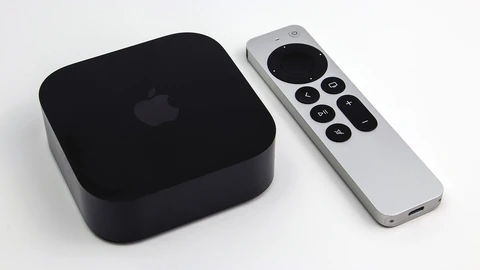
The Paper also summarised an Apple China website device list for Apple Intelligence phones: iPhone 16 models and later, iPhone 15 Pro, iPhone 15 Pro Max and iPhone Air. AI Lookout could not independently load a stable English mirror of that Apple China page during this check, so the device list is reported here as The Paper's account of Apple's China site, not as a freshly scraped Apple page. Separately, Apple's Apple TV 4K with Siri AI shows how the company is still expanding assistant features on other hardware outside this China test.
Earlier Western reporting had pointed to a broader China launch with iOS 27.3 in December. Cook's late-October test does not cancel that calendar; it sits in front of it. A test build can reach a limited set of users weeks before a wider public release, and Cook did not, in the published quotes, give a date for general availability beyond the test.
How the approvals show up in Chinese filings
The Paper connected Cook's interview to Chinese telecom equipment filings dated around 29 September 2026. It said the China-market iPhone Duo (model A3721) and several other recent iPhones had network-access permits updated to include large-model registration numbers. The three codes The Paper printed were Shanghai-AppleZhiNeng-202506160057 for Apple Intelligence, Shanghai-TongYiWanXiang-202410090024 for Tongyi Wanxiang and ZheJiang-TongYiQianWen-20230901 for Tongyi Qianwen.
Those numbers matter because China requires generative AI services offered on phones to go through filing and telecom equipment processes that Western markets do not use. Seeing Apple Intelligence listed beside Alibaba's Tongyi family on the same device paperwork is concrete evidence that Apple's China AI stack is being treated as a localised product with named Chinese model partners, not a simple mirror of the US build.
The Paper also noted that China's cyberspace regulator included Apple Technology Development (Shanghai)'s "Apple Intelligence" on-device generative AI service in a July 2026 batch of phone-side filings, with an 8 July 2026 filing date. That July registration is older than Cook's October interview; the interview is the public confirmation that Apple now feels cleared to put a test in users' hands.
Alibaba and Baidu's reported roles
A separate China Daily report on 15 October, citing unnamed sources familiar with the matter, said Alibaba will supply AI model capabilities while Baidu will support search and functions associated with Siri and Visual Intelligence. China Daily said Cook also linked Apple Intelligence approval to Alibaba's associated Qwen models in the Shanghai interview, a detail that goes beyond the Cook quotes The Paper printed.
On China Daily's account, Alibaba's role centres on models for text and image understanding and content generation, with integration plans spanning iPhone, iPad, Mac and Vision Pro software in China. Baidu's role is described as connecting Baidu services to Apple search, Siri-related functions and Visual Intelligence, which lets users ask about objects and scenes through the camera. China Daily stressed that Baidu's Siri-related work is separate from the redesigned Siri AI assistant Cook excluded from the first test.
Those partner claims are attributed to unnamed sources, not to an Apple, Alibaba or Baidu press release. They fit the filing picture The Paper described, where Tongyi models appear on the same device paperwork as Apple Intelligence, and they fit Alibaba's wider open-model push, including work such as QwenGyre for long-running coding agents. Until the companies publish their own terms, treat the division of labour as reported, not as settled contract language.
How this differs from Apple Intelligence elsewhere
Outside China, Apple Intelligence has relied on Apple's own on-device and Private Cloud Compute stack, with optional ChatGPT handoffs in some markets. The China path described this week is different: local model partners, local filings and a feature set that starts without the new Siri AI. That is the usual shape of Apple's China product localisation, applied to generative AI.
It also sits beside other Apple research and product moves that are not China-specific. Apple researchers recently described Minions, a way to pool idle Apple silicon for distributed GPU work, which is about compute topology rather than consumer Apple Intelligence features. The China story is a regulatory and product-availability story, not a new model architecture announcement.
For Chinese users, the practical difference is simpler: features that have been absent from China-market iPhones because of local rules now have a named path into a test build. For developers and enterprises that ship apps into China, the open question is which Apple Intelligence APIs and system intents will exist in the China OS builds, and whether those APIs call Alibaba or Baidu backends under the hood.
What to watch next
The near-term watch list is concrete. First, whether Apple ships the late-October test on schedule and which iOS or iPadOS build number carries it. Second, whether Apple, Alibaba or Baidu publish a joint note that confirms partner roles without anonymous sourcing. Third, whether the December iOS 27.3 reporting still matches Apple's public plan once the test is out.
Also watch what "test version" means in practice: TestFlight-style limited access, a China-only developer seed, or a broader beta. Cook's quotes do not say. The Paper's device list suggests the hardware bar will look familiar to Apple Intelligence users elsewhere, but software entitlement and language support still have to be measured on the build itself.
Finally, watch whether Siri AI remains excluded through the wider launch. China Daily's sources already draw a line between Baidu's involvement in Siri-related functions and the redesigned Siri AI assistant. That line could move; the published Cook quotes keep Siri AI out of the first test only.
Limits and open questions
Apple has not, as of this writing, posted an English newsroom confirmation of the China approval or the test schedule. The strongest primary for Cook's words is The Paper. Partner roles for Alibaba and Baidu rest on China Daily's unnamed sources. Network-access filing numbers come from The Paper's reading of MIIT disclosures; AI Lookout did not download the raw MIIT PDFs for this check.
Benchmark claims, latency numbers and quality comparisons for the China models are absent from these sources. There is no public side-by-side of China Apple Intelligence writing tools against the US build, and no Apple statement on whether Private Cloud Compute has a China analogue or whether requests stay on-device and with local partners.
Until Apple publishes its own China Apple Intelligence page in a form outsiders can archive cleanly, readers should treat feature lists, device matrices and partner maps as reporting about Apple rather than as Apple documentation. The approval and the late-October test are the firmest points in the public record today.
Common questions
Is Apple Intelligence available in China today?
Not as a finished public launch in the sources we checked. Cook said approval is in place and a test version is due later in October 2026, without Siri AI in that first batch.
Which features did Cook name for the China test?
Live translation, writing tools and the Photos cleanup tool. He said Siri AI is not included in the first China batch.
Are Alibaba and Baidu confirmed partners?
China Daily reported that split, citing unnamed sources. The Paper's filing story lists Tongyi model registration numbers beside Apple Intelligence on recent iPhones. Neither company issued a joint press release that AI Lookout reviewed for this article.
Sources & further reading
How this story was made
Written by Kristian Kostov with AI assistance and checked against the linked sources. Company performance claims are attributed to the company. Analysis reflects AiLookout’s interpretation; we have not independently tested the products discussed. The cover places the companies’ own logos, taken from public-domain or openly licensed files credited in the caption, on a plain background. It is not a product photograph, a screenshot, or an endorsement.
Our editorial standards